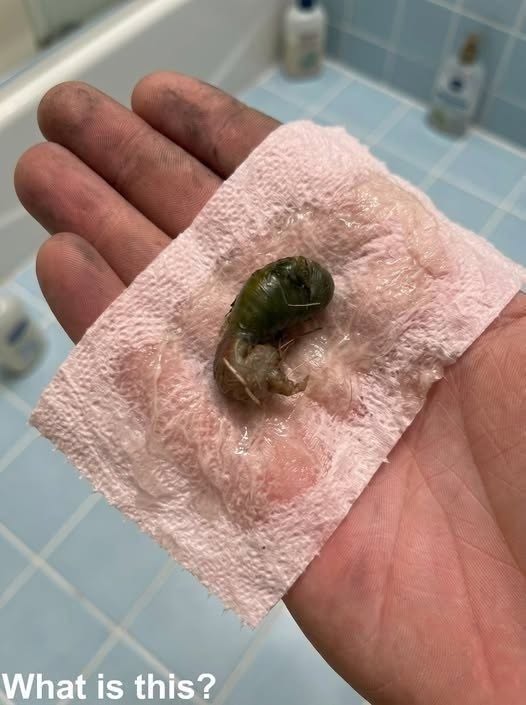
Using a tissue, the husband gently moved it into a small container. That allowed the family to examine it without damaging it or putting anyone in direct contact with something they could not yet identify.
From there, they compared what they were seeing with photographs and descriptions from reliable online identification resources. The closer they looked, the more it seemed to have natural features rather than anything manufactured or hazardous.
The Likely Answer: A Stage in an Insect’s Life
The closest match appeared to be a beetle pupa. A pupa is one of the stages some insects pass through before becoming adults.
Many insects go through what is known as complete metamorphosis. That process includes four main stages: egg, larva, pupa, and adult. During the pupal stage, the insect may appear still from the outside while major changes are happening inside.
That is one reason pupae can seem so strange when found unexpectedly. They may be motionless, oddly shaped, or colored in a way that does not look like the adult insect people are used to seeing.
In other words, what first looked like a puzzling object on the floor may have been part of a normal natural life cycle.
What Readers Should Know
Finding an unidentified insect, casing, or pupa in the home does not always mean there is a serious problem. Still, it is smart to be cautious.
Avoid direct contact if you are unsure what something is. Use a tissue, gloves, or a small container if it needs to be moved. If there are multiple insects, repeated sightings, damage to wood or fabric, or signs of an infestation, a local pest professional or extension office may be able to help with identification.
For a single unusual find, clear photos and trustworthy insect identification guides can often provide useful clues. Good identification matters because different insects can mean very different things for a household.
In this case, a small green mystery became less alarming once it was treated with patience and curiosity. Sometimes the most interesting science lesson is not outside in the woods or inside a classroom, but waiting quietly on the bathroom floor.
The next time something unfamiliar turns up at home, it may be worth taking a closer look before deciding what it is.