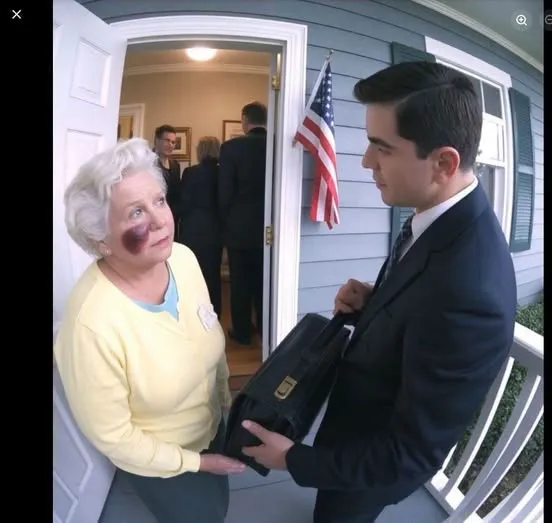
Deacon did not apologize. He did not check whether she was hurt. Instead, he told her to stop talking, kissed his wife, and left for dinner as if nothing serious had happened.
The House That Never Felt Like Home
Loretta had moved in with Deacon and Sloan six months earlier. Illness and rising living costs had made it difficult for her to stay on her own, and the arrangement had sounded practical at first. She would have a room. They would help her. She would contribute part of her disability income toward expenses.
But the expensive home never truly felt like hers. The room she was given felt less like a family space and more like a place to keep her out of the way. Her money was expected every month, yet her comfort and health seemed negotiable.
The smoke became one of the clearest signs that her needs did not matter. Loretta had tried to be polite. She had explained the medical warning. She had asked more than once for Sloan not to smoke inside the house.
Each time, the request was brushed aside.
After Deacon hit her, Loretta went back to her room and looked at the mark forming on her face. Nearby was an old graduation photo, a reminder of the son she once believed would never treat her this way.
Then she picked up her phone.
The Phone Calls That Changed Everything
The first person Loretta called was Marcus, an elder-law attorney. Years earlier, he had been a struggling single father living in her apartment building. Loretta had watched his baby, shared food when money was tight, and encouraged him while he worked his way through law school.
When Marcus asked whether she was safe, Loretta almost gave the answer she had practiced for years: that she was fine.
This time, she told the truth.
She explained the slap, the smoke exposure, the monthly payments, and the way her finances had come under Deacon and Sloan’s control. Marcus told her not to confront them yet. He advised her to document what she could: receipts, bank records, messages, photos, and anything that showed the conditions she had been living under.
Loretta made two more calls.
One went to Rhonda, a journalist whose mother Loretta had once helped care for so Rhonda could stay in school. Another went to Calvin, a financial investigator who had spent many nights eating at Loretta’s table when he was a college student with nowhere else to go.
All three remembered her. None treated her like a burden.
That night, Loretta photographed the bruise on her cheek. She documented the room, the broken latch, and the records of payments she had made. For the first time in months, she was not simply enduring what was happening. She was building a record.
Why This Matters
Stories like Loretta’s carry a difficult truth: elder abuse is not always committed by strangers. Sometimes it happens inside a family home, hidden behind closed doors and polite explanations.
It can involve physical harm, but it can also include financial pressure, isolation, intimidation, or ignoring medical needs. For someone with a health condition, even a household habit like indoor smoking can become a serious safety concern when a doctor has warned against exposure.
The next morning, Loretta walked into the kitchen without raising her voice. Deacon sat with his phone. Sloan ate breakfast. At 9 o’clock, the doorbell rang.
Marcus was there with information about a protective-order petition and emergency housing options. Rhonda stood with him, not to expose Loretta’s private life without permission, but to help document a broader pattern of elder exploitation. Calvin had already begun reviewing the financial records and had found transfers and charges that raised concerns.
Deacon tried to describe the payments as normal household contributions. But Calvin’s review suggested Loretta had paid more than what had been agreed, including withdrawals she said she never authorized.
Marcus made clear that striking an elderly parent and exploiting her finances could bring serious legal consequences.
Loretta did not argue. She did not beg. She simply said she was leaving and that any future communication would go through her attorney.
With help from a local support service, Loretta moved into a small accessible apartment. It was not grand, but it was hers. No one smoked in the kitchen. No one demanded money at the door. No one made her feel like a guest in the final years of her own life.
The legal process did not erase what Deacon had done. It did, however, help restore control over her income and create a formal record of the assault. Loretta also received medical care for her cheek and her breathing issues.
Deacon had assumed his mother was alone. What he forgot was that Loretta had spent decades helping people survive their hardest seasons. The people who came to her door were not strangers with power. They were adults who remembered the woman who had once given them food, childcare, encouragement, and dignity.
For six months, Loretta believed needing help meant she had to tolerate humiliation. One honest phone call proved she did not.
Sometimes the first step out of a painful situation is not a dramatic speech. It is simply saying, “I’m not fine. I need help.”
And for Loretta, those words opened the door to a life that finally belonged to her again.