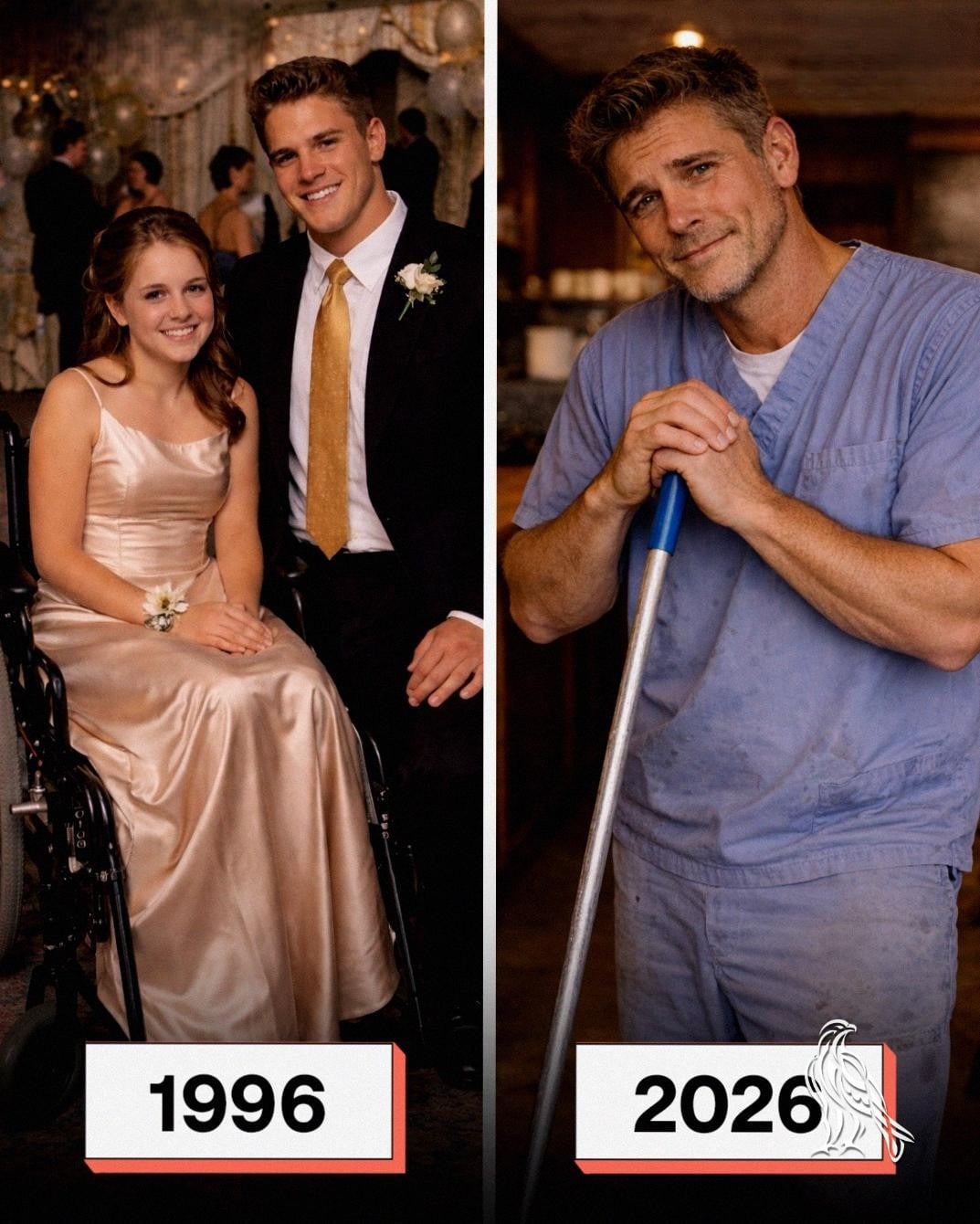
## Prom Night in a Wheelchair: The Dance That Changed Everything
The car accident didn’t just leave me with injuries—it rewired the way I saw myself. Overnight, I went from feeling like a typical teenager to wondering if I’d become “invisible.” Not in the dramatic, movie-scene way… but in the quiet way that happens when people avoid eye contact because they don’t know what to say.
By the time prom arrived, I already felt like an outsider walking into someone else’s celebration—except I wasn’t walking. I was in a wheelchair, and the gym looked like a world built for everyone else: crowded floors, tight spaces, and the kind of social energy that makes you feel even more alone when you’re not sure where you fit.
I told myself I didn’t care. I acted like I was fine sitting on the sidelines. But inside, it hurt more than I wanted to admit.
### When Everyone Looked Away, One Person Didn’t
Across the room, I watched groups laugh, sway, and spin under the lights. Couples moved like they belonged there. Meanwhile, I could feel the space around me—people passing by, smiling politely, then moving on.
And then Marcus walked over.
No hesitation. No awkward pity. No “I’m doing this to be nice” energy. He just came up like it was the most normal thing in the world.
He looked at me and asked, simply:
**“Would you like to dance?”**
In that moment, it didn’t feel like a favor. It felt like recognition—like someone was saying, *You’re still here. You still matter. You’re still part of this.*
### That One Question Became a Turning Point
That dance didn’t magically fix my confidence, and it didn’t erase the hard realities of living with a disability. The world didn’t suddenly become accessible. Doors were still too narrow. Ramps were still missing. People still made assumptions.
But something changed in me.
Instead of shrinking, I started noticing how many spaces quietly shut people out—schools, workplaces, event venues, even “community” programs that weren’t designed for everyone. I began to understand that accessibility isn’t a special feature—it’s basic dignity.
Over time, that prom night became a private reminder I carried into every frustrating moment: I didn’t need to disappear just because the world hadn’t made room yet.
So I started making room.
### Years Later, We Found Each Other Again
Decades passed. Life happened. We both collected scars—different kinds, but heavy in their own ways. When I crossed paths with Marcus again, it didn’t feel like some fairytale coincidence.
It felt like something unfinished finally had the chance to be completed.
We talked like adults who had survived things teenagers can’t always name. And somehow, we ended up building something meaningful together: a community center designed with real inclusion in mind—wide doorways, accessible entrances, thoughtful layouts, and a culture that didn’t treat anyone like an afterthought.
Not “special accommodations.”
Just smart, respectful design.
### The Dance That Came Full Circle
At the grand opening of the center, with people filling the space we’d worked so hard to create, Marcus turned to me again.
Same calm confidence. Same steady presence.
And he asked,
**“Would you like to dance?”**
This time, it wasn’t a repeat of the past. It was proof that some moments don’t end—they mature. They wait until you’re ready to fully step into what they meant all along.
That first dance reminded me I was still worthy of being seen.
The second one reminded me I’d built a life where others could be seen too.
—
### Quick Question for You
Have you ever had a small moment—one sentence, one gesture—that changed the direction of your life?
Share your story in the comments, and if this moved you, pass it along to someone who might need the reminder today.