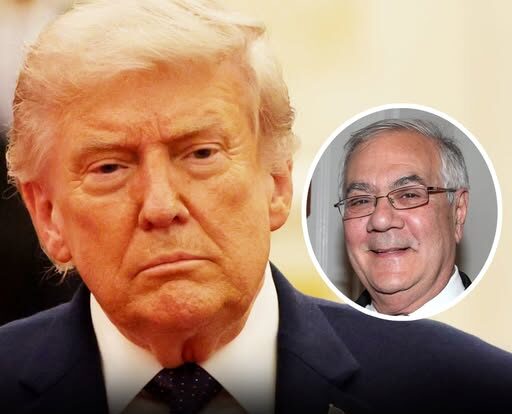
Throughout his career, Frank built a reputation for sharp arguments, detailed policy knowledge, and a willingness to confront opponents directly. That same no-nonsense style carried into his final reflections.
Why Frank Kept Returning to Trump
In his final stretch, Frank repeatedly turned his attention to Donald Trump and what he saw as the lasting impact of Trump-era politics. According to accounts of those conversations, Frank believed Trump’s strength came less from governing skill and more from emotional intensity—especially the ability to convert frustration and resentment into political power.
He argued that this approach thrives on division, rewarding conflict over problem-solving. Frank reportedly described Trump as an “idiot savant,” meaning someone with a narrow but potent talent—particularly for energizing supporters through grievance—while lacking depth in areas Frank considered essential to effective leadership, such as immigration policy and foreign affairs.
To Frank, the bigger issue wasn’t just one political figure. It was a style of leadership that, in his view, elevates outrage above solutions and makes the country harder to govern long-term.
His Final Regret Wasn’t About Himself
Despite decades of influence and a historic career, Frank’s most personal regret near the end wasn’t tied to legislation, elections, or professional recognition. Instead, he reportedly wished he could live long enough to see what he believed would be the eventual decline of Trump’s political power.
He didn’t frame that as personal payback, but as a kind of political closure—wanting to witness how a movement built on anger and confrontation would ultimately resolve. Frank believed that leadership fueled primarily by resentment has built-in limits, even if it can be effective in the short term.
At the same time, he offered a warning: even when a political era ends, its effects don’t simply vanish. The tone it sets, the norms it weakens, and the divisions it deepens can remain embedded in institutions and public life long after any single leader leaves the spotlight.
A Final Message Focused on Consequences
In hospice care—where many people seek quiet acceptance—Frank remained engaged, critical, and deeply concerned about the future. His last reflections blended the same traits that defined him in office: intellectual intensity, sharp judgment, and an insistence that political leadership has real-world consequences.
Whatever one thinks of Barney Frank’s politics, his final days underscored something consistent throughout his life: he believed democracy depends on accountability, seriousness, and leaders who build more than they divide.
What do you think? Were Frank’s final critiques a fair warning about modern politics—or an overly harsh view of Trump’s influence? Share your take in the comments, and if you want more political history explained in plain language, stick around and read the next article.