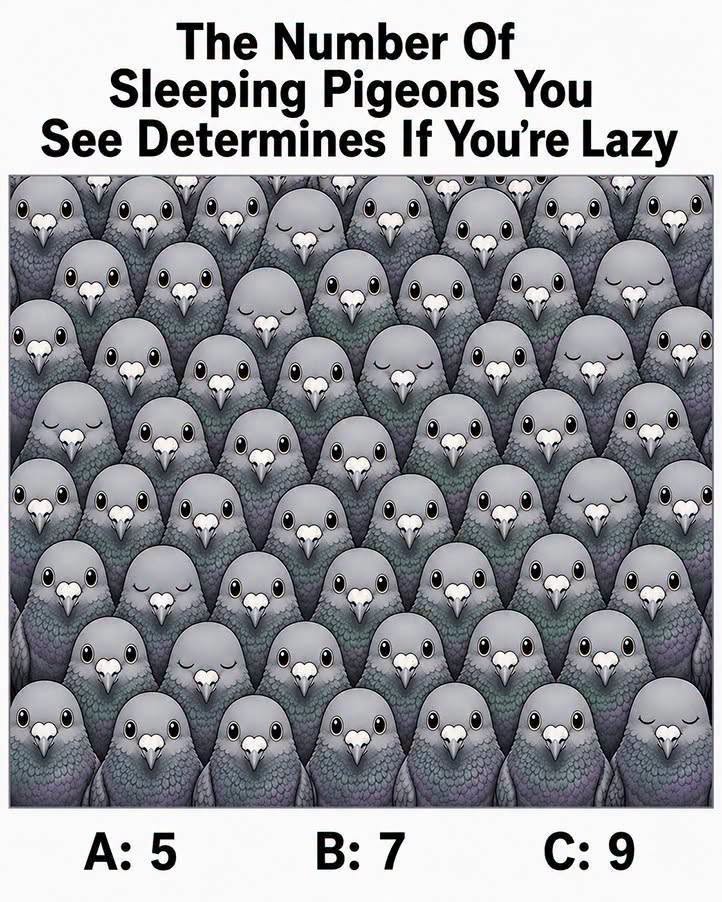
That is why the result should be treated as entertainment, not evidence. Still, it can be a useful conversation starter because people often approach the same image in very different ways.
If You Noticed 5 Pigeons First
If your first answer was 5, you may have focused on the main shape or overall scene before checking every small part of the image. People who observe this way often prefer to understand the general idea first and then decide whether the details matter.
This broader approach can be helpful when thinking about long-term plans, possibilities, or changes. It may also make it easier to avoid getting stuck on minor details. At the same time, situations that require accuracy can benefit from a slower second look.
If You Noticed 7 or 9 Pigeons First
If you noticed 7 pigeons first, you may have taken in both the full image and several smaller details at once. This balanced style can be useful when comparing options, gathering information, or trying to understand more than one side of a situation.
If your first count was 9, you may naturally pay closer attention to small details that others miss at first glance. A detail-focused approach can be an advantage when reviewing information, solving problems, or completing tasks where accuracy matters.
Of course, being detail-oriented does not mean every situation needs deep analysis. Sometimes the simplest answer is enough, and sometimes stepping back from the details can make the whole picture clearer.
What Readers Should Know
Visual perception puzzles can be fun, but they do not define your personality, predict success, or measure intelligence. What you see first can change based on the image quality, your attention level, and even how quickly you decide to answer.
The best way to enjoy this kind of test is to treat it lightly. Compare answers with friends or family, notice how differently people scan the same picture, and use it as a reminder that observation is not always as straightforward as it seems.
So, did you notice 5, 7, or 9 pigeons first? Take another look and see whether your answer changes the second time around.