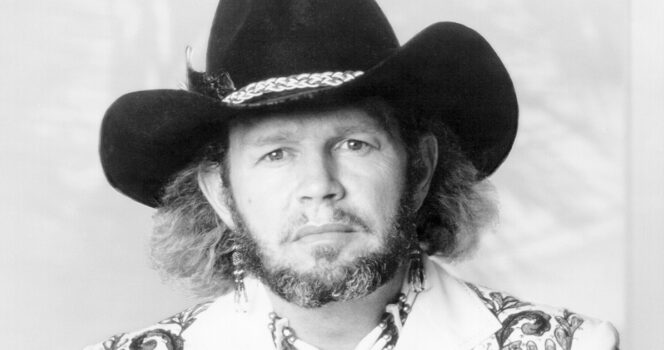
When he reached Nashville in the late 1960s, he did not arrive as a polished industry product. Like many songwriters trying to break into country music, he spent years pushing for recognition before a major success changed the direction of his career.
That moment came when Tanya Tucker recorded “Would You Lay With Me (In a Field of Stone)”. The song reached No. 1 in 1973 and helped establish Coe as a songwriter with commercial power as well as a distinct point of view.
He soon became known not only for writing songs, but for performing them in a style that resisted the smoother Nashville sound of the era. Albums such as The Mysterious Rhinestone Cowboy and Once Upon a Rhyme helped place him among the artists associated with outlaw country’s rise.
The Songs That Kept His Name in Country Music
One of Coe’s best-known recordings, “You Never Even Called Me by My Name,” became a country staple thanks to its humor, self-awareness, and playful take on what makes a country song. It remained one of the tracks most closely tied to his public identity.
His writing also reached well beyond his own albums. Coe wrote “Take This Job and Shove It,” which became a major hit for Johnny Paycheck. The song connected strongly with working-class listeners and became one of country music’s most recognizable workplace anthems.
That kind of songwriting helped explain his staying power. At his best, Coe wrote about frustration, defiance, regret, and survival in language that felt direct rather than polished. For fans, that rawness was the point.
His catalog also carried real business significance inside country music. Songs that continue to be streamed, covered, discussed, and licensed can keep an artist’s influence alive long after peak radio success, especially for writers whose work became part of the genre’s wider songbook.
The Bigger Picture
Coe’s legacy is not simple. His career included releases that drew criticism for explicit and provocative content, and those projects remained a source of division among listeners and critics. He sometimes characterized controversial material as exaggerated or satirical, but criticism around that part of his catalog followed him for years.
His later public life also included legal trouble. In 2015, a tax-related case resulted in probation and financial penalties, adding another complicated chapter to a career already marked by both admiration and scrutiny.
Even so, Coe retained a loyal audience. Many fans viewed him as an artist who refused to soften his image or chase approval, and they continued to connect with the independence and hard-edged storytelling that ran through much of his work.
His death leaves country music with a familiar question: how to remember an artist whose influence is real, but whose career also invites difficult conversations. In Coe’s case, both parts are likely to remain tied together.
For those revisiting his music now, the story is not just about one singer’s passing. It is about a turbulent era of country music, the rise of outlaw voices, and the lasting appeal of songs that sounded like they came from outside the system.
Keep reading, listening, and remembering the artists who changed the shape of country music in ways that were rarely simple.