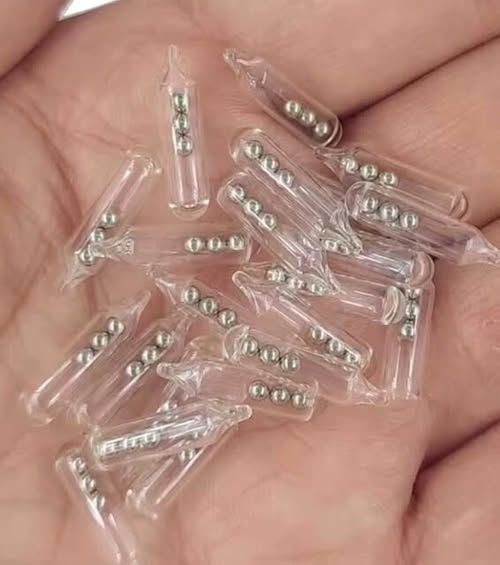
Three small balls can make the reading easier to interpret, especially in certain workshop or machinery settings where vibration might make a bubble harder to read. The balls act as a physical indicator, moving with the slope of the surface.
Where These Pieces Usually Turn Up
If you found one loose, it may have come from an old wooden, brass, or cast-iron level. It might also have been part of a machinist’s measuring tool or a specialized leveling instrument used around equipment.
Common places to spot them include vintage toolboxes, garage cleanouts, flea markets, estate sales, and antique tool shops. A sealed dome-shaped glass capsule mounted in metal is a strong sign that the piece was originally part of a leveling device.
For collectors, the value is often less about the tiny tube alone and more about the complete tool it came from. Antique machinist’s tools and well-preserved workshop instruments can be desirable because they show the craftsmanship and practical engineering of their time.
What Readers Should Know
Handle old sealed glass parts carefully. The liquid inside may be ethanol, oil, or, in some historical examples, ether. Some of those liquids can be flammable or unpleasant to inhale if the tube breaks.
If the glass is intact, it is generally safe to handle gently. Do not try to open, cut, or break it to identify the contents. If the tube is cracked or leaking, treat it as damaged glass with an unknown liquid inside and dispose of it carefully according to local guidance.
A small glass tube with tiny steel balls may not look important at first, but it can be a clue to a larger piece of industrial history. Sometimes the smallest object in an old toolbox has the most interesting story behind it.