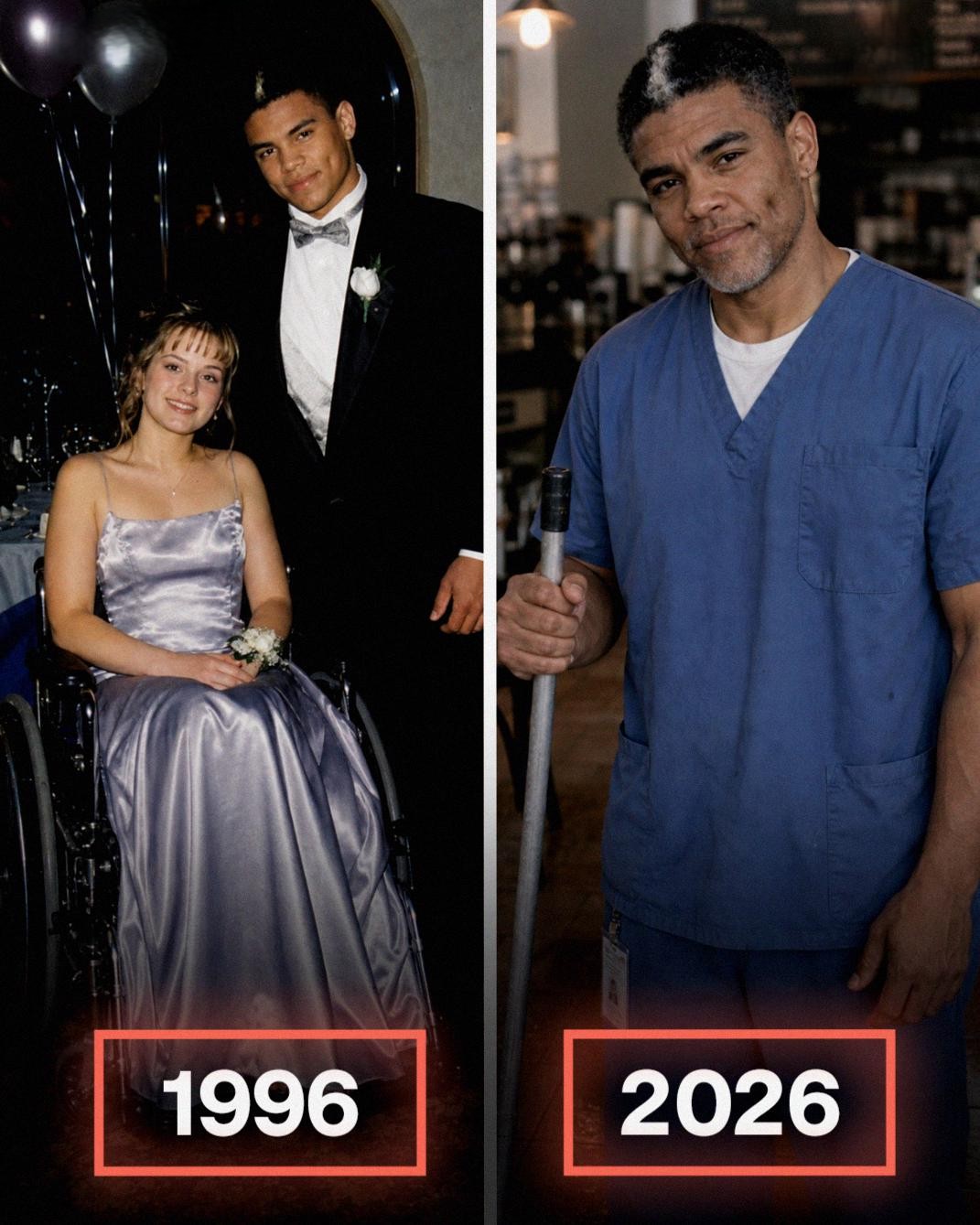
I stayed near the back wall, watching couples pose for photos and drift toward the dance floor. I tried to act like I was fine. I wasn’t.
Then a guy named Marcus—one of the popular boys everyone recognized—walked straight past the crowd and stopped in front of me.
He didn’t hesitate. He didn’t look around to see who was watching. He just smiled and asked, softly, if I wanted to dance.
I told him I couldn’t. Not like that. Not the way everyone else was dancing.
Marcus didn’t argue. He simply said, “Then we’ll do it our way.”
Before I could talk myself out of it, he rolled my wheelchair onto the dance floor like it was the most normal thing in the world. He moved with me—not around me—turning my chair gently in time with the music. He made it feel playful, like we were in on a secret. And for the first time since the accident, I laughed until my face hurt.
When the song ended, he brought me back to my table. I asked him why he did it.
Marcus shrugged, almost embarrassed, and said, “Because nobody else did.”
Not long after graduation, my family moved to another city so I could continue treatment. Life got busy, then hard, then busy again. But that one moment—someone choosing kindness without making it a performance—stayed with me for decades.
Turning Pain Into Purpose
The next thirty years weren’t easy. I fought through surgeries and setbacks. I learned to walk short distances with heavy braces. I got tired of how often the world treated accessibility like an afterthought—something added only when it was required, not because people truly cared.
So I built a career around changing that.
I studied design and architecture and eventually started my own firm. Over time, it grew into a highly respected business, known for creating inclusive, accessible public spaces—places where people didn’t have to enter through a side door or feel like they were inconveniencing everyone just by showing up.
I did well. Financially, professionally—on paper, everything looked “successful.”
But some memories never stop tapping on the glass.
A Chance Meeting That Didn’t Feel Like Chance
Three weeks ago, I was visiting a local construction site and stopped at a nearby café. I fumbled my cup and spilled hot coffee across the counter and my hand. I was wincing, trying to clean it up, when an employee hurried over with a mop.
He moved with a noticeable limp. He wore faded scrubs under a stained apron. He looked exhausted in a way that went deeper than a long shift.
When I looked up to thank him, I froze.
Even with graying hair and years etched into his face, I recognized his eyes immediately.
It was Marcus.
I came back the next afternoon, waited until he was close enough to hear me, and said, “Do you remember prom… when you asked the girl in the wheelchair to dance?”
His hand stopped mid-wipe. His expression shifted as the memory caught up with him. Then he said my name—Emily—like he couldn’t believe it was real.
He sat down across from me, and over the next hour, he told me what happened after high school.
When Responsibility Takes Everything
That summer, Marcus’s mother became seriously ill. His father left. Any plans for college, sports, and scholarships disappeared overnight.
Marcus did what a lot of people say they’d do—but few are ever forced to do. He stayed. He worked. He carried the weight.
He bounced between physically demanding jobs—warehouse work, maintenance, anything that paid. Somewhere along the way, he injured his knee badly. But time off wasn’t an option, and medical care wasn’t affordable. The injury turned into chronic pain and a permanent limp.
Now, at 50, he was working double shifts—one at an outpatient clinic, another at the café—trying to stay afloat while medical bills stacked higher than he could climb.
I told him I wanted to help.
Marcus shut down immediately. Pride can be a shield, especially for someone who’s had to survive by never asking for anything.
So I didn’t offer charity.
I offered opportunity.
A Job Offer That Respected His Dignity
My firm was designing a large adaptive recreation center, and we needed real-world insight—someone who understood mobility limitations, athletic identity, and what it feels like when your body won’t cooperate with your goals.
I asked Marcus to join the project as a paid community accessibility consultant.
He hesitated, but he agreed.
And he changed everything.
In his first meeting, he studied the blueprints and said something my senior team needed to hear:
“It’s accessible on paper, but it doesn’t feel welcoming.”
He pointed out details most people overlook—like how often ramps are placed near loading areas, or how “accessible entrances” end up feeling like an afterthought. He explained that people don’t just want to get inside a building; they want to feel like they belong there.
My team listened. The project improved overnight.
Recovery Isn’t Just Physical
As Marcus settled into the role, I helped him find a trusted orthopedic specialist. With proper treatment, his pain decreased and his mobility improved—proof of what can happen when someone finally gets the care they should have had years ago.
He started mentoring teens with new injuries, training staff, and speaking at community events. He wasn’t just working a job—he was rebuilding a life.
One evening, I found an old prom photo tucked away in a keepsake box: Marcus and me, smiling like two kids who didn’t know how much that moment would matter later.
I brought it to the office and set it on my desk.
When Marcus saw it, his face softened. He admitted he’d tried to find me after graduation, but my family had moved without leaving an address. Then he said something that made the air in the room feel different:
Through everything—every hard year, every lost dream—I was the only girl he’d ever hoped to see again.
Full Circle, One More Dance
Thirty years of bad timing can’t erase what kindness started. Today, Marcus and I are building a life together—two people who know how quickly everything can change, and how powerful it is when someone chooses to show up anyway.
At the grand opening of the recreation center, with the community gathered and the doors finally open, Marcus walked up to me and held out his hand.
“Would you like to dance?” he asked.
I took his hand, smiling, because we already knew exactly how.
If this story moved you, share it with someone who believes small acts of kindness don’t matter—and tell me in the comments: what’s one moment you’ll never forget because someone chose to include you?