On an ordinary morning in his Manhattan office—glass walls, skyline views, assistants moving fast—an envelope landed on his desk that didn’t fit the scene. It was handwritten. No return address. No corporate logo. Just a name he hadn’t allowed himself to say in years.
Emily.
He hadn’t heard from her in nearly a decade. And he’d made sure of that.
Inside the envelope was no speech, no accusation, no emotional trap. Only an address in rural Kentucky—so far off the grid his navigation system stalled before confirming it was real.
Daniel stared at it longer than he wanted to admit.
For the first time in years, he stopped chasing the next milestone.
A CEO Who Finally Hit Pause
He canceled meetings. Ignored calls. Left the tailored suits behind. He didn’t take his driver. Instead, he rented a plain van—anonymous, forgettable, the opposite of his usual image—and headed south.
The city thinned into highways. Highways softened into farmland. The constant buzz of profit, performance, and pressure faded—until his own thoughts became the loudest thing in the vehicle.
He rehearsed what he’d say when he arrived: a clean apology, a controlled explanation, a version of events that would let him keep his dignity.
But one feeling kept interrupting the script:
Whatever is waiting at the end of this road could dismantle the story he’d told himself for years.
The House He Never Expected to See
When he finally pulled up to the address, he didn’t recognize the life in front of him.
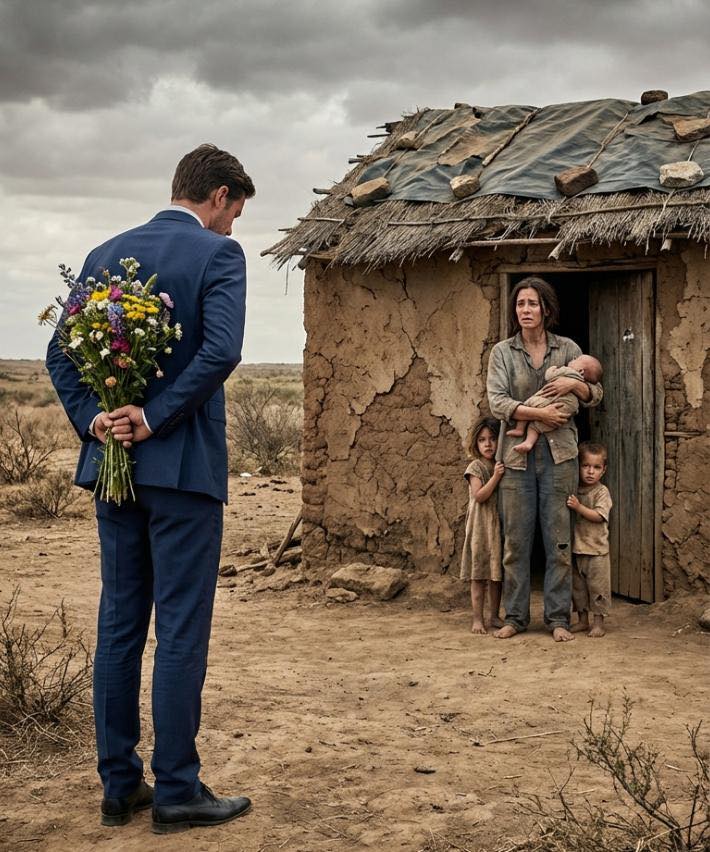
The house was small and tired, leaning slightly as if time had pressed down unevenly. Faded paint. A sagging roof. Porch steps cracked from years of use. It was the kind of place his world usually drove past without noticing.
Daniel stepped out holding a modest bouquet of wildflowers he’d picked up on the way. Standing there, the gesture felt almost ridiculous—too small for what he’d done, too late to mean much.
Then the door opened.
Emily stood in the doorway—older, yes, but unmistakably herself. Silver threaded through her hair. Hands marked by work. But what stunned him wasn’t her appearance.
It was her expression.
No rage. No theatrics. No bitterness on display.
Just calm.
“What are you doing here, Daniel?” she asked.
“Do You Want the Truth—or Just Less Guilt?”
Inside, the home was simple but cared for. Mismatched furniture, clean surfaces, nothing wasted. The kind of space built on necessity and discipline—not aesthetics or status.
Daniel tried to understand how she ended up here.
Emily didn’t answer right away. She studied him like she was deciding whether he deserved honesty.
“Do you actually want to know,” she said, “or do you just want to feel less responsible?”
The question landed harder than any accusation.
Because Daniel already knew the short version: when he cut her out of his life, he didn’t simply walk away. He made calls. He planted doubts. He used influence like a weapon.
He didn’t just end the relationship.
He damaged her reputation.
“You didn’t just leave me,” she said quietly. “You made sure no one else would take me in either.”
After that, she tried to rebuild—selling what she could, searching for work, pushing through rejection after rejection. But the doors didn’t just close. They stayed closed.
Money ran out. Housing disappeared. There were months in a shelter. Eventually she found work cleaning hospital rooms—long shifts, low pay, no safety net.
Then her grandmother passed away and left her this house—one place Daniel couldn’t reach, couldn’t control, couldn’t erase.
Daniel listened, and for the first time, his achievements felt less like proof of greatness and more like evidence of what power can destroy.
Why He Came (And Why It Wasn’t Noble)
When Daniel finally explained why he’d shown up, it wasn’t the heroic confession he had imagined on the drive down.
His company—his billion-dollar empire—was in trouble. Years of aggressive decisions, made without the balance Emily once brought to his thinking, had pushed the business into a corner he couldn’t escape alone.
He needed help.
Her help.
But underneath that request was something more uncomfortable: he owed her a truth he’d avoided for years.
He owed her respect. Accountability. A real acknowledgment of what he’d taken.
The Plans He Ignored—That Could Save Everything
Emily crossed the room and opened a small wooden box. Inside was a worn folder filled with detailed notes and business strategy—ideas she had developed years ago when she still believed Daniel would listen.
Plans for long-term growth. Ethical leadership. Sustainable operations. A vision that focused on people and profitability—without sacrificing one for the other.
Daniel recognized it immediately.
He’d dismissed it back then. Too slow, too idealistic, too “soft.”
Emily looked at him and said, “It could have worked ten years ago. Now it depends on whether you’re willing to actually change.”
Not for optics. Not for a quarterly report. Not for a quick PR win.
For real.
Rebuilding the Company—and Something Bigger Than the Company
They worked together again, but the power dynamic had shifted. Emily wasn’t trying to be accepted anymore. She didn’t need his approval to validate her value.
And she wasn’t interested in saving a business just so a wealthy man could keep his legacy intact.
Her focus was different now: the employees behind the numbers, the communities affected by corporate decisions, the long-term impact that doesn’t show up in a simple spreadsheet.
At first, Daniel struggled to understand. He’d been trained to measure everything—market share, margins, valuation, influence.
But in Kentucky, he saw a world where problems weren’t solved by money alone. He met people who worked hard and still stayed stuck. Families who didn’t need a motivational quote—they needed fair opportunities, stable systems, and leaders who didn’t treat human lives like collateral.
Slowly, the company began to stabilize using Emily’s strategy. Investors returned. Operations improved. The brand regained trust.
It was the outcome Daniel had chased his entire life.
Yet the biggest shift wasn’t financial.
It was personal.
The Truth That Made Him Walk Away From “Everything”
Daniel had spent decades chasing measurable success—numbers he could point to as proof that his life meant something.
But standing there, watching what Emily had survived and still built, he realized the empire wasn’t the most important thing he could hold onto.
Because somewhere along the way, he’d lost something that no amount of money could replace: integrity, connection, and the kind of peace that doesn’t depend on winning.
When they eventually stood side by side again, it wasn’t a fairytale reset. It wasn’t the past returning.
It was something new—built on accountability, earned trust, and a different definition of power.
He thought walking away from “everything” would feel like failure.
Instead, it felt like the first honest decision he’d made in years.
If this story made you think about ambition, leadership, or the hidden cost of success, share your takeaway in the comments—and pass it to someone who needs a reminder that it’s never too late to choose differently.