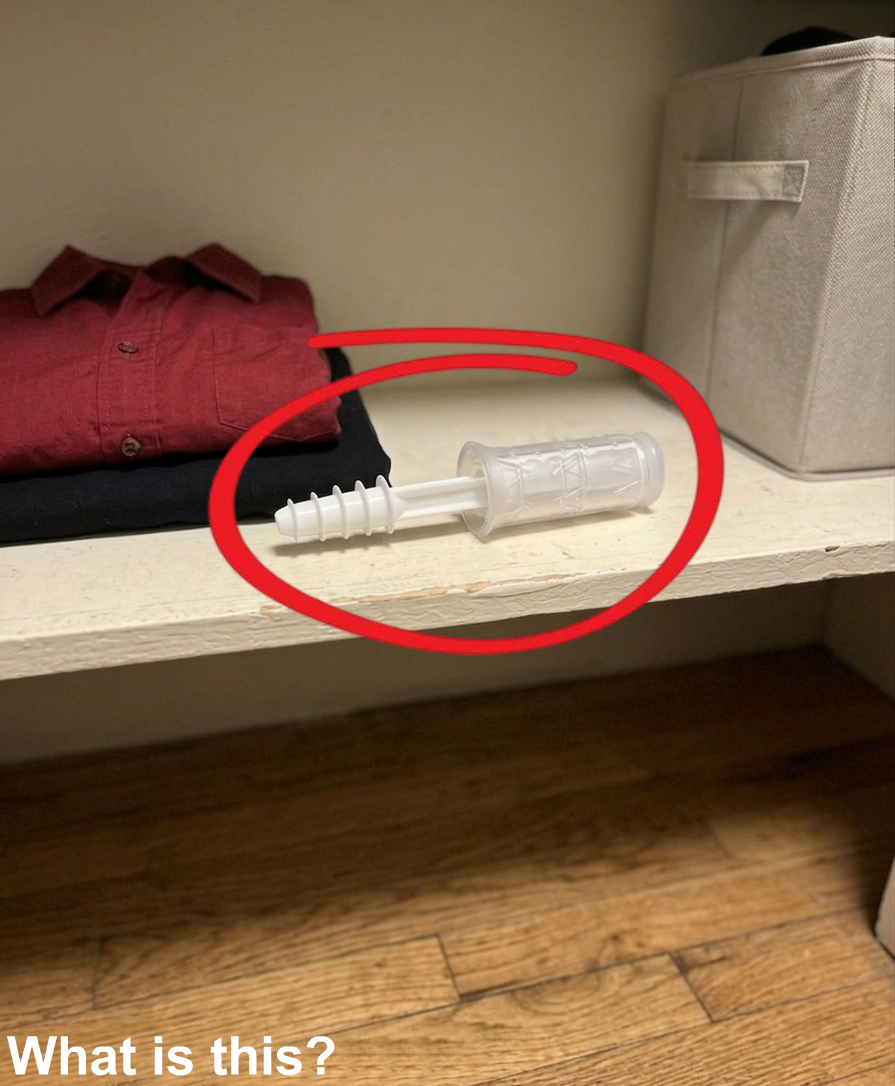
The answer came back almost instantly. It was an applicator nozzle for silicone sealant.
Not evidence of a secret. Not a sign of betrayal. Just a household tool, likely connected to some kind of repair or DIY job.
The realization brought relief, but also embarrassment. He had taken an ordinary object and, for a few tense minutes, turned it into proof of a story that existed only in his imagination.
Why This Matters
The moment is relatable because many people have been there in some form. A missed call, a vague message, a strange receipt, or an unfamiliar item can quickly become something bigger when trust feels fragile or anxiety takes the lead.
It is also a reminder that not every mystery needs an emotional reaction first. Sometimes the most useful step is the simplest one: pause, check the facts, and avoid building a conclusion before there is enough information.
In relationships, suspicion can grow quickly when it is fed by fear instead of communication. This story did not end in a dramatic confrontation, but in a small moment of self-awareness.
The Bigger Picture
Every home has random objects that make sense to one person and confuse another: tools, spare parts, packaging, repair accessories, craft supplies, or items saved for later. Without context, even harmless things can look strange.
What made this moment stand out was not the silicone nozzle itself, but the reaction it caused. It showed how easily the mind can connect unrelated details when it is already worried.
In the end, the discovery was harmless. The lesson was not: trust can feel delicate, and sometimes protecting it starts with taking a breath before assuming the worst.
It is a small story, but one worth remembering the next time an ordinary object starts to look like something more.