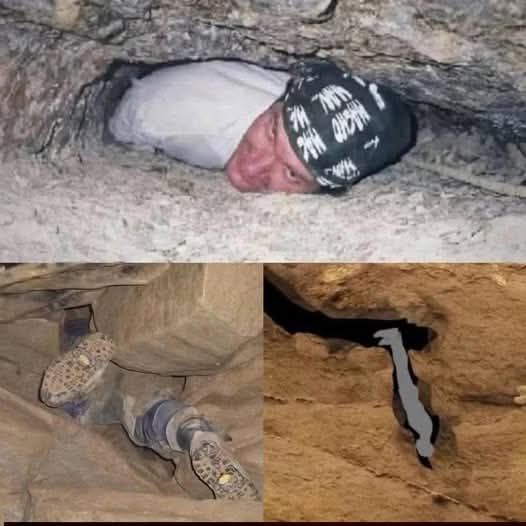
The Hidden Danger of “Just One More Crawl”
There’s a reason people are drawn to caves, tunnels, and underground passages. They promise mystery and discovery—an experience that feels raw, real, and far from everyday life. For adventure seekers, it’s hard to ignore that pull.
And a tight opening rarely looks like a trap at first. It looks like a route. A narrow squeeze, sure—but something you can manage if you’re careful. Something that might open up into a bigger chamber on the other side.
At first, it feels controlled.
Then you shift forward one inch too far—and suddenly the math changes.
Why Getting Stuck Happens Faster Than You Think
In a confined rock crevice, your body can become “locked” into the shape of the passage. Shoulders compress. The torso pins. Legs stretch behind you with almost no traction to push backward. Turning around stops being an option.
And then breathing becomes part of the problem.
In extreme confined spaces, the danger isn’t only oxygen—it’s pressure. If your chest can’t expand normally, each breath feels smaller than it should. The body interprets that restriction as an emergency, and the survival response kicks in fast: heart rate spikes, thoughts race, and panic tries to take the wheel.
The instinct is to fight your way out.
But in tight-space entrapment, force often makes it worse. Pushing harder can wedge you deeper, tighten the pinch points, and drain energy you can’t afford to lose.
Claustrophobia Isn’t the Only Threat—Panic Is
People think claustrophobia is something you either have or you don’t. In reality, even calm, experienced hikers can feel it when stone is inches from their face and movement disappears.
Time distorts. Seconds stretch. The air feels heavier. Your mind starts narrating worst-case outcomes. And once panic rises, decision-making drops.
That’s why in many cave rescue situations, the most valuable skill isn’t strength—it’s control.
How Experienced Cavers Escape Tight Passages
Seasoned cave explorers train for tight squeezes because they understand a counterintuitive truth: the way out usually isn’t brute force.
It’s technique.
- Micro-movements over big pushes: Small adjustments—an angled shoulder, a shifted hip—can create a tiny pocket of space that changes everything.
- Breath control: Slowing breathing reduces panic and can slightly reduce chest expansion at the wrong moment, helping you reposition instead of getting pinned.
- Reducing tension: Muscles that are clenched make your body “bigger.” Relaxation can be the difference between stuck and sliding free.
- Knowing when to stop: Sometimes the safest move is no move at all—pause, assess, and avoid wedging deeper.
Stillness feels wrong when you’re trapped. Everything in you screams to move. But in confined-space survival, staying calm can be the first real step toward escaping.
The Real Safety Issue: Going In Unprepared
Caves and underground systems are unpredictable. A passage that looks manageable can narrow suddenly. A stable surface can shift. Visibility can lie to you. Even skilled explorers can misjudge a squeeze when conditions change.
This is why responsible caving isn’t just “adventure”—it’s risk management.
Basic safety planning can be lifesaving:
- Proper helmet and lighting (with backups)
- Clear communication and a plan for check-ins
- Never going alone in tight or unfamiliar systems
- Someone outside knowing your location and expected return time
- Understanding the route instead of improvising deeper underground
In a space that tight, even a small advantage matters—an extra light, a partner’s guidance, a calm voice telling you how to angle your shoulders, or the ability to call for help.
Curiosity Builds Discovery—But It Also Creates Consequences
There’s something bigger happening in moments like this. The same curiosity that pulls someone into a cave is the same force that drives exploration, invention, and progress. It’s human nature to want to see what’s hidden.
But curiosity without caution turns quickly into risk.
And underground, risk doesn’t negotiate.
This is the exact point where intention meets consequence—where a decision to explore becomes a situation that demands survival thinking.
If He Got Out, It Wasn’t Because He Fought the Rock
If the person managed to free themselves, it likely happened through patience, not power. Inch-by-inch repositioning. Slower breathing. A careful shift of weight. Maybe guidance from someone outside the crevice—directions the trapped person couldn’t see from inside.
Because in a passage that doesn’t flex, you can’t “win” by forcing it.
You win by staying calm enough to think.
The Takeaway That Sticks With You
Images like this leave a mark because they reveal how quickly control can vanish. How a space that seems manageable can become a trap without warning. And how important it is to respect environments that don’t adapt to human error.
This isn’t only about someone stuck in a narrow crack.
It’s about the line we all walk when we push beyond what we know—the balance between curiosity and caution, between moving forward and knowing when to stop.
Sometimes the way out isn’t pushing harder.
It’s thinking clearer.
CTA: Have you ever explored a cave, tunnel, or tight trail that made your nerves spike? Share your experience in the comments—and if you want more true-to-life outdoor survival lessons and safety tips, bookmark this page and check back for the next story.