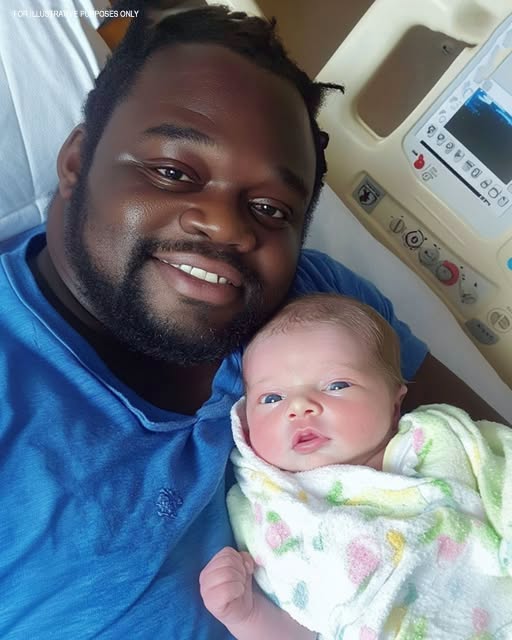
Naomi admitted she had wanted to explain it before they had a child, but fear kept stopping her. From the drawer beside her hospital bed, she pulled out old family photographs.
One showed an elderly white woman beside a dark-skinned man. Another showed Naomi’s mother as a little girl, bearing a strong resemblance to Naomi herself. As he compared the pictures with the baby in front of him, the connection became harder to ignore.
Naomi told him their relatives had always spoken about an unusual combination of inherited traits. Most of the time, no one noticed. But sometimes, a child was born with features that seemed unexpected to outsiders.
The DNA Test Brought the Answer
As they were talking, another knock came at the door. A genetic counselor entered and placed a folder on the bedside table. Naomi had apparently prepared for the possibility that this conversation might happen.
The counselor explained that appearance alone is not reliable proof of parentage. Children can inherit recessive traits from both parents, and family genetics can be more complicated than people assume.
To remove any doubt, the counselor offered to arrange a DNA test. Naomi agreed immediately. She told her husband that if the result showed the baby was not his, she would not ask him for anything.
Three days later, he waited for the results barely able to breathe. When the genetic counselor gave the answer, it was clear: the probability of paternity was 99.999%.
He returned to Naomi’s room overwhelmed with guilt. She told him she understood why he had reacted the way he did, but he knew the truth: he had accused her before trusting her.
Then their daughter wrapped one tiny hand around his finger, and he realized how close he had come to walking away from his family.
Why This Matters
The story is a reminder that family resemblance is not always simple. Genetics can skip generations, reappear unexpectedly, and create features that surprise even close relatives. In sensitive situations, medical testing and professional guidance can provide clarity before assumptions cause lasting harm.
As their daughter grew, strangers sometimes asked uncomfortable questions. Her parents learned that she did not owe anyone a full explanation of her family tree.
Years later, she came home from school upset because a boy had told her he could not be her father since they did not look alike. Instead of getting angry, he sat her on his lap and opened a box of family photographs.
Inside were pictures of relatives who shared her blonde hair and blue eyes, including a distant cousin. He told her she had not gotten her looks from strangers. She belonged to a family with a story deeper than appearances.
That night, he found the old envelope Naomi had once kept hidden. Inside was a photograph of him holding their daughter for the first time after the DNA results came back.
Never let appearances speak louder than love—or louder than the truth.
Some stories stay with us because they ask a difficult question: how much damage can doubt do before we stop and listen?