The Pattern Had Been Building for Years
Nora had long been the person her relatives leaned on when something needed to be handled. If someone needed a ride, money, a place to sleep, or help sorting out a problem, she was usually the first call.
None of those requests seemed dramatic on their own. That was part of the issue. One favor became another. A short stay became an expectation. Her time and resources were often discussed before she had even agreed to offer them.
Because Nora rarely pushed back, her family became used to her saying yes. Over time, her helpfulness stopped being treated as a choice and started being treated like a family service.
The lake house was different. She had worked for years to afford it. It was not a shared vacation rental, a free summer camp, or overflow lodging for relatives. It was her home, and she wanted one place where her answer actually mattered.
She Set the Boundary Before They Arrived
As the reunion plans became more ambitious, Nora decided not to argue in circles. She did not send a long speech or try to convince everyone that her feelings were valid.
Instead, she handled the practical side. She updated the property’s security settings, changed access codes, confirmed the ownership records, and coordinated with her property manager so only approved visitors could enter.
For a homeowner, those steps were not extreme. They were basic property protection. Access codes, gates, cameras, and clear visitor rules exist for a reason, especially when a private home is being treated like a public family asset.
Nora also understood something important: a boundary that depends on everyone else being reasonable is not much of a boundary. This time, she made sure the answer was clear before anyone arrived with assumptions.
The Trailer Made Everything Clear
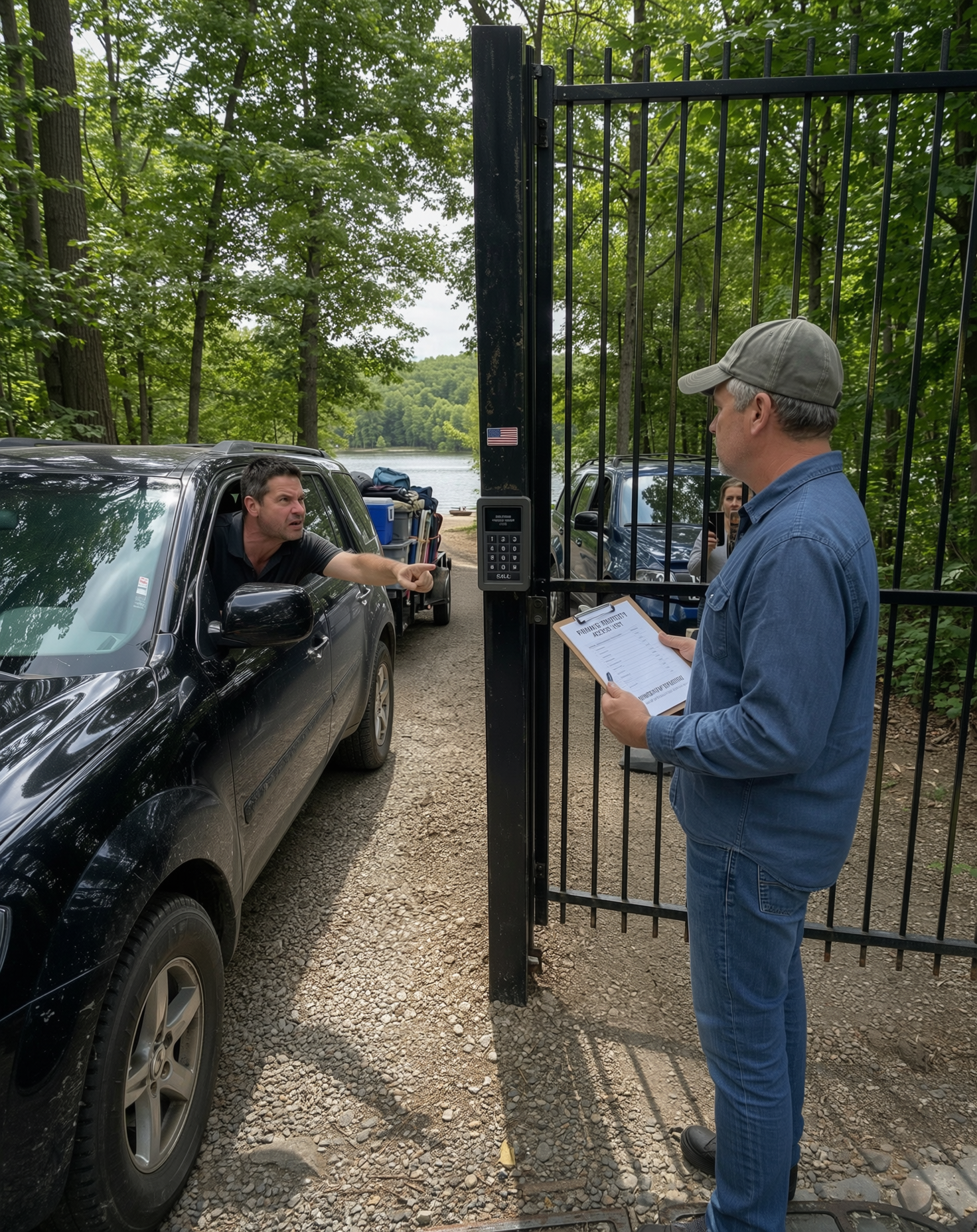
That Friday afternoon, Nora was at work when a security alert came through from the lake house cameras. She opened the live feed and saw her father’s SUV at the gate.
Behind him was her sister’s minivan. Behind that was a rented moving trailer.
It was packed with bicycles, coolers, lawn chairs, storage bins, luggage, and enough supplies to suggest far more than a weekend reunion. Whatever her family had told themselves, they had arrived prepared for an extended stay.
Then the gate stayed closed.
The phone calls started almost immediately. Some relatives were confused. Others were angry. They said plans had already been made. They said the children had been excited. They acted as if Nora had disrupted an agreement, even though she had never given permission for the property to be used that way.
Nora did not raise her voice. She simply reminded them that the lake house belonged to her, and that no one had been approved to stay there for the summer.
For the first time, the family’s assumptions ran into a locked gate.
Why This Matters
The situation was not really about a vacation house. It was about control, consent, and the quiet pressure that can build inside families when one person is always expected to give.
Family closeness does not erase ownership. A relative’s home is still private property. Their time is still theirs. Their savings, space, and emotional energy are not automatically available just because someone else made plans.
That can be especially difficult when the person setting the boundary has spent years being the dependable one. Saying no may feel harsh at first, but it can also be the first honest step toward healthier relationships.
Nora’s family eventually left that afternoon, upset and disappointed. In the days that followed, messages and criticism continued. Some tried to make her feel guilty for ruining the trip.
But a few mornings later, sitting on her porch and looking out at the lake, Nora understood the situation differently. Closing the gate had not been about rejecting her family. It had been about refusing to give up the life she had worked to build.
Kindness can include generosity, but it does not require unlimited access. Sometimes protecting your peace begins with making sure the gate only opens when you choose to open it.