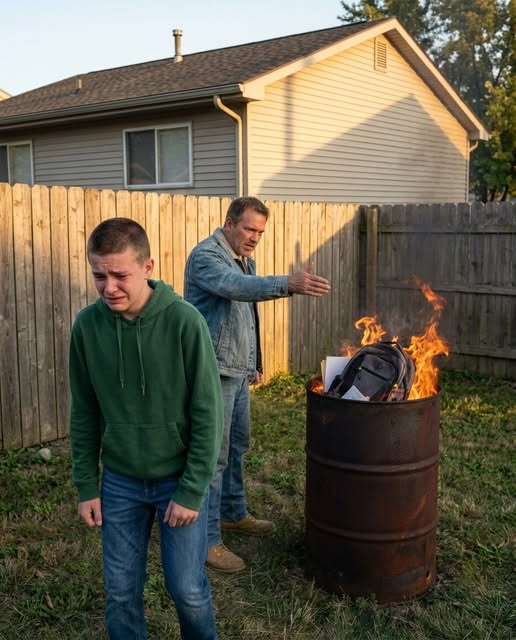
His father saw that as betrayal. To him, his son was not a young adult building a future. He was labor, obedience, and an extension of the family name. When the son chose a different path, the father tried to make leaving as painful as possible.
But earlier that day, the son had quietly moved his essential documents, small savings, and acceptance letter into his friend Nate’s car. By the time the flames rose in the yard, the fire was no longer a full destruction of his life. It was a final confirmation that he had to go.
He left that night with 43 dollars, one backpack, and a promise to himself: if he ever gained power, he would not use it the way his father had.
Building a Life From the Ground Up
Columbus was not easy. Survival came first. He slept wherever he could, took hard jobs, and spent his days doing physical work while learning a trade at night.
He worked demolition, framed houses, patched roofs, and studied the people who knew how to build well. The work was exhausting, but it gave him something his father could not take away: skill. Over time, those skills became income, then stability, then a business.
By 22, he was leading crews. By 24, he had earned his license and bought a used pickup truck. He named his company Hayes Restoration and Build, not to honor the father who shared the name, but to change what the name meant.
His company found its place in damaged properties. He took jobs others avoided: neglected houses, structural problems, repairs that required patience instead of shortcuts. In the process, he became good at seeing value where other people saw only loss.
That eye for restoration eventually led him to a listing that stopped him cold. His father’s house was in trouble. The property had fallen behind on taxes, carried liens, and showed obvious signs of neglect. For many real estate buyers, it would have looked like a risky investment heading toward auction. To him, it looked like a circle he had never expected to close.
The Bigger Picture
Property auctions, unpaid taxes, and liens can turn a family home into a financial liability quickly. For contractors and small real estate investors, distressed homes can become business opportunities, but they also come with repair costs, legal steps, and paperwork that cannot be ignored.
That mattered to him. When he bought the house at auction, he did not rush in with anger. He followed the proper process. He understood ownership, legal procedure, and documentation because he had built his life around doing things the right way.
After the sale was completed, he drove to the property. The house that once felt like a fortress now looked smaller, worn down by time and neglect. The porch sagged. The yard was overgrown. The place that had once held so much fear was now just a building in need of work.
He stood near the same driveway where the fire had burned years earlier and took a photo of himself in front of the home. Then he called the number he had avoided for six years.
When his father answered, irritated as ever, he simply told him to check the mailbox and ended the call.
Inside was the photo. It showed the son standing in front of the house his father no longer controlled.
He did not throw his father out that day. He did not stage a scene or repeat the cruelty that had once been used against him. He let the legal process move as it was supposed to. That restraint became the point. The power was real because it did not need to be loud.
When his father finally called demanding answers, the son told him the truth: he had been an excellent teacher, but only because he had shown what power looks like in the wrong hands. The son had learned the lesson and chosen not to copy it.
A month later, the process was finished and his father was gone.
Then the son did what he knew best. He repaired the house. He rebuilt what had rotted, restored what could be saved, and turned the neglected property into something solid again.
When the renovation was complete, he sold it. Instead of spending the profit on a status symbol, he put the money into a program that helps repair housing for young people aging out of foster care. They, too, knew what it meant to start over without a safe place to land.
For years, he thought victory would mean making his father feel the same loss he had felt beside that burning barrel. In the end, victory looked different. It was not revenge. It was ownership of his own life.
The fire did not erase him. It became the place where he started building.