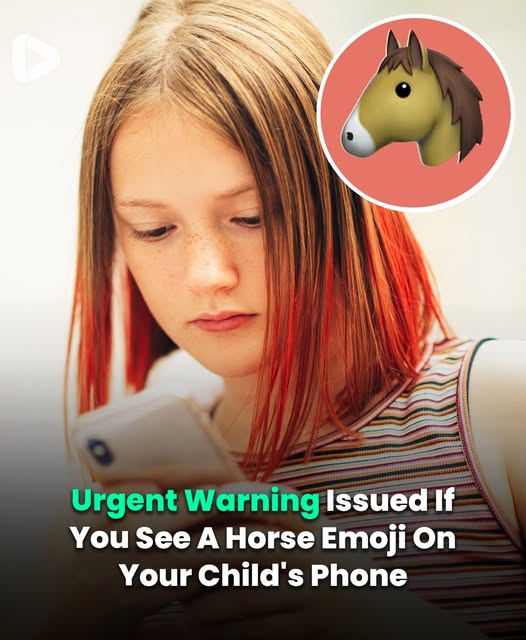
Parents often view emojis as harmless parts of everyday conversations, but law enforcement agencies and online safety experts caution that some symbols can occasionally be used as coded language in digital communications.
One emoji that has attracted attention is the horse 🐴, which, depending on the context, may be used as slang for ketamine or referenced in conversations involving inappropriate online activity. Authorities emphasize that the meaning of any emoji depends heavily on the surrounding conversation and should never be interpreted in isolation.
Why Authorities Encourage Awareness
Police and digital safety professionals advise parents to stay informed about evolving online slang. Because emojis can have multiple meanings, some individuals may use them as shorthand in private conversations, making it difficult for adults to recognize potentially concerning discussions.
Experts recommend focusing on the overall context of messages rather than assuming a specific meaning from a single emoji. Open communication and digital literacy remain some of the most effective tools for helping young people stay safe online.
Other Emojis That May Have Alternate Meanings
According to various online safety resources, certain emojis have occasionally been associated with slang or coded references:
- Snowman ⛄ / Snowflake ❄️ – Sometimes used as a reference to cocaine, often called “snow.”
- School Bus 🚌 – Reportedly used in some conversations as slang for Xanax.
- Blowfish 🐡 – May be used as a reference to the term “blow,” which can relate to illegal drugs.
- Alien 👽 / Demon 👹 / Skull 💀 – Sometimes associated with discussions involving MDMA or ecstasy.
- Balloon 🎈 – Can be used to refer to nitrous oxide, commonly known as “laughing gas.”
It is important to remember that these emojis are frequently used in completely innocent ways, and their meaning depends on the context in which they appear.
continue reading on the next page…