⚖️ 3. Choose the Heaviest One
When comparing watermelons of similar size, pick the one that feels heavier.
Why It Works
Extra weight usually means the fruit contains more water, making it juicier and more refreshing.
💚 4. Look at the Rind
A ripe watermelon should have:
- A dull or matte finish rather than a shiny surface
- Strong, well-defined green stripes
- Firm, unbroken skin without soft spots or major bruises
A glossy rind can sometimes indicate the fruit was picked before it fully ripened.
🔄 5. Look for a Uniform Shape
Whether round or oval, choose a watermelon with a consistent shape.
Avoid melons with noticeable bumps, dents, or irregular growth, as these can occasionally indicate uneven development.
🌿 6. Check the Stem
If the stem is still attached:
- A dry, brown stem usually means the watermelon ripened naturally before harvest.
- A green stem may indicate it was picked a little early.
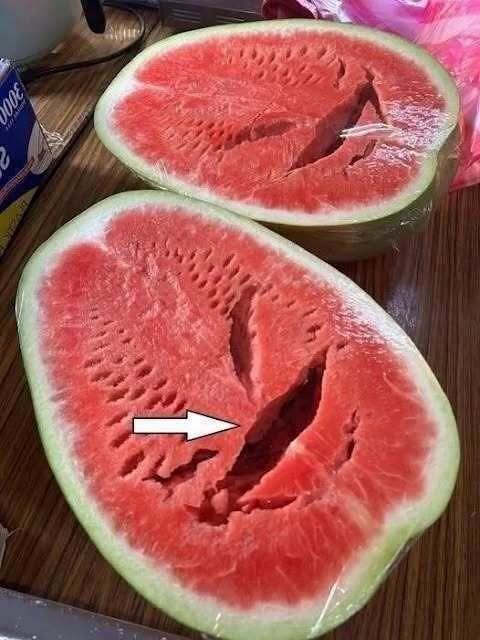
🍉 What About Cracks Inside a Watermelon?
Sometimes a watermelon may have internal cracks or hollow spaces when cut open.
In many cases, these are caused by natural growing conditions, such as rapid growth, weather changes, or fluctuations in water availability. They do not automatically mean the watermelon is unsafe to eat.
However, you should avoid eating the watermelon if you notice signs of spoilage, including:
- An unpleasant or sour smell
- Slimy or mushy flesh
- Mold
- Discoloration accompanied by an off taste
If the fruit smells fresh and tastes normal, small internal cracks alone are generally not considered a food safety concern.