When I arrived, that’s exactly what happened. Oliver barreled toward me like a tiny tornado of joy, arms wrapped around my waist, laughing like nothing else mattered. For a moment, the world felt simple again.
But as I stepped inside, I realized something wasn’t right.
The House Didn’t Look “Messy”—It Looked Overwhelmed
The kitchen sink was full of dishes—some rinsed, some not. Toys were scattered across the floor like someone had hit pause mid-play. Laundry sat in quiet piles that didn’t look careless… just unfinished.
It wasn’t the kind of clutter that comes from laziness. It was the kind that comes from people running on empty.
Lila moved quickly, giving me the basics—Oliver’s routine, where things were, what time bedtime usually happened. She thanked me, but her smile didn’t fully reach her eyes. Whatever this trip was, it didn’t feel like a fun getaway. It felt like something they needed just to catch their breath.
When the door closed behind her, I stood still for a second and took it all in.
This weekend wasn’t going to be only about keeping Oliver safe and entertained.
It was going to be about helping them breathe again.
I Started Small—One Room, One Task at a Time
I didn’t storm through the house with a “fix everything” attitude. I’ve learned that when a family is stressed, perfection isn’t the goal—relief is.
So I started in the kitchen. I cleared the counters, washed the dishes, wiped everything down until the space felt usable again. Oliver followed me like a cheerful shadow, asking questions, narrating his own little world, offering “help” in the way only a child can.
We took a quick trip to the store for a few missing essentials—basic groceries and household items. Oliver held onto the cart like it was his job, pointing out what he thought we “definitely needed” and negotiating snacks like a tiny attorney.
Back home, I put laundry in, switched it over, folded it, and stacked it neatly. Toys went back where they belonged. Floors cleared. The house didn’t become a showroom—it became calmer. Lighter.
And in between, we actually lived.
The Best Part of the Weekend Wasn’t the Cleaning
Oliver and I baked cookies together, which turned into a full-blown flour situation. There was batter where batter shouldn’t be, and we laughed until my sides hurt. We read stories. Played games. Sat quietly at times without the pressure to constantly “do” something.
Those were the moments that mattered.
Because helping a family isn’t only about chores—it’s about presence. It’s about making a child feel secure, and giving exhausted parents the kind of support that doesn’t come with strings attached.
Sunday Came—and the House Felt Different
By the time the weekend was ending, the change wasn’t dramatic, but it was real. The air felt calmer. The rooms felt manageable. The kind of difference you notice the second you walk through the door—even if you can’t explain it in one sentence.
I gathered my things and did one last scan of the kitchen.
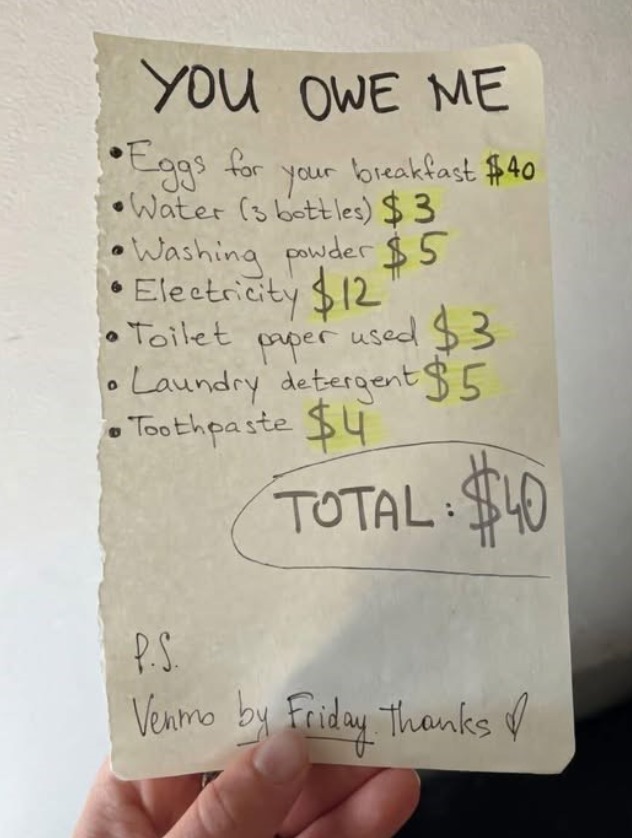
That’s when I saw it on the counter: a written list of expenses. Groceries. Small household items. A total at the bottom.
And a request to be paid back.
I read it twice, just to make sure I wasn’t misunderstanding.
What I felt wasn’t explosive anger. It was quieter than that—more like a heavy pause in my chest. Because none of what I’d done had been about money. I wasn’t keeping score. I wasn’t tracking “value.” I was trying to help my daughter and grandson feel okay again.
I didn’t make a scene. I didn’t call anyone in the moment. I simply looked around one more time, made sure Oliver was settled, and left.
But I carried that note with me—mentally and emotionally.
Then Something Shifted
Later, Lucas reached out, and his tone was different than I expected—softer, more aware. He had noticed the changes in the house. He had seen the effort, the time, the care behind everything that got done while they were gone.
He didn’t give a long speech. He didn’t need to.
What happened next wasn’t about the amount of money. It was about what it represented: recognition. The understanding that what I gave that weekend went far beyond receipts and grocery totals.
Because support isn’t just “watching the kid.” It’s the emotional labor, the mental load, the hours spent restoring order so a family can function again.
What That Weekend Taught Me
The whole thing started as a simple favor. But it ended as a reminder that care often goes unnoticed until someone steps back and truly sees it. That effort can be invisible—until it suddenly isn’t.
And sometimes, the biggest changes aren’t the ones you can photograph.
They’re the ones you feel.
If this story hit close to home, share your thoughts in the comments—have you ever helped family and felt unappreciated at first? And if you’d like more real-life stories about family, boundaries, and rebuilding connection, stick around and read the next one.