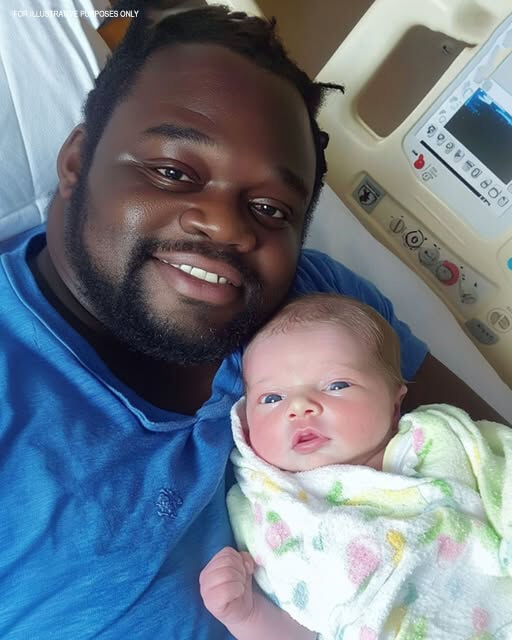
On her tiny foot was a distinct birthmark—an unmistakable shape in an unmistakable spot. The same kind I’ve had my entire life. I’ve covered it with socks, joked about it, and forgotten it existed most days. But in that moment, it felt like a lifeline.
I breathed out, thinking maybe the panic would pass.
It didn’t—because my mother was already moving in.
When My Mother Crossed a Line, I Finally Saw the Real Problem
My mom leaned closer, eyes narrowed like she was inspecting evidence. Before I could react, she tried to rub the birthmark on my daughter’s foot, as if it were dirt that could be wiped away.
That was the moment something in me snapped.
Not because of the gesture alone—but because I understood what it represented: the need to control the story, to protect a “family image,” to decide who counts and who doesn’t. My baby wasn’t even a day old, and already someone was trying to reject her.
I looked at my wife—exhausted, emotional, and still trying to process becoming a mom—and I realized she was watching to see what I would do next.
And so was I.
I chose my wife and my child, even if it meant upsetting the people who raised me. Even if it meant being judged, criticized, or shut out.
Because in that room, the only thing that mattered was protecting my family—the one I helped create.
The DNA Test Wasn’t About Doubt—It Was About Ending the Noise
When emotions run high, “proof” becomes a weapon. I didn’t want my daughter’s life to start with whispers, accusations, and ugly assumptions.
So we agreed to a DNA test—not because my heart didn’t recognize her, but because I wanted the attacks to stop. I wanted peace for my wife. I wanted certainty for anyone who was suddenly acting like love required paperwork.
When the results came back, they confirmed what I already felt in my bones: she was ours.
And the relief I expected to feel?
It was mixed with anger—because it shouldn’t have taken a lab report for people to treat a baby with basic decency.
Facing My Family With the Results Changed Everything
I brought the results to my family, expecting denial, excuses, maybe even more drama. Instead, I saw something I hadn’t seen in a long time: embarrassment.
There were hesitant apologies. Awkward silence. A few attempts to justify what had been said and done.
But I finally understood something that day:
Love isn’t proven by resemblance.
It isn’t validated by approval.
And it definitely isn’t decided by the loudest person in the room.
Love is proven in the moment you decide who you’ll stand beside when everyone else walks away.
And I stood beside my wife—because she deserved a partner, not a spectator. I stood beside my daughter—because she deserved protection, not suspicion.
What This Taught Me About Marriage, Family, and Real Loyalty
That experience changed the way I see everything: parenting, boundaries, and the meaning of family. Sometimes the greatest test isn’t money, infidelity, or hardship—it’s whether you can break old patterns and choose the people who depend on you now.
I learned that being a husband and father means having the courage to say, “This is my home. These are my people. And disrespect ends here.”
Because the truth is, you don’t build a healthy family by keeping everyone happy.
You build it by keeping your values clear—and your loved ones safe.
Have you ever had to set hard boundaries with family to protect your spouse or child? Share your story in the comments—your experience might help someone else make a brave decision today.