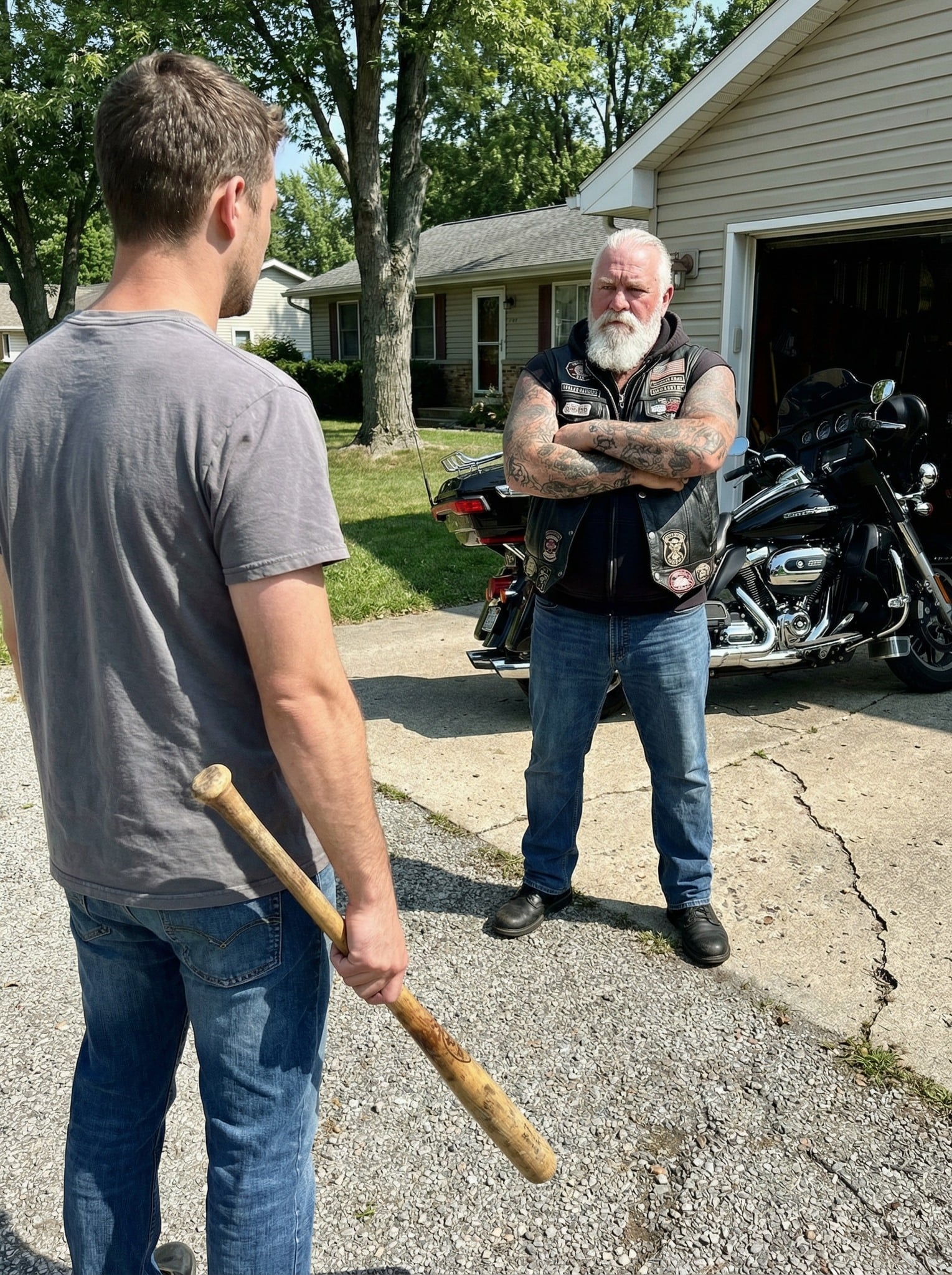
Ray didn’t square up. He didn’t smirk. He didn’t even look surprised to see me standing there with anger in my chest and a weapon in my car. He just… moved aside, like he’d been waiting for this moment to arrive.
And that’s when I saw it—bruises on Kayla’s arm.
Not the kind you get from being clumsy. Not the kind you can laugh off. The kind that makes a parent’s stomach drop so fast it feels like you’re falling.
In that instant, the story I’d been telling myself cracked wide open.
Ray wasn’t stalking my daughter. He was watching her—because he’d noticed what I hadn’t. He wasn’t there to scare her. He was there because he was scared for her.
He didn’t say much. He didn’t try to be a hero. He didn’t ask for credit. He just looked exhausted, like someone who’d learned too late in life what silence can cost.
It hit me hard: this man wasn’t a danger. He was a father trying to do one decent thing—maybe to make up for something he couldn’t fix in his own past. Maybe because he knew what it looked like when a young woman was being controlled, isolated, and hurt behind closed doors.
And I hated myself for how quickly I’d judged him… and how long I’d missed what was happening to my own child.
The Moment I Knew the Truth
When we got to Kayla’s apartment, I told myself I’d stay calm. I told myself I’d ask the right questions. I told myself I’d be careful not to “overreact.”
Then Tyler walked into the room.
Kayla flinched—small, automatic, like her body reacted before her mind could cover it up.
I didn’t need screenshots. I didn’t need an explanation that would make it easier for everyone else to swallow. I didn’t need her to “prove” anything.
That flinch was the proof.
So I did something I wish I’d done sooner: I stopped negotiating with the discomfort of the situation and started protecting my daughter.
I didn’t ask her to downplay it. I didn’t let her minimize it. I didn’t let her carry the burden of making it sound less serious.
I looked at her and said, “Get your things.”
We packed what mattered into a battered overnight bag. The rest could be replaced. She couldn’t.
Then I called the police.
What Stayed With Me After the Police Arrived
Once the authorities took over, the apartment felt strangely quiet. The adrenaline drained out of my body, leaving only a heavy, shaking exhaustion.
Kayla sat close, like she wasn’t sure the ground was stable yet.
And Ray—this man I’d labeled as the enemy—didn’t hang around to be thanked. He didn’t make a speech. He didn’t try to insert himself into our family’s pain.
He just slipped away like someone who didn’t need recognition—only relief that she was finally safe.
I walked back to my car with the baseball bat still in the trunk, and I realized something that changed me:
Protection isn’t always about force.
Sometimes it’s about noticing. About asking better questions. About staying present. About believing someone the first time they say, “I’m not okay,” even if they say it with their eyes instead of their voice.
I drove home crying so hard I had to pull over—not because I was afraid of Ray, but because I finally understood how close I’d come to missing the truth entirely.
Closing Thought
If you’ve ever had a gut feeling that something isn’t right with someone you love, don’t wait for the “perfect” proof. Pay attention to the small signs. Make space for honesty. And choose safety over silence—every time.
Have you ever misread a situation because fear pointed you at the wrong target? Share your thoughts in the comments, and if this story resonated with you, pass it along—you never know who needs the reminder that being believed can be life-changing.