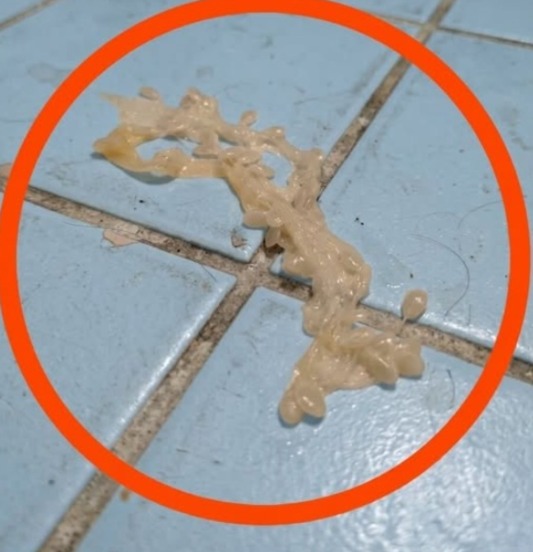
Within seconds, my thoughts sprinted through every worst-case explanation imaginable. The logic was simple: if I don’t recognize it, it might be dangerous.
Psychologists often describe this as a natural protective response. When the brain can’t quickly identify something, it starts searching for patterns and meaning. If it can’t find a clear answer, it may fill in the gaps with fear-based assumptions—because from an evolutionary standpoint, being cautious used to keep people alive.
Why “Just Googling It” Can Make Anxiety Worse
Like most people would, we did what everyone does when they’re confused and slightly freaked out: we searched online.
That was a mistake.
Instead of calm, we got an endless buffet of terrifying possibilities. Search results and forum threads suggested everything from bathroom mold to insect eggs to other nightmare fuel that absolutely did not help.
The longer we looked, the more our curiosity turned into real anxiety. Suddenly, the apartment didn’t feel as comfortable. The bathroom—normally a completely normal, familiar space—felt uncertain.
It’s wild how fast that shift can happen when you don’t have solid information.
The Simple Explanation We Didn’t Want to Believe
Eventually, someone suggested something so boring it felt impossible:
It was probably just melted hot glue.
Hot glue that had dripped, spread slightly on the tile, and hardened into an odd shape.
At first, we resisted the idea because it sounded too simple compared to everything we’d built up in our heads. But when we looked again with that explanation in mind, it clicked instantly.
The object hadn’t changed at all.
Only our interpretation had.
What This Taught Me About Fear, Uncertainty, and the Stories We Tell Ourselves
That moment stuck with me because it wasn’t really about glue.
It was about how quickly the mind can turn an everyday situation into a threat when details are missing. When we don’t fully understand what we’re seeing, the brain tries to complete the picture—and it often defaults to danger as a “better safe than sorry” setting.
In other words, fear doesn’t always come from the thing itself. A lot of the time, it comes from the story we create around it.
What looked terrifying turned out to be harmless. But the emotional roller coaster was real—and it was a reminder that the best response to uncertainty usually isn’t panic. It’s slowing down, checking the facts, and letting clarity replace assumptions.
Have you ever misidentified something and scared yourself for no reason? Share what happened in the comments—and if you enjoy real-life moments that turn into unexpectedly useful lessons, stick around for the next story.