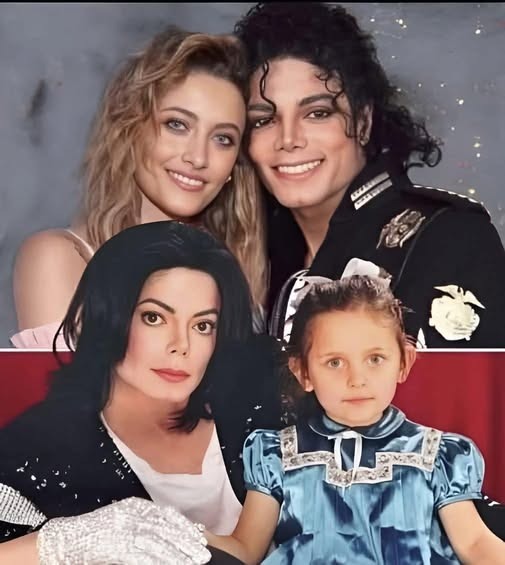
When she does speak, she doesn’t try to reduce her father’s life to trophies, chart positions, or celebrity status. Instead, she describes a person shaped by pressure from an early age—someone expected to be exceptional before he was old enough to choose a normal life.
In her view, his success came with a price: intense scrutiny, isolation, and the kind of fame that leaves little room for peace.
She Acknowledges the Controversy—Without Turning It Into a War
Paris doesn’t pretend the public debates don’t exist. The accusations, documentaries, and years of arguments are part of how many people understand Michael Jackson’s story. She recognizes that reality, but she doesn’t approach it with constant anger or defensiveness.
One of the most telling ideas she’s shared is simple: “Everyone has their truth.”
It’s not a demand that people agree with her. It’s an admission that public perception is complicated—and that people often interpret the same story in completely different ways. Still, she draws a clear boundary between what the world argues about and what she personally lived.
Because while the world debated, she was a child growing up with him.
The Private Moments People Never Saw
Paris’s memories aren’t about stadium lights or red carpets. They’re about ordinary moments that never made the news: quiet mornings, small routines, private advice, and a father trying to create a sense of safety in a life that was anything but normal.
Even the parts of her childhood that outsiders questioned—like masks, security, and privacy—weren’t about attention or theatrics from her perspective. She describes them as protection. Her father, having lost much of his own childhood to fame, tried to keep his children from experiencing the same relentless exposure.
To the public, it looked unusual. To her, it felt like care.
Losing Him at 11—and Grieving in Front of the World
When Paris lost her father at just eleven years old, the grief was devastating. But what made it even harder was how public it became. Most people get to mourn privately. She couldn’t. Cameras, speculation, and nonstop commentary followed her during a time when she needed quiet and stability.
She has been open about how deeply that period affected her and how close she came to being consumed by grief and pressure. It wasn’t only about losing a parent—it was about being forced to carry a public identity she never asked for.
Eventually, she realized survival meant more than “being strong.” It meant building a life that belonged to her.
Building Her Own Identity Through Music and Creativity
Paris didn’t try to copy her father’s career or step into his shadow as a replacement. Instead, she moved toward creative work in a way that felt personal—music, art, and self-expression that helped her process what she’d lived through.
Her path hasn’t been perfect or easy. It’s included setbacks, self-reflection, and learning how to exist in a world that constantly tries to define her. Over time, she’s worked toward a healthier balance: honoring her father’s memory without letting his legacy control her future.
A More Human Conversation About Michael Jackson
What Paris brings to the discussion is something that often gets lost online: humanity. Not the extreme versions—neither the untouchable legend nor the one-dimensional villain—but a complex person who carried both strength and vulnerability.
She speaks less about fame and more about values: kindness, creativity, choosing grace over conflict, and staying intentional even when surrounded by noise. These are the lessons she says she took from him—not from the performer, but from the father.
And that may be the biggest point she’s making: behind every global celebrity is a private life the public can’t fully access—relationships, struggles, love, and moments that don’t fit neatly into a headline.
Why Her Voice Matters Now
Paris isn’t trying to force the world to see Michael Jackson exactly the way she does. She’s doing something more personal: protecting how she remembers him.
In speaking up, she’s also doing what many people spend their whole lives trying to do—separating other people’s narratives from their own truth, and defining herself as an individual rather than an extension of a famous name.
Her perspective doesn’t “end” the conversation. But it adds something that has been missing: the view from someone who lived the private reality behind the public storm.
What do you think about Paris Jackson’s approach—focusing on personal memory rather than public arguments? Share your thoughts in the comments, and if you want more stories like this, browse our latest updates and subscribe for future posts.