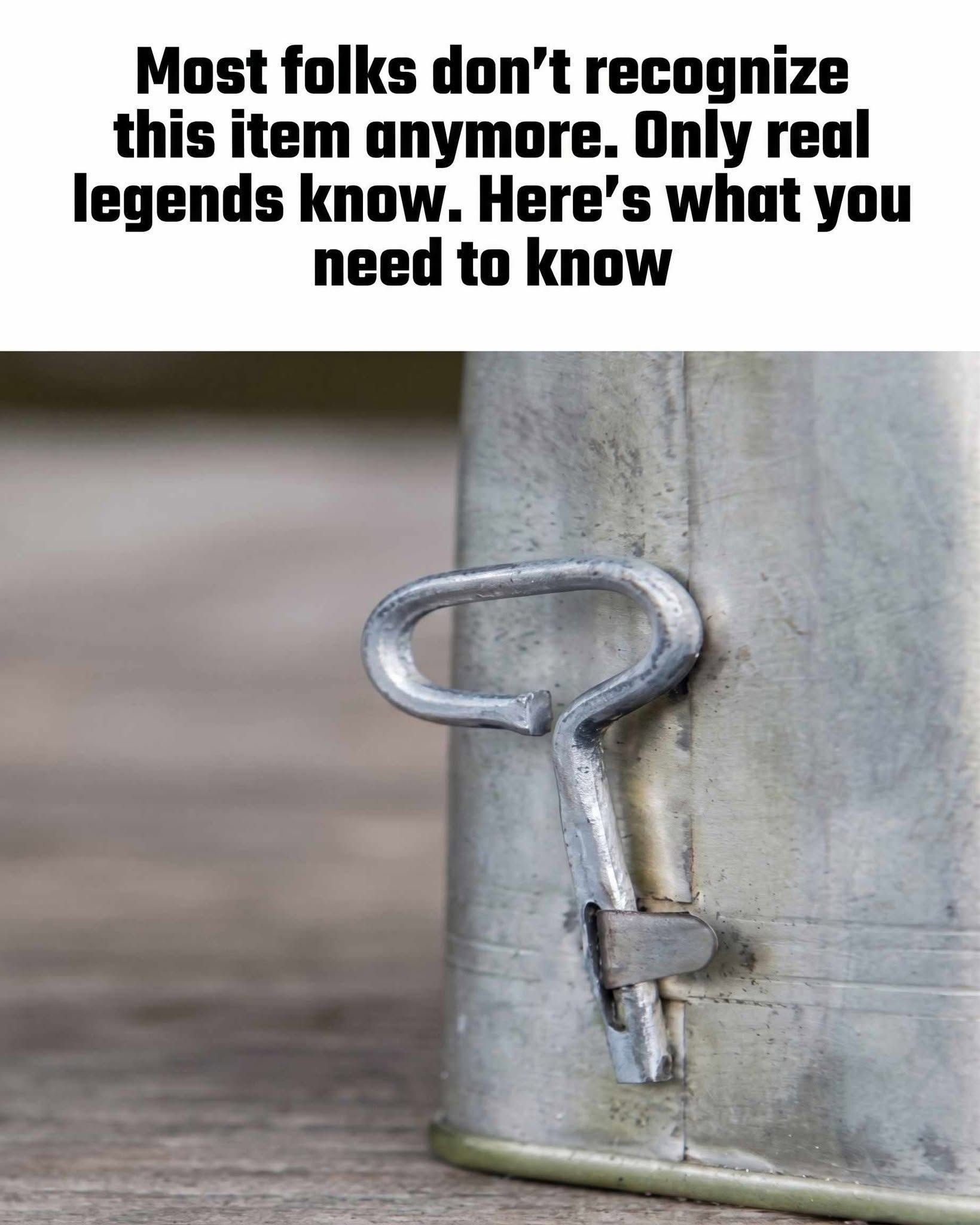
This Simple Metal Piece Once Had an Important Job Around Farms and Homes
Decades ago, small pieces of metal hardware like this could be found almost everywhere. They appeared on farms, inside barns and workshops, and attached to buckets and other containers used for everyday chores.
To someone seeing one today, the object might look like little more than a strangely shaped piece of wire. But hardware of this type served a practical purpose: helping secure the carrying handle of a metal bucket, pail, or similar container.
It is a small reminder of an era when everyday equipment was often designed around simplicity, durability, and easy repair.
A Small Part With a Practical Purpose
Traditional metal buckets commonly used a curved wire carrying handle known as a bail.
For that handle to work properly, it needed attachment points on opposite sides of the container. These fittings allowed the wire handle to stay connected while still moving freely as the bucket was picked up, carried, or placed back down.
Depending on the container and manufacturer, the exact design of these attachments varied. They are often described generally as bail handle attachments, handle lugs, or handle fasteners.
Despite their small size, they performed an important job. A bucket filled with water, milk, feed, tools, or other materials could become surprisingly heavy, placing considerable stress on the handle and its attachment points.
Common Around Farms and Workshops
Metal pails and containers were once essential pieces of everyday equipment.
On farms, they could be used to transport water, carry animal feed, collect or move milk, and handle numerous other daily tasks. Similar containers were also common in workshops, gardens, garages, and households.
A sturdy wire handle made those containers much easier to carry.
Instead of creating a complicated mechanism, manufacturers could use relatively simple metal components to connect the handle to the container while allowing it to pivot.
The result was inexpensive, functional, and often remarkably durable.
Built With Simplicity in Mind
One reason old hardware like this remains interesting today is how little was required to make it work.
There were no electronic components or elaborate moving mechanisms. In many designs, a carefully shaped piece of metal and a secure attachment point were enough to perform the job.
That simplicity had practical advantages.
Metal components could tolerate repeated movement and heavy everyday use. If something became bent or damaged, repairs could sometimes be relatively straightforward compared with replacing an entire container.
Many older galvanized buckets and pails survived for years precisely because their construction emphasized function and durability.
Why Objects Like This Can Be Difficult to Recognize Today
Modern containers are manufactured differently.
Plastic buckets frequently have molded attachment points and plastic grips, while newer metal containers may use stamped brackets, riveted fittings, or other standardized handle systems.
As those designs became more common, older pieces of hardware gradually disappeared from everyday life.
Someone who grew up regularly using galvanized pails might recognize such a component immediately. Someone from a younger generation, however, could reasonably have no idea what it was designed to do.
Without the original bucket or container around it, the object provides very little context.
A Reminder of Practical Everyday Engineering
Objects do not have to be complicated to reveal something interesting about the past.
Small pieces of hardware like traditional bail-handle attachments show how manufacturers solved ordinary problems with relatively simple materials and designs.
A piece of bent metal may not appear particularly important on its own, but when it formed part of a bucket carrying water, feed, tools, or other necessities, it had a clear and useful purpose.
Today, examples of this older hardware can offer a small glimpse into the equipment once commonly used around farms, workshops, and homes.
Sometimes the most ordinary objects from the past are also the ones that become the hardest to recognize.