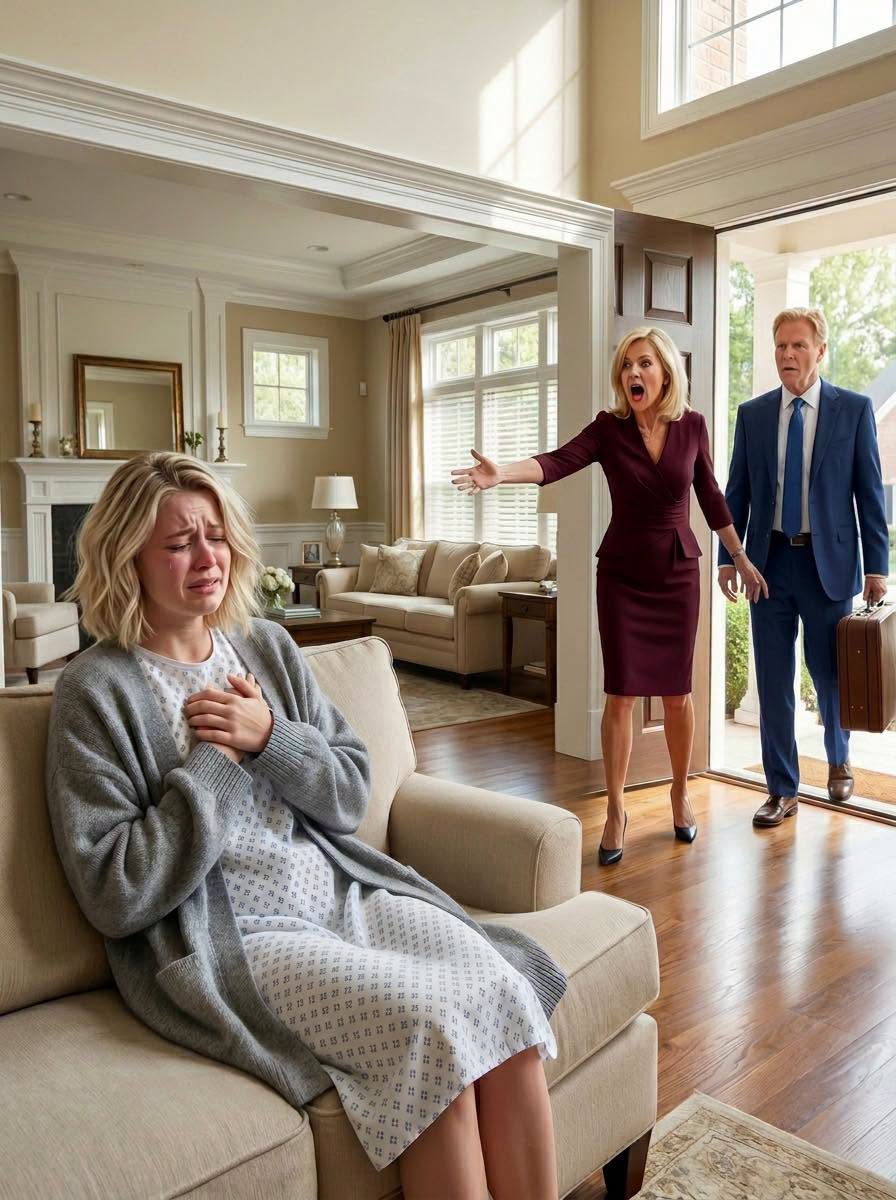
They had a Florida vacation planned—beachfront, flights booked, the whole thing. My hospitalization wasn’t something to worry about, in their minds. It was an inconvenience. They decided the doctors were “overreacting” and that I was being “dramatic.”
When I could finally sit up without the room spinning, my mom appeared with my clothes, irritation written all over her face. I told her my breathing still felt shallow and my legs were weak. She leaned close and hissed that I was embarrassing the family and wasting everyone’s time.
My dad barely spoke. He stood near the window scrolling through flight confirmations, detached like he was waiting for a boarding call—not watching his daughter struggle to breathe.
They Didn’t Take Me Home—They Took Control
Instead of driving me back to my apartment, they brought me to their house outside the city. During the ride, I asked for my debit card so I could order groceries and refill medication.
My mom said it casually, like she was mentioning the weather: they’d used my account to pay for the rental car and the resort deposit.
I felt like the air left the car. I had worked hard to build a small safety net—rent paid, bills handled, a little cushion for emergencies. And with a few taps, they drained it to upgrade their trip and lock in a better view.
When we arrived, they moved me inside with the cold efficiency of people unloading something they didn’t want. My mom set down a single glass of water, pointed at crackers and canned soup, and told me to rest. Then she added, almost as an afterthought, that they’d be gone for four days.
I stared at the suitcases lined up by the door and realized she wasn’t joking.
Abandoned While I Could Barely Breathe
They left before sunrise. I woke to the garage door rumbling open, tires crunching on gravel, and then silence—thick, heavy, and terrifying.
My phone battery was nearly dead. My inhaler was close to empty. The fridge held condiments and fruit that had started to rot. When I tried to stand, my body gave out and I hit the floor, lungs burning with every short pull of air.
On the kitchen wall, the family calendar mocked me. Across the week, my mom had written one word in bright, cheerful marker:
VACATION
For hours I tried to manage it alone. I dragged a chair across the floor so I could move in stages—sink to counter, counter to table—without collapsing. When I finally got my phone to power on, I called my parents.
My dad answered, annoyed, like I’d interrupted something important. He told me not to “ruin the trip” with my panic and suggested cough syrup.
My brother laughed and told me to “start acting like an adult,” then hung up.
That was the moment it hit me: I’d been trained to protect the image of our “nice family,” even if it cost me my life. I was still worried about what the neighbors would think if an ambulance showed up.
Then the pain got worse, and shame stopped mattering.
A Kind Stranger Did What My Family Wouldn’t
I sent a shaky, incomplete text to Mrs. Delaney, the neighbor across the street. Within minutes she was at the door.
She didn’t wait for permission. She used the garage code my mom had given her for deliveries, rushed inside, and found me on the kitchen floor. I tried to protest—mumbling something about not making a scene.
She ignored it and called 911 immediately.
When paramedics arrived, their faces changed the second they realized I’d been discharged against medical advice and then left alone. Their disbelief said everything my family refused to acknowledge: this wasn’t “drama.” This was dangerous.
I was fading in an empty house while my family boarded a plane—on my money.
The Hospital Helped Me Call It What It Was
Back at the hospital, a social worker sat with me and asked direct questions: Who signed the discharge? Who had access to my accounts? Was anyone controlling my finances or interfering with medical care?
For the first time, I said the word out loud: abuse.
With the hospital’s help, I froze my accounts, documented what happened, and filed a police report about the stolen funds. I kept records—dates, messages, the timeline of my forced discharge—everything.
While I spent the next few days recovering under proper care, the calls finally started coming in from Florida. Not to ask if I could breathe. Not to apologize.
They called because the bank flagged the charges and the resort wouldn’t accept their card.
The voicemails were revealing. My mom said I was selfish for “humiliating” the family. My dad accused me of overreacting. My brother joked that he hoped the “show” was worth it.
I saved every message.
Choosing Safety Over “Family Loyalty”
When I was discharged again—this time safely—I didn’t go back to that house. Mrs. Delaney drove me to my apartment. My manager helped arrange emergency leave and checked in like my life actually mattered.
My mom showed up once, furious, yelling that I was choosing strangers over blood. Standing behind my locked door, I told her if she didn’t leave, I’d call the police.
That was the clearest truth I’d ever spoken: blood wasn’t a bond to them. It was leverage.
They still tell relatives I’m unstable and dramatic. I don’t chase their version of the story anymore. I’m too focused on breathing without fear, rebuilding my financial stability, and learning what peace feels like when nobody is trying to control it.
Freedom is expensive in a way people don’t talk about. Sometimes the price is realizing you never needed permission to survive.
If this story hit close to home, share your thoughts in the comments—and if you’ve ever dealt with financial control, medical neglect, or toxic family pressure, what helped you take your first step toward safety?