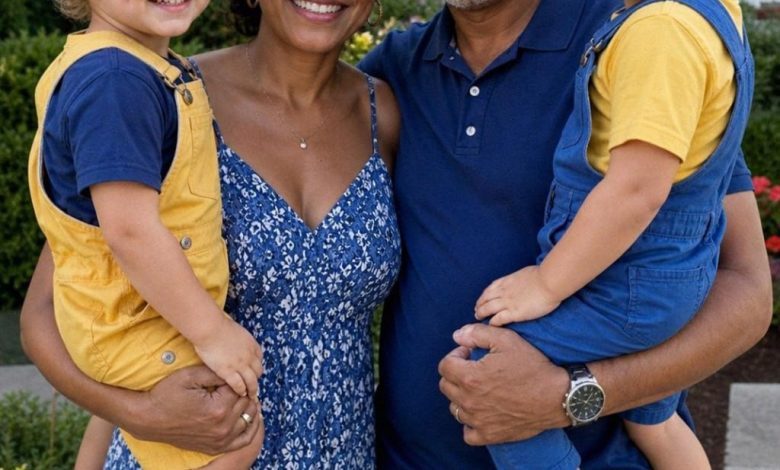
“Look at them,” he said, voice low. “Remember when we thought that would be us?”
I tried to brush it off, but when I looked at his face, I saw something I hadn’t seen in years—raw longing mixed with fear.
A few days later, he slid his phone and an adoption pamphlet across the breakfast table.
“Our house feels empty, Hanna,” he said. “I can’t pretend it doesn’t. We can still have a family.”
I stared at the brochure. “Josh… we made peace with this.”
His eyes glossed over. “Maybe you did. But I didn’t. Please. Just try once more—with me.”
And then came the detail that should have made me pause.
“It would help if you were home,” he added quickly. “For the home study. For the process. For them.”
So I did it. I stepped back from my job—my stable paycheck, my routine, my identity—because he sounded so sure that this was our next chapter.
We Met the Twins, and My Heart Changed Overnight
The paperwork was exhausting: background checks, interviews, parenting plans, questions that felt impossible to answer on a form—about discipline, trauma, safety, and love. Joshua moved through it like a man chasing a deadline he couldn’t name.
Then we were shown a photo of two little boys, four years old, standing close together with serious eyes that looked older than they should.
“Don’t they look like they belong with us?” Joshua whispered.
When we met them in person, one barely spoke. The other stayed pressed against him like a shield.
Joshua crouched down and offered a dinosaur sticker. The quieter boy didn’t move.
The other one studied me and said, matter-of-fact, “He talks for both of us.”
I knelt down too. “That’s okay. I talk a lot for Joshua.”
Joshua laughed—an actual laugh, the kind I thought we’d lost.
The boys didn’t smile yet, but they didn’t pull away either.
Our Home Filled Up—Fast
The day the twins moved in, our house felt too bright and too nervous, like it was holding its breath. Joshua had bought matching pajamas. I’d organized drawers and labeled everything like organization could prevent heartbreak.
The boys arrived with small bags that held almost nothing. By bedtime, they’d somehow turned the bathroom into a disaster zone, and for the first time in years, laughter bounced off our walls.
For a few weeks, life felt like a miracle we didn’t deserve: pancake dinners, bedtime stories, LEGO towers, sticky hands, big emotions, tiny socks everywhere. Two little boys slowly learning that reaching for adults didn’t always end in rejection.
One night, I sat beside their beds in the dark, listening to their breathing.
“Are you coming back in the morning?” one of them whispered.
“Always,” I promised. “I’ll be right here when you wake up.”
That night, a small hand reached for mine and held on.
That was the moment I stopped feeling like a caregiver and started feeling like their mom.
Then Joshua Started Disappearing
At first, it was easy to explain away: late nights, closed doors, phone calls that ended when I walked into the room. A laptop snapped shut too quickly.
“Work is intense,” he’d say, eyes sliding away from mine.
He still kissed the boys goodnight when he was around. Still smiled for them. But he began slipping away before the hard parts: the tantrums, the messes, the emotional storms that come with kids who’ve already lost too much.
When one twin spilled juice and the other burst into tears, it was me on the kitchen floor, wiping it up, whispering, “It’s okay. I’ve got you.”
After a rough dinner—peas under the table, two crying kids, my nerves stretched thin—I finally confronted him.
“Are you actually in this with me?” I asked.
He looked offended, like the question itself was unfair. “Of course I am. This is what we wanted.”
But something in me had started to ache in a way I couldn’t name.
I Overheard the Truth by Accident
One afternoon, both boys fell asleep at the same time—rare, precious silence. I walked down the hall and heard Joshua’s voice behind his office door.
“She thinks I wanted a family with her,” he said, voice shaking.
I froze.
“I can’t do this, Dr. Samson. I can’t watch her figure it out after I’m gone. She deserves more than that. But if I tell her, she’ll fall apart. She gave up everything for this. I just wanted to know she wouldn’t be alone.”
My stomach dropped.
Then he whispered, barely audible: “How long did you say?”
In that instant, the life I thought we were building flipped into something terrifying.
He hadn’t pushed adoption because he was hopeful.
He’d pushed it because he was preparing to leave me.
He Let Me Become a Mother Without Consent to the Full Truth
I walked into our bedroom in a haze, packed clothes for me and the boys, grabbed pajamas and stuffed animals and their favorite book, and called my sister.
One of the twins shuffled into the hallway, half-asleep. “Are we going on a trip?” he asked.
I forced my voice to stay calm. “Yeah, sweetheart. Just for a little bit.”
I left Joshua a note on the kitchen table and drove to my sister’s house, where I finally broke apart in a way I hadn’t allowed myself to in years.
The next morning, while the boys colored on the living room rug, I opened Joshua’s laptop—hands shaking, heart pounding.
The files were all there: scans, test results, oncology notes, treatment plans. A message from his doctor urging him—again—to tell me.
So I called the number myself.
“I’m Hanna,” I said when Dr. Samson answered. “Joshua’s wife. I found the records. I know it’s lymphoma. I need to know if there’s anything left to try.”
There was a pause, then a careful breath. “There is a clinical trial. It’s high-risk, expensive, and the waitlist is difficult. And it won’t be covered by insurance.”
I looked at the twins—our twins—leaning over crayons like they finally believed they were safe.
“I have severance money,” I said. “Put his name on the list.”
The Conversation That Nearly Broke Us
When I confronted Joshua, he looked like a man who’d been caught mid-fall.
“You let me quit my job,” I said. “You let me fall in love with those boys. You let me believe this was our dream.”
His face crumpled. “I wanted you to have a family.”
“No,” I said, voice shaking. “You wanted to control what happened to me after you were gone.”
He whispered, “I thought I was protecting you. But I was protecting myself. I couldn’t handle watching you decide whether to stay.”
That truth hit like shattered glass.
“You made me a mother without telling me I might be raising them alone,” I said. “You don’t get to call that love and expect me to be grateful.”
Then I took a breath and said the only thing I knew was real:
“I’m here because those boys need stability. And if there’s time left, we’re going to live it in the truth.”
No More Secrets: Treatment, Parenting, and Real Life
The next day, I made the rules clear.
“We tell our families,” I said. “We stop hiding. We fight properly—with all the information on the table.”
His sister cried, then got angry. My mom was quieter, which somehow hurt more.
“You should have trusted your wife with her own life,” she told him.
After that, our days turned into a blur of hospital drives, insurance calls, clinical trial paperwork, school drop-offs, spilled apple juice, bedtime stories, and fear that never fully left the room.
Joshua’s body changed fast. Some mornings he could barely stand. One night, I found him recording a video message for the boys.
“If you’re watching this and I’m not there,” he said softly to the camera, “just remember I loved you from the moment I saw you.”
Later, one twin climbed into his lap and whispered, “Don’t die, Daddy.”
The other pressed a toy truck into Joshua’s hand. “So you can come back and play,” he said.
That was the first time I cried for all of us at once—for the fragile, expensive, impossible love of a family built under pressure.
Remission—and a Second Chance We Didn’t Expect
When Joshua’s hair started falling out, I brought out the clippers. The boys sat on the bathroom counter, giggling while I shaved his head. One called him an astronaut. The other said he looked like a potato.
Joshua laughed so hard he had to sit down.
There were nights I cried in the shower so no one could hear. Days I snapped and apologized. Nights we held each other and shook—not sure how to be brave without being angry, too.
Then, one bright spring morning, my phone rang.
Dr. Samson’s voice came through warm and steady. “Hanna… the latest results are clear. Joshua is in remission.”
I started crying so hard I couldn’t speak. One of the boys ran in, saw my face, and shouted, “Mom’s leaking again!”
Joshua appeared in the doorway, pale and terrified, like he couldn’t let himself believe it.
When I nodded, he dropped to the floor beside me, and we held each other while the twins climbed onto us like we were their safest place in the world.
Two Years Later, Our House Is Loud—and Honest
Today, our home is nothing like the quiet place it used to be. There are backpacks by the door, soccer cleats in the hallway, crayons under the couch, and two boys who say “Mom” and “Dad” like it’s always been true.
Joshua tells them I’m the bravest person in the family.
“Brave isn’t staying silent,” I tell him. “It’s telling the truth before it’s too late.”
For a long time, I thought he pushed adoption so I wouldn’t be alone.
But I understand it differently now: love built on secrecy eventually collapses under its own weight. Love built on honesty—even when it hurts—has a real chance to last.
And every morning, when the twins thunder down the stairs and Joshua burns the toast while insisting it was “on purpose,” I look at the chaos we almost lost and feel grateful we chose truth in time.
CTA: If this story moved you, share your thoughts in the comments—have you ever faced a life-changing secret in a relationship? And if you want more real-life stories about marriage, parenting, and resilience, bookmark this page and come back for the next one.