Instead, a wooden sign hung on the gate:
“This home is not open to people who don’t ask permission.”
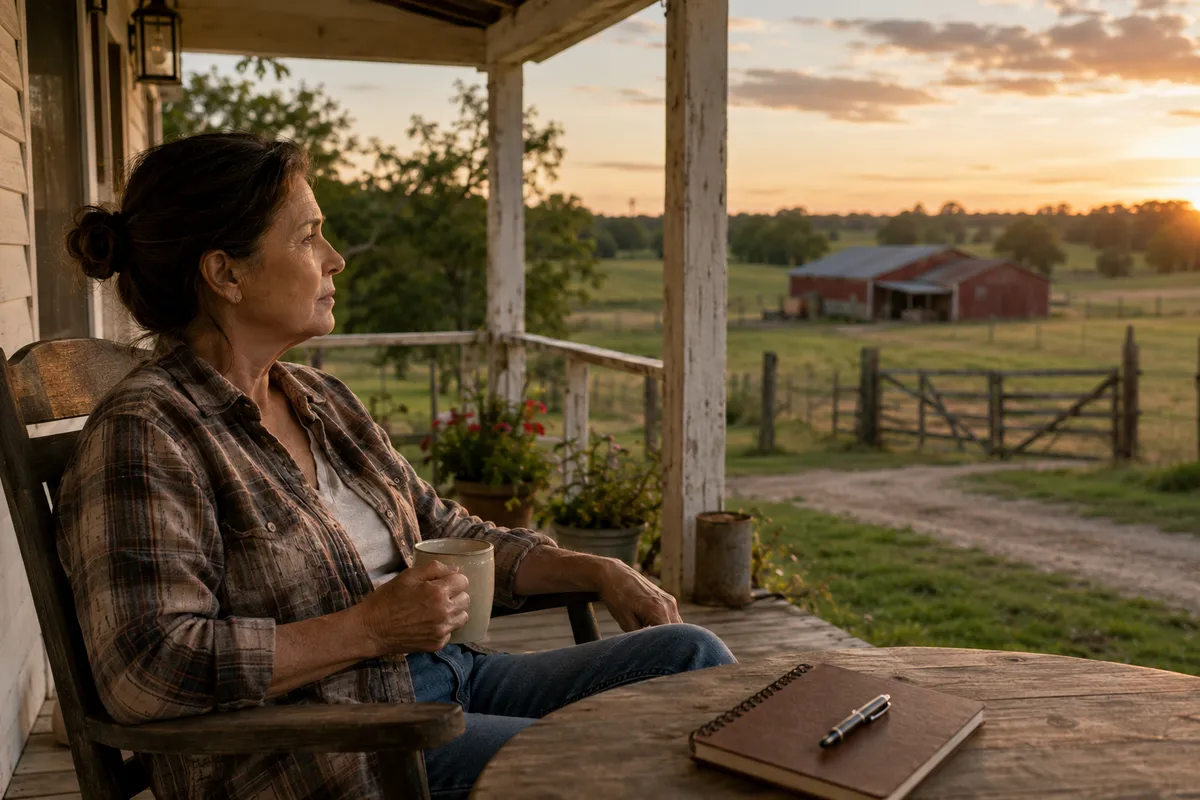
Beneath the sign sat a worn leather notebook tied with a red ribbon.
I watched from the porch beside Juan and my attorney, Mr. Ferrer, while my son Carlos stared like the world had tilted. A week earlier, Carlos had removed me from the family group chat and said, like it was nothing:
“Mom, it’s for working adults.”
That sentence didn’t just sting—it clarified everything.
When “Family Time” Turns Into Free Lodging
For a long time, I told myself the constant requests meant I was loved. The farm became the default location for every birthday, long weekend, and holiday gathering. People arrived without calling first. They opened cabinets like they were checking into a rental. They left piles of dishes, used up supplies, and disappeared when it was time to clean.
I wasn’t being included.
I was being used.
Little by little, I stopped being “Mom” and became the person who maintained the property, stocked the kitchen, and kept the spare key hidden for everyone else’s convenience.
The Group Chat That Made Me Feel Invisible
The family group chat was the moment the truth stopped being easy to ignore. I’d seen it before—plans made quickly, decisions made without me—but this time it was different.
They were organizing weekends at my farm, assigning rooms, coordinating meals, and joking about “the old woman” like I wasn’t a real person with feelings and a life.
When I asked Carlos why I’d been removed, he didn’t even look guilty.
“You wouldn’t get what we talk about,” he said.
It wasn’t just a chat I lost access to. It was respect. And once you see that clearly, you can’t unsee it.
The Notebook at the Gate Held the Real Story
The notebook outside wasn’t a stunt. It was history.
Some of it belonged to my late husband, José. Page after page showed what it actually took to turn empty land into a family home—real sacrifices, real financial stress, real work.
There were notes about repairs, loans, and bills. There were memories written in plain, honest lines:
- Jewelry sold to afford the water pump.
- Repairs delayed so school supplies could be paid for.
- Working through sickness to save the lemon trees after a freeze.
- Me sewing late into the night to cover the cost of a roof patch.
- Medicine bought for Carlos while the dining room floor “could wait another year.”
As my children read, their faces shifted. For the first time, the farm stopped being a “free weekend getaway” in their minds and became what it really was: a lifetime of labor and love.
My Pages Were the Hardest to Read
The last pages were mine.
I explained that the pain wasn’t about being left out of a conversation. It was realizing I had become background noise in my own family—useful, expected, and ignored.
No mother should have to earn basic courtesy in her own home.
The Legal Documents They Didn’t Expect
Inside the notebook was the part that truly shocked them: updated legal paperwork.
With my lawyer’s help, I made sure the farm was fully in my name—and that it would not be divided among the children after I’m gone.
Instead, I arranged for the property to become a retirement and community center for widows in our municipality, with a small library dedicated to José’s memory.
Laura looked stunned. Diego called it unfair. Carlos accused me of “overreacting” and punishing them over one misunderstanding.
But it wasn’t one misunderstanding.
It was years of entitlement. Years of treating my kindness like an unlimited subscription service. Years of assuming I’d always stay quiet so everyone else could stay comfortable.
The Apology That Actually Mattered
Then something happened that I didn’t expect.
My teenage granddaughter, Sofia, stepped forward. She kept reading out loud. And when she finished, she looked at me and apologized—calmly, sincerely, without bargaining.
Not because she wanted access to the farm.
Because she understood what had been taken for granted.
That apology landed deeper than every adult argument combined.
I Opened the Side Gate—With Conditions
That evening, I opened only the small side gate. Not wide enough for a crowd to rush in—just enough for the grandchildren to enter one at a time for dinner.
The adults stayed outside with their coolers and suitcases, finally learning what it feels like to stand at a closed door and wait.
In the kitchen, I served soup. I listened to the kids laugh again. And for the first time in years, I felt something I didn’t realize I’d been missing:
peace without resentment.
Love Without Respect Becomes Burnout
The farm wasn’t closed because I stopped loving my family.
It was closed because I finally understood that love without respect turns into exhaustion. And sometimes the healthiest thing a mother can do is stop leaving the key under the flowerpot—so she can see who is willing to knock, ask, and treat her like she matters.
If this story hit close to home, share your thoughts in the comments: Have you ever had to set boundaries with family to protect your peace and financial future?