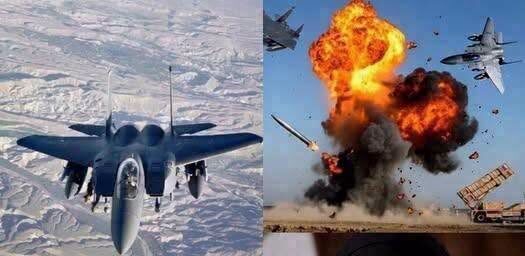
Modern conflicts are fought not only with military equipment.
Information itself has become a powerful strategic tool.
Social media platforms can spread an unverified claim to millions of people before journalists, governments, or independent investigators have time to establish whether it is accurate.
A dramatic headline suggesting an imminent attack can therefore create fear even when the underlying information is incomplete or misleading.
This makes media literacy increasingly important.
When encountering a major national-security claim, readers should consider several basic questions:
- Who originally reported it?
- Is there independent confirmation?
- Are officials actually making the claimed statement?
- Is the information current?
- Could an old photograph or video be circulating again?
- Does the headline make a stronger claim than the evidence supports?
These questions do not eliminate uncertainty, but they can prevent speculation from being mistaken for established fact.
Israel’s Changing Defense Strategy
Israel has invested heavily in layered air-defense capabilities over many years.
The country’s defense architecture includes systems designed to address different types of threats, rather than relying on a single technology.
Iron Dome is primarily associated with intercepting short-range rockets, while other systems have been developed to address longer-range missiles and higher-altitude threats.
At the same time, Israel and its allies have explored newer technologies, including artificial intelligence, improved radar systems, autonomous capabilities, and directed-energy concepts.
These developments represent an important technological shift.
However, advanced defense systems do not make a country immune to conflict. Every defensive system has limitations involving cost, capacity, geography, warning time, and the number and type of incoming threats.
Why the United States Remains Closely Involved
The United States has longstanding military, diplomatic, and economic interests in the Middle East.
American forces and facilities in the region support a variety of missions, including deterrence, maritime security, counterterrorism, intelligence cooperation, and the protection of strategic interests.
Washington’s relationship with Israel is particularly significant, while the United States also maintains partnerships with several Arab countries.
That creates a complicated balancing act.
American policymakers must consider regional security while also weighing the potential economic and military consequences of deeper involvement in another conflict.
The Global Economic Consequences
The importance of Middle Eastern stability extends far beyond military affairs.
The region contains major energy producers and sits near some of the world’s most important shipping routes.
Any serious disruption involving oil infrastructure, commercial shipping, or major maritime corridors could affect energy prices, transportation costs, inflation expectations, and financial markets.
For businesses and investors, geopolitical uncertainty can therefore become an economic issue very quickly.
Higher energy costs can affect everything from manufacturing and transportation to household budgets.
That is why financial analysts often monitor geopolitical developments alongside traditional economic indicators.
The Risk of Miscalculation
Perhaps the greatest concern during periods of heightened tension is not necessarily that every side wants a major war.
It is that a series of smaller events could produce unintended escalation.
A military strike, mistaken assessment, cyber incident, disputed intelligence report, or misinterpreted warning could trigger a response that becomes increasingly difficult to control.
History contains numerous examples of governments making decisions under intense pressure with incomplete information.
Modern communication makes the challenge even greater because leaders and military officials operate in an environment where events can become public almost instantly.
What Comes Next?
No responsible analysis can guarantee whether current tensions will escalate, stabilize, or eventually lead to renewed diplomacy.
That uncertainty is precisely why exaggerated predictions about an inevitable global conflict should be treated cautiously.
Diplomatic channels can reopen even after periods of severe confrontation. At the same time, tensions can deteriorate unexpectedly.
The most useful approach is therefore to focus on verified developments rather than predictions presented as certainty.
For the public, that means following reliable reporting, checking claims before sharing them, and remembering that dramatic language does not necessarily indicate a confirmed change in the strategic situation.
A World Watching Closely
The Middle East remains one of the most strategically important regions in the world, and events there can have consequences far beyond its borders.
Iran’s relationship with the United States, Israel’s security concerns, American military commitments, regional alliances, energy markets, and international diplomacy are all interconnected.
Technology has changed the speed and character of modern security threats, but one principle remains unchanged: information matters.
In an environment filled with rumors, predictions, and emotionally charged headlines, understanding what is confirmed—and what remains uncertain—is one of the most valuable forms of preparedness.
The world may be watching the region closely, but that does not mean the future has already been decided.
The next chapter will ultimately be shaped not by viral headlines, but by decisions made by governments, military leaders, diplomats, and the people working to prevent uncertainty from becoming a larger crisis.