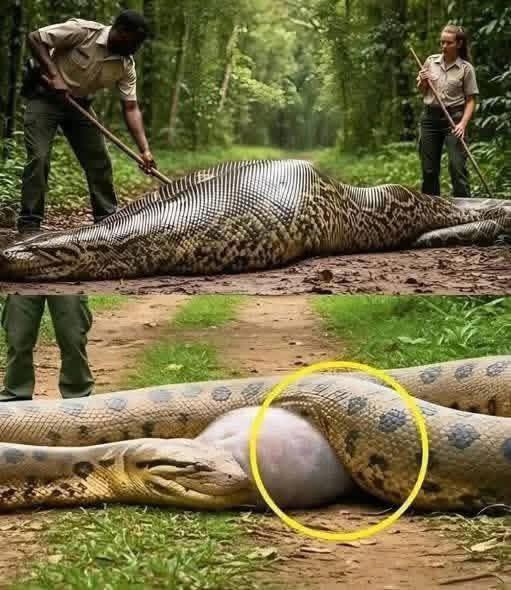
- Internal blockages that prevent normal digestion
- Organ damage and life-threatening infections
- Reduced mobility, leaving the animal unable to hunt or escape danger
- Risk to the ecosystem if a key predator is removed from the food chain
By responding quickly, the rangers not only prevented suffering—they also reinforced the importance of habitat protection and responsible behavior in and around wildlife areas.
Green Anacondas: Nature’s Heavyweight Predator
The green anaconda is one of the most powerful reptiles on Earth and a vital part of wetland ecosystems. Found in South America’s rivers, swamps, and floodplains, these snakes help keep animal populations balanced and support overall ecosystem health.
Key Facts About Anacondas
- Size and Weight: Green anacondas can exceed 20 feet and weigh hundreds of pounds, making them the heaviest snake species in the world.
- Camouflage: Their olive-green bodies with dark markings help them blend into murky water and dense vegetation.
- Incredible Strength: Their muscular build allows them to overpower prey through constriction.
- Built for Water: Anacondas are elite swimmers and spend much of their lives in aquatic environments.
- Ambush Hunting: They often wait near the shoreline, striking when prey comes close.
- Live Birth: Females are typically larger than males and give birth to live young—sometimes dozens in a single litter.
Despite their reputation, anacondas generally avoid people, and most incidents involving humans come from habitat pressure or misunderstanding rather than aggression.
A Reminder of the Delicate Balance Between People and Nature
This rescue is more than a dramatic wildlife story—it’s a reminder that conservation isn’t just about protecting animals from predators or natural threats. It’s also about keeping ecosystems free from hazards introduced by humans. When protected areas are respected and kept clean, wildlife has a better chance to thrive.
Enjoy stories like this? Share your thoughts in the comments—should penalties for dumping in wildlife habitats be stricter? And if you want more real-world wildlife rescue updates and conservation news, bookmark this page and check back for the next story.