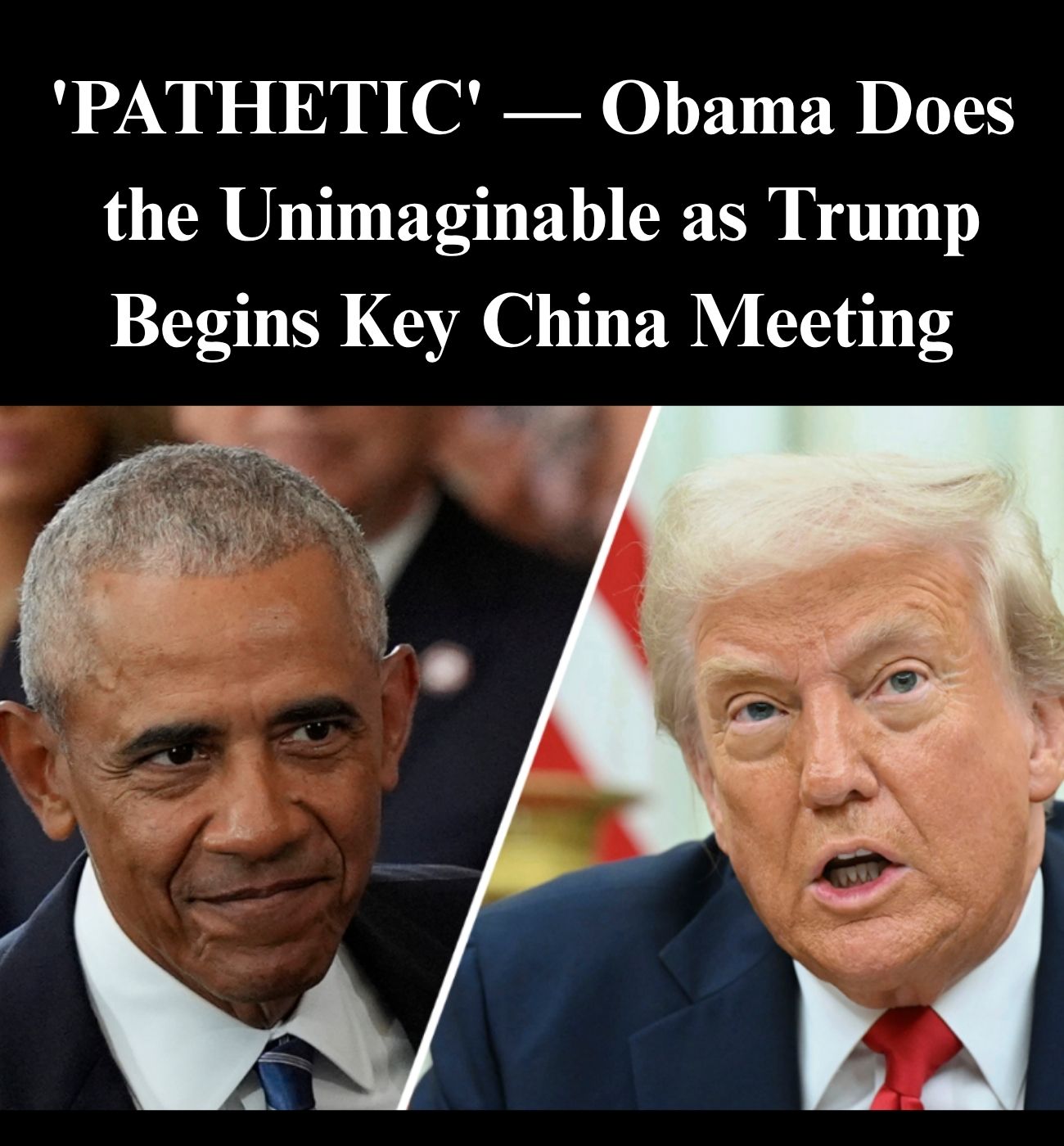
## “PATHETIC” — A Tale of Two Presidencies, Two Foreign Policy Playbooks
Barack Obama’s Chicago interview wasn’t just a trip down memory lane—it was a deliberate message about what he believes *real* American leadership looks like. Speaking with measured confidence, Obama defended the Iran nuclear deal as a model of **smart diplomacy**, built on **strict verification**, **international cooperation**, and the idea that **military action should always be the last resort**.
He didn’t hedge his words, either. Obama insisted the agreement “worked,” pointing to intelligence assessments he said backed that claim—including, notably, information aligned with **U.S. and Israeli intelligence**. The subtext was clear: Trump’s “maximum pressure” posture may sound tough, but Obama was arguing that *results* matter more than rhetoric—especially when the stakes involve **nuclear weapons**, **Middle East stability**, and the risk of another costly conflict.
While Obama made the case for diplomacy, Donald Trump was delivering a very different kind of performance on the global stage—one centered on leverage, commerce, and spectacle.
Halfway across the world in China, Trump arrived with a high-powered entourage that looked less like a political delegation and more like a boardroom summit. With figures such as **Elon Musk**, **Apple CEO Tim Cook**, and **NVIDIA’s Jensen Huang** nearby, the message to Beijing was unmistakable: America’s influence isn’t just military—it’s also **Big Tech**, **global supply chains**, and **capital markets**.
China’s leadership responded with optimism. Xi Jinping offered promises of broader access and deeper cooperation, while Trump’s team projected confidence about **expanded market access**, potential **new investment deals**, and the possibility of reshaping the **U.S.–China economic relationship** in America’s favor.
Put side by side, the contrast couldn’t be sharper:
– Obama argued he helped prevent conflict through **diplomatic agreements and inspections**.
– Trump aimed to project dominance through **economic power, corporate influence, and deal-making**.
Between Tehran and Beijing—between diplomacy and pressure—two competing visions of American leadership are colliding in real time. And the debate isn’t just about personalities. It’s about what the United States should prioritize: **peace through negotiated constraints** or **strength through hard leverage**.
### Closing CTA
What do you think works better in today’s world—diplomacy backed by verification, or pressure backed by economic and military power? Share your take in the comments, and if you want more breakdowns like this, stick around and read the next piece.