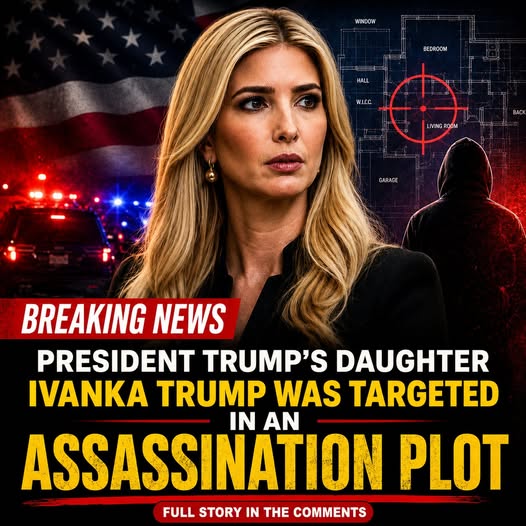
They point toward a dangerous reality in which the families of former government leaders may remain vulnerable long after official policies, military operations, and administrations have changed.
A Shadow Cast by the Soleimani Strike
Much of the concern surrounding the alleged plot appears tied to lingering tensions following the 2020 U.S. drone strike that killed Iranian General Qasem Soleimani in Iraq — one of the most consequential military actions of Donald Trump’s presidency.
At the time, Iran vowed retaliation.
Years later, officials and analysts continue warning that threats connected to that event have never fully disappeared. Instead, many believe they evolved into quieter, harder-to-detect operations involving surveillance, recruitment networks, cyber monitoring, and long-term targeting strategies aimed at symbolic American figures.
What makes the latest allegations especially alarming is the idea that Ivanka Trump — someone who stepped away from frontline politics after leaving Washington — could allegedly still be viewed internationally as a symbolic extension of her father’s administration.
That distinction matters.
Because it suggests the line between political leadership and family life may no longer offer meaningful protection in the eyes of hostile actors.
More Than a Political Story
For many Americans, the story is unsettling regardless of political affiliation.
Threats involving public officials are unfortunately not new. But threats allegedly extending toward children, spouses, or relatives of former presidents strike a far deeper emotional nerve. Security experts have long warned that targeting family members is often designed not simply to harm individuals, but to send a broader psychological message: that power, influence, and public status cannot guarantee safety.
That possibility transforms the story from political drama into something much darker.
It raises questions about how many potential threats are intercepted before the public ever hears about them — and how much unseen work is happening constantly behind the scenes to prevent violence before it unfolds.
The Invisible World of Protective Security
Cases like this rarely reveal the full picture publicly.
Behind every reported investigation is usually an enormous network of intelligence gathering, digital monitoring, interagency coordination, and protective surveillance that remains largely invisible to ordinary citizens.
Former first families often continue receiving extensive protection long after leaving office precisely because threat environments do not disappear when headlines fade. Security officials understand that symbolic figures can remain targets for years, particularly when geopolitical grievances remain unresolved.
The alleged plot involving Ivanka Trump has therefore renewed attention on how modern threats operate differently than they once did.
Plots today are not always loud, immediate, or obvious.
Many develop quietly through encrypted communications, foreign intermediaries, online radicalization networks, or individuals operating under ideological influence from abroad. By the time the public learns about an alleged threat, investigators may already have spent months tracking movements, communications, and connections behind closed doors.
That hidden timeline is what many experts find most unsettling.
A Reminder of Lingering Global Tensions
The case also reflects how international conflicts increasingly blur the boundary between military retaliation, political symbolism, and civilian life.
The Soleimani strike was not viewed globally as an isolated military action. In parts of the Middle East, it became a defining political and emotional event whose consequences continue echoing years later through propaganda, rhetoric, and alleged revenge narratives.
Whether or not the accusations in this case are ultimately proven in court, the broader concern remains the same: unresolved geopolitical tensions can create long shadows that outlive administrations, elections, and even public attention itself.
And when those tensions allegedly evolve into threats targeting families rather than policymakers, the psychological impact becomes even more profound.
Why This Story Matters Beyond Politics
For supporters of Donald Trump, the allegations may reinforce long-standing concerns about security threats connected to international retaliation.
For critics of Trump, the case still presents an uncomfortable truth: political disagreement should never normalize violence or threats against family members.
That is the line many observers say cannot be allowed to blur.
Because once retaliation politics expands beyond leaders and into private households, the consequences extend far beyond one family or one administration. It creates a precedent where relatives become symbolic targets simply because of proximity to power.
And that possibility changes the emotional temperature of public life entirely.
The Bigger Question No One Can Ignore
Perhaps the most unsettling aspect of the story is not the headline itself — but the possibility that this may represent only one visible case among many threats never publicly disclosed.
If investigators are correct about the alleged networks involved, then the obvious question becomes unavoidable:
How many other names were being watched?
How many other addresses were quietly mapped?
And how many plots are interrupted before the public ever realizes they existed?
For now, investigators continue piecing together the facts while security agencies remain on heightened alert. But regardless of where the legal case ultimately leads, one reality has already become clear:
The aftershocks of geopolitical conflict do not always end on battlefields.
Sometimes, they arrive silently at front doors.