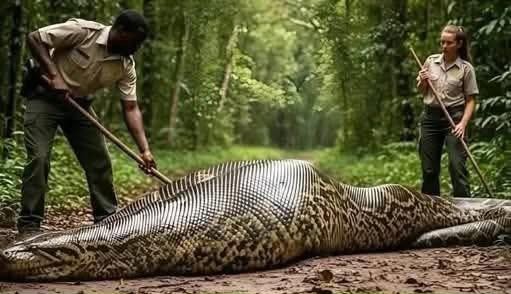
A Careful Rescue In Difficult Conditions
Helping an adult green anaconda is not a simple task. These snakes are extremely strong constrictors, and any rescue attempt has to protect both the animal and the people handling it.
The conservation team used professional equipment designed for large reptiles to secure the anaconda as safely as possible. Their goal was to reduce stress while giving trained handlers enough control to work around the obstruction.
Slowly, the team began applying careful pressure along the snake’s body, trying to move the object back toward its mouth. The process required patience and precision, because too much force could have caused serious internal injury.
After nearly an hour in the wetland heat, the obstruction finally moved far enough for the team to remove it.
What came out was not prey. It was a large, jagged piece of industrial plastic waste.
Investigators believe the anaconda may have mistaken the floating debris for food in the murky water and swallowed it whole. Once the plastic was removed, the exhausted snake began breathing more freely.
Why This Matters
The rescue ended well for this anaconda, but the discovery pointed to a much larger problem. Plastic waste can travel through rivers, floodplains, and drainage systems, reaching habitats that may appear protected on paper but remain vulnerable to pollution.
For wildlife, floating debris can be deadly. Animals may confuse plastic with food, become injured while trying to swallow it, or suffer blockages that prevent them from feeding and moving normally.
Incidents like this also carry a practical cost. Conservation teams, park agencies, and wildlife rescue workers often need equipment, staff time, veterinary support, transport, and monitoring space to respond when pollution harms animals. Preventing waste from entering waterways is often less costly than dealing with emergencies after the damage is done.
Green anacondas play an important role in wetland ecosystems by helping regulate prey populations. When pollution threatens large predators, it can affect the balance of the wider habitat as well.
The Anaconda’s Recovery
After removing the plastic, rangers treated minor injuries around the snake’s mouth and provided hydration. They did not release it immediately. Instead, the anaconda was placed in a secure temporary observation area so staff could monitor its breathing, movement, and overall condition.
Over the next 24 hours, the reptile regained much of its strength and alertness. After veterinary assessments found no immediate signs of serious lasting damage, rangers transported it back to the swamp channel where it had been discovered.
When the enclosure opened, the anaconda slowly slipped into the muddy water and disappeared below the surface.
For the rescue team, the moment brought relief, but also a reminder: even remote wetlands are not isolated from the waste people leave behind. Protecting these habitats depends not only on rescue work, but on keeping pollution out of waterways before wildlife pays the price.