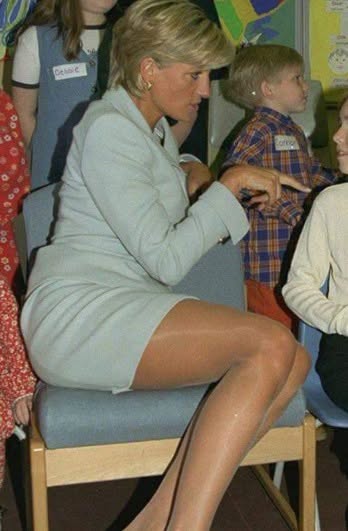
One of the most recognizable engagement photographs was taken at Buckingham Palace after the couple announced their engagement on Sunday, February 24, 1981. The image became part of royal history, not only because of the announcement itself, but also because of the attention it brought to Diana’s now-famous engagement ring.
Unlike many royal engagement rings, Diana’s ring was not a custom royal commission. The 12-carat sapphire, surrounded by 14 solitaire diamonds and set in white gold, came from a Garrard jewelry collection catalog. Years later, Prince William proposed to Catherine Middleton with the same ring, giving it a new place in modern royal history.
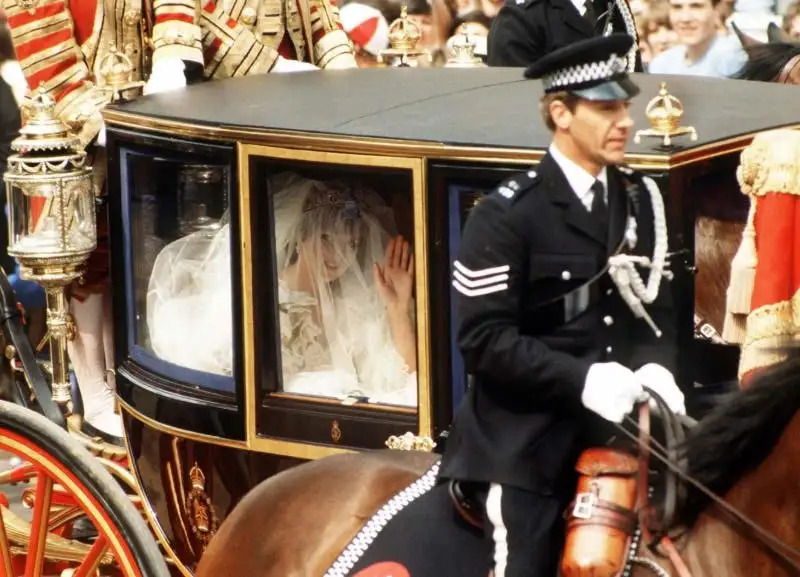
The wedding that followed brought enormous public attention. Diana’s gown, with its 25-foot train, became one of the most discussed wedding dresses in royal history. But it also caused practical problems. The train was difficult to manage, and after Diana entered the carriage, the fabric became slightly crushed and wrinkled.
There were also small human moments behind the ceremony. On the wedding day, Diana was reportedly so nervous and excited that she mixed up Charles’s names, saying “Philip Charles Arthur George” instead of “Charles Philip.” Her brother, Charles Spencer, later recalled that Diana also struggled with the tiara because she was not used to wearing one for so long and developed a headache.
In an interview, he remembered that “in the evening we all went to a sort of semi-private party and she was there and I just remember she had a cracking headache also since she wasn’t used to wearing a tiara all morning.”
Family Moments Behind The Formal Image
Some of the most enduring photographs of Diana are not the grand royal portraits, but the images of her with her sons. A ski trip with Prince William and Prince Harry showed a more relaxed side of royal family life. Another memorable photo shows Diana with Harry in matching outfits as he sticks out his tongue toward the crowd, a playful moment that stood apart from formal royal tradition.
Diana was also photographed leaving the hospital with Prince Charles after giving birth to her first son, William. Family portraits taken at Kensington Palace, including one from October 6, 1984, captured the public-facing image of a young royal family at the center of national attention.
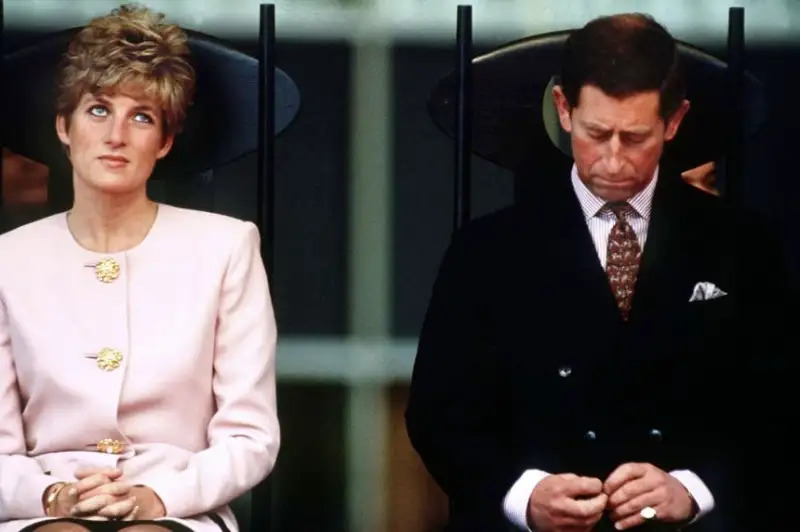
Other images show Diana greeting supporters, standing beside Charles in official settings, or sharing early married moments, including the couple’s first appearance before crowds as husband and wife and their first public kiss after the wedding.
Even during the honeymoon, the couple remained a subject of close observation. At the time, a lip reader claimed the newlyweds said that “the honeymoon was the ideal time to catch up on sleep,” a detail that reflected how closely even private-looking moments were examined.
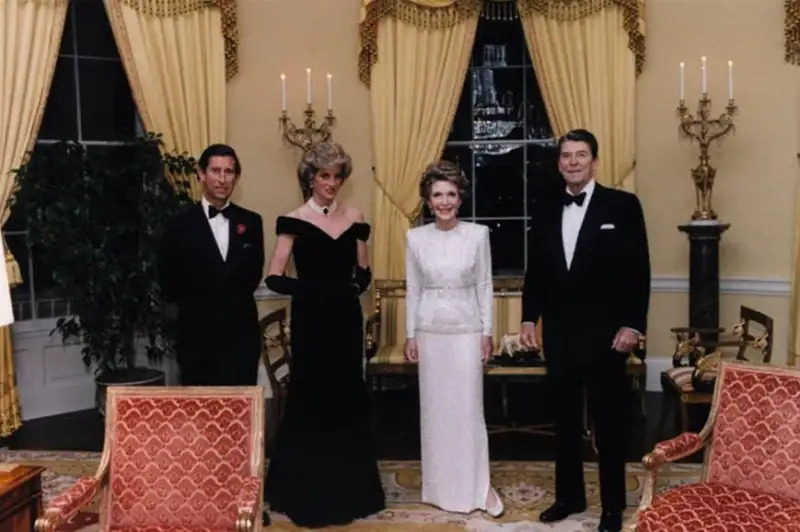
The royal wedding also came with unusual and highly symbolic gifts. Among the presents Charles and Diana received were a handcrafted porcelain centerpiece and an engraved Steuben glass bowl from the Reagans, as well as gloves made from 100-year-old silk and a timepiece set with diamonds and sapphires.
The Bigger Picture
Diana’s public life was not defined only by palaces, ceremonies, and royal fashion. One of the most powerful images from her later years shows her in Angola in 1997, where she visited landmine victims. That trip remains closely tied to her humanitarian legacy and to the way she used her visibility to draw attention to people living with the consequences of conflict.
Other photos show Diana in places far from the usual royal backdrop, including Australia’s Northern Territory at Alice Springs. These images helped create the impression of a royal figure who could appear at ease in very different environments, whether greeting crowds, visiting communities, or speaking with individuals face to face.
There were also personal and complicated chapters. Diana was photographed with her stepmother, whose relationship with Diana was often portrayed harshly in the press. She was also photographed on holiday with Dodi Fayed shortly before her death, images that later took on a deeply sad significance.
Her style remains part of her lasting image, too. A beach photograph of Diana wearing an animal-print bathing suit is often remembered for its relaxed confidence, while other portraits are still described by admirers as among the most beautiful images ever taken of her.
What makes these photographs endure is not just royal nostalgia. They show how Diana balanced duty, motherhood, public pressure, and compassion in front of a world that rarely looked away.
Decades later, Princess Diana’s image still carries emotional weight because so many of these moments feel human first and royal second.