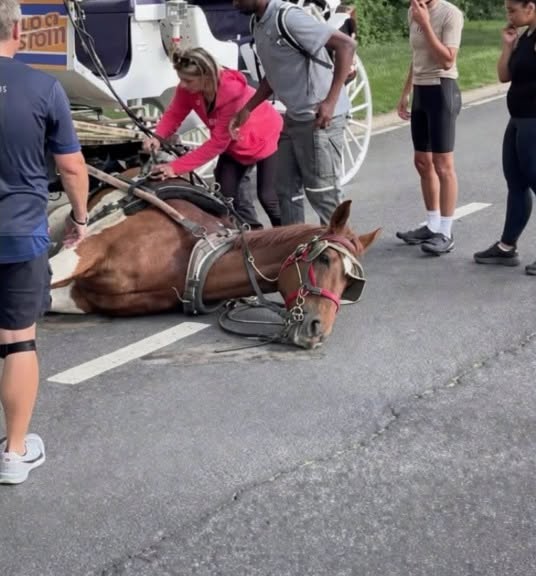
The horse appeared to be shielding a young animal beneath or near him, staying close in a way that looked less like weakness and more like protection.
That discovery changed how the rescuers understood the moment. The stallion’s stillness was not necessarily a sign that he had given up. It appeared to be part of a protective response, with the animal staying near something that needed safety.
Why Wildlife Rescues Require Patience
Wild animals do not always behave in ways people expect. Their actions can be shaped by instinct, fear, environment, and experience. What looks alarming from a distance may turn out to have a different explanation once trained responders have time to assess the situation.
That is why wildlife and animal rescue situations are often handled slowly. The goal is not only to help quickly, but to avoid causing extra stress or accidentally making the situation more dangerous.
In this case, careful observation allowed rescuers to understand what was happening before stepping in. Their priority became making sure both the horse and the vulnerable animal nearby could receive appropriate help without unnecessary disturbance.
The Bigger Picture
The encounter is a reminder that nature often asks for patience before judgment. A scene that first looked like an injured horse on the ground turned into a moment showing how strong animal instincts can be.
For anyone who comes across wildlife in distress, the safest choice is usually to keep a respectful distance and contact local animal rescue or wildlife authorities when possible. Getting closer for a better look can increase danger, even when the intention is good.
Sometimes the most important part of a rescue is not acting first, but looking carefully enough to understand what is really happening.