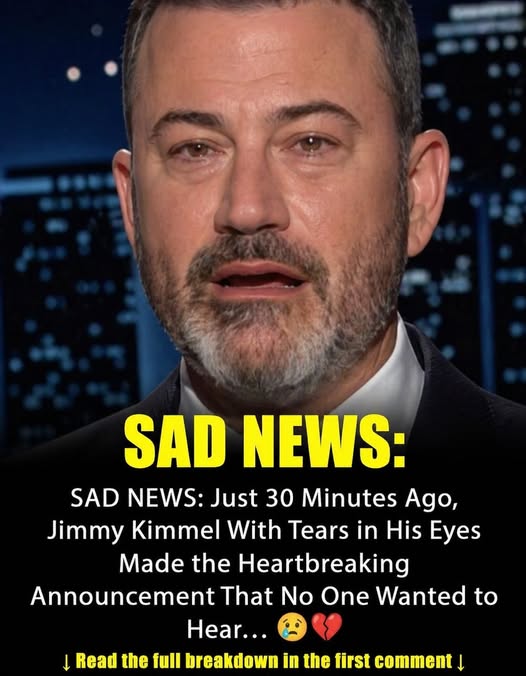
What made his reaction resonate so deeply wasn’t simply his long-known criticism of Donald Trump. It was the way he connected political outcomes to everyday vulnerability. Kimmel spoke not in terms of campaign slogans or party victories, but in terms of ordinary people: immigrants worried about deportation, elderly citizens uncertain about healthcare, parents struggling to afford groceries, and families already stretched thin by economic pressure. By focusing on human consequences rather than political theater, he transformed abstract election headlines into something intimate and immediate.
For many viewers, his words reflected a broader emotional divide that has been growing in America for years. There was a sense that two completely different versions of the country were colliding—one built on ideals of inclusivity and stability, and another driven by anger, distrust, and cultural polarization. Kimmel’s visible distress seemed to symbolize the shock felt by people who believed certain political outcomes were impossible, only to watch those assumptions collapse in real time.
The reaction online was immediate and deeply divided. Supporters praised him for showing vulnerability and speaking openly about fear and uncertainty in a moment when many public figures choose safer, more calculated language. Critics, meanwhile, accused him of dramatizing politics and allowing personal ideology to overshadow his role as an entertainer. Yet even many who disagreed with him admitted that the emotion on display felt genuine. That authenticity—raw, uncomfortable, and unscripted—is what made the moment linger long after the broadcast ended.
Beyond the political context, the moment also highlighted a larger shift in modern media culture. Late-night hosts like Kimmel are no longer viewed solely as comedians; they increasingly function as emotional interpreters for audiences processing crisis, division, and social instability. In times of uncertainty, viewers often turn to familiar public personalities not just for entertainment, but for reassurance, clarity, or even solidarity. Kimmel’s reaction showed how blurred the line between entertainer and public commentator has become.
Perhaps the most haunting part of the moment was that Kimmel did not claim to have answers. He did not offer certainty or promise that everything would improve quickly. Instead, he spoke from a place of visible concern and emotional exhaustion, reflecting the feelings of many Americans who fear that political division is no longer just ideological, but deeply personal and destabilizing. His tears became symbolic not simply because they were emotional, but because they revealed how profoundly politics now shapes people’s sense of safety, identity, and belonging.
Whether viewers agreed with him or not, the moment struck a nerve because it captured something undeniably real: the growing feeling that public life has become emotionally overwhelming for millions of people. And in those few quiet minutes on television, Jimmy Kimmel became more than a host delivering commentary—he became a mirror reflecting a country struggling to recognize itself.