Then money entered the story, and everything changed.
The Proposal That Was Never About Romance
By the time Rick came into her life, she was barely keeping herself afloat. Her apartment was in poor condition, her bills felt constant, and the fear of losing what little she had followed her every day.
Rick was wealthy, but not in a careless way. He had built something substantial, and he understood the cost of keeping it intact. He watched people closely. He noticed who agreed with him only because of his bank account, and who was willing to challenge him when something did not make sense.
That was why he noticed her.
He told her he trusted her more than he trusted his own family. It was not a romantic confession in the traditional sense. It was practical, unsettling, and strangely honest. To her, it also sounded like a possible escape from the instability that had defined her life.
When she told Violet, the friendship fractured. The person who had once made her feel safe suddenly could not accept what was happening. The words exchanged between them hurt more deeply than she expected, because they came from someone she had believed would always stand beside her.
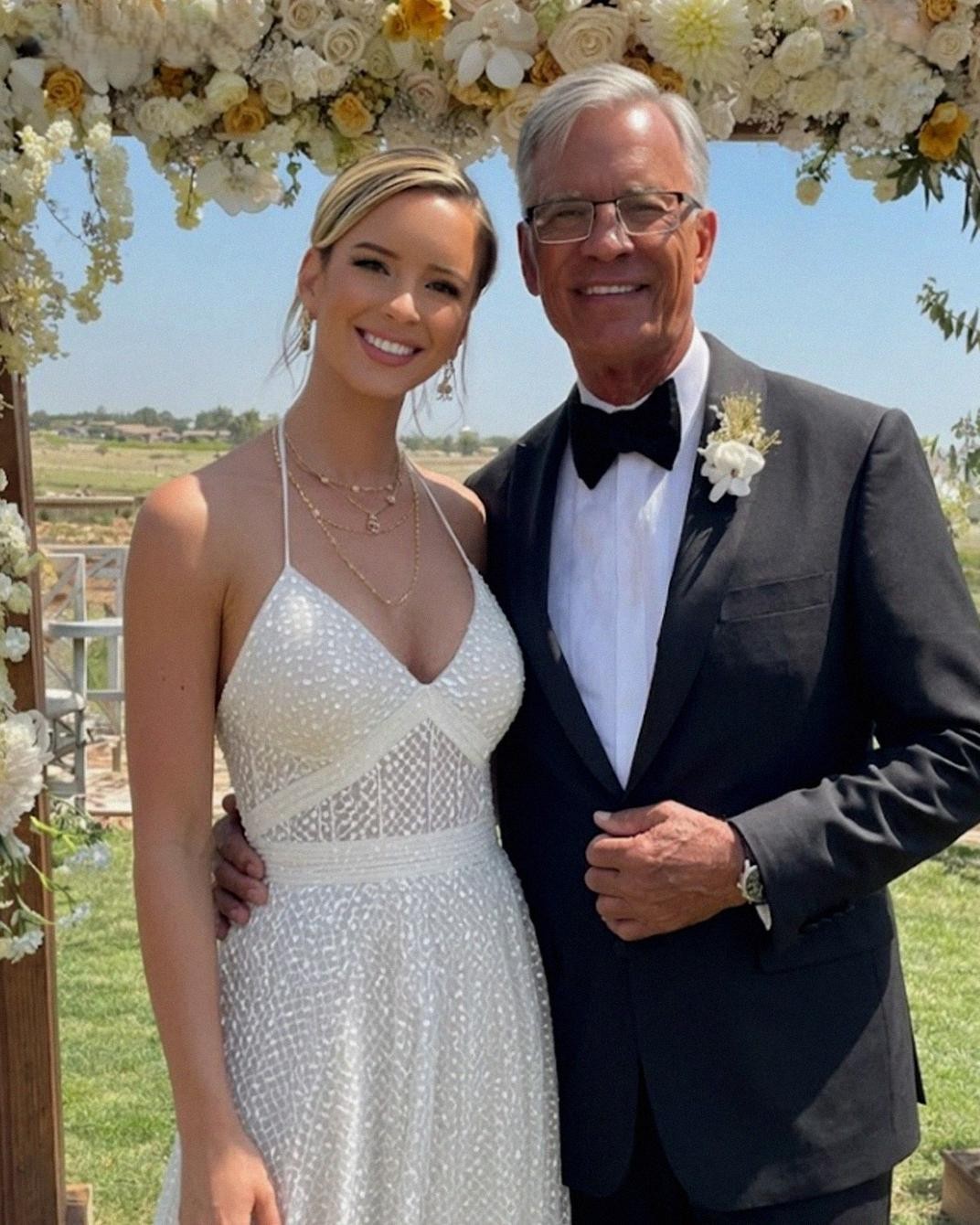
The wedding itself was small and tense. There was no warmth in the room, no sense of celebration. It felt less like the beginning of a marriage and more like the opening move in a fight that had already been going on for years.
The Truth Rick Revealed After the Wedding
On their wedding night, Rick finally explained why he had married her.
He had a serious heart condition. He had months left, perhaps a year. His family knew his health was failing, and according to Rick, they were already trying to take control before he was gone.
His son, David, had attempted to have him declared mentally unfit. His daughter, Angela, had been removing loyal employees and shifting money in ways Rick did not trust. Even medical bills connected to Violet’s mother, which others had taken credit for handling, had reportedly been paid by Rick without their knowledge.
Rick did not believe his family was simply preparing for the future. He believed they were trying to seize it.
He told his new wife that he had not married her for companionship. He had married her to protect the business, the foundation, the estate, and the people who depended on them. In his view, she saw details others ignored. That, more than charm or status, was what he needed.
From that moment, she was no longer just a woman who had married into wealth. She had been placed in the center of a family and financial conflict with serious legal and business consequences.
The months that followed proved Rick had not exaggerated the tension. Angela treated her like an intruder in a house she now legally shared. David spoke to her as if her role would disappear the moment Rick died. But the more they dismissed her, the more clearly she understood what they feared: losing what they believed already belonged to them.
Rick’s condition declined faster than expected. One night, he collapsed in the living room. While she tried to keep him conscious and called for help, Angela complained about the inconvenience. That moment changed how she saw them. Whatever family loyalty had once existed in that house seemed to have been replaced by entitlement.
The Bigger Picture
Near the end of his life, Rick gathered everyone together and made his wishes unmistakably clear. She would stay. She would oversee the foundation, the company, and the work he wanted finished.
Then he revealed what he had collected: records of transfers, falsehoods, and quiet moves others believed had gone unnoticed. For the first time, the people who had spoken over her had nothing to say.
After Rick’s death, the conflict did not end. There were legal battles, power struggles, and attempts to remove her from the role he had left behind. But Rick had prepared for that. His decision was not only emotional; it was structured around control of assets, governance, and the future of the organization he had built.
In stories involving estates, family businesses, foundations, and inheritance disputes, paperwork often matters as much as personal loyalty. Rick understood that trust had to be backed by documentation, planning, and clear authority. Without that, even a final wish can become another fight.
Later, Violet returned, changed by everything that had happened. She brought records showing what Rick had done for her family. The gesture mattered, but it no longer defined the woman Rick had chosen.
She did not need Violet’s approval anymore. She did not need David or Angela to see her as worthy. The girl who used to disappear into corners and laugh a moment too late just to fit in was gone.
Now, when she walks into the foundation office, she does not feel like a visitor. She sits at the desk Rick left behind knowing that the security she once wanted was not the only thing she gained.
She gained a voice, a purpose, and the right to stop shrinking herself for people who never intended to make room for her.
Sometimes the life someone leaves behind is not just an inheritance. It is a responsibility, and a chance to become the person no one expected you to be.