Inside were medical reports and a letter from Ben. The first lines made it clear he had not expected her to discover it so soon.
He wrote that if she was reading the letter, someone had failed to keep a secret. He had hoped she would not find the papers until much later.
Then came the truth: the doctors had been right that he was ill, but they may not have had the complete picture.
According to the letter, three weeks after his diagnosis, another specialist had reviewed his case. That specialist believed Ben might qualify for an experimental treatment that was already showing promising results.
For a moment, the running bathroom faucet was the only sound in the room. She looked between the reports and the letter, trying to understand why Ben had kept something so important from her.
The answer was written plainly. Ben said he could not ask her to marry him based on hope alone. He wanted her to choose him while knowing she might lose him. If she still married him under those circumstances, he would know her decision was not tied to promises about tomorrow.
She slipped the papers back into the envelope just before Ben returned to the room, weak but smiling. For that night, she kept the envelope hidden beneath her pillow.
A Conversation They Couldn’t Avoid
By the next morning, pretending was no longer possible.
She asked him if he had planned to tell her eventually. The silence that followed said almost as much as his answer.
Ben told her he had not been trying to protect himself. But she pushed back. He did not get to decide what she could handle, especially now that they were married.
What mattered, she told him, was that they would face whatever came next together.
Ben admitted that marriage had changed things. The secret he had carried alone could no longer stay between them.
Within a week, they were on a plane to the research hospital connected to the experimental treatment. The journey ahead was not simple or easy. It involved scans, blood tests, specialist appointments, and long periods of waiting.
Some days, Ben could barely get out of bed. Other days brought small improvements that felt enormous. Setbacks arrived too, and each one made the future feel fragile again.
Their story became less about one dramatic discovery and more about the daily reality of serious illness: appointments, uncertainty, hard conversations, and the emotional cost of hoping without guarantees. It is a reminder that medical decisions often affect an entire family, not just the patient.
The Day Everything Felt Different
Nearly a year after their hospital-room wedding, Ben sat across from his oncologist on a winter morning, waiting for the latest scan results.
The doctor studied the images, then turned the monitor toward them. Even the doctor had tears in his eyes.
Ben still needed regular checkups, the doctor told them. But for the first time in more than a year, the future did not feel like borrowed time.
They walked outside into bright sunshine, carrying a kind of relief they had almost forgotten was possible.
Five years later, they finally held the wedding reception they had canceled. It was not because they needed a second wedding. It was because they wanted to celebrate the days they once feared they would never have.
The chaplain who had married them in the hospital came. So did the nurse who had once whispered in the hallway and helped make sure the secret did not stay buried.
At the reception, Ben danced with her grandmother. Later, he raised a glass and spoke about what those years had taught him. He had once thought life was measured by how much time a person had. Now he believed it was measured by who stands beside you while you fight for every tomorrow.
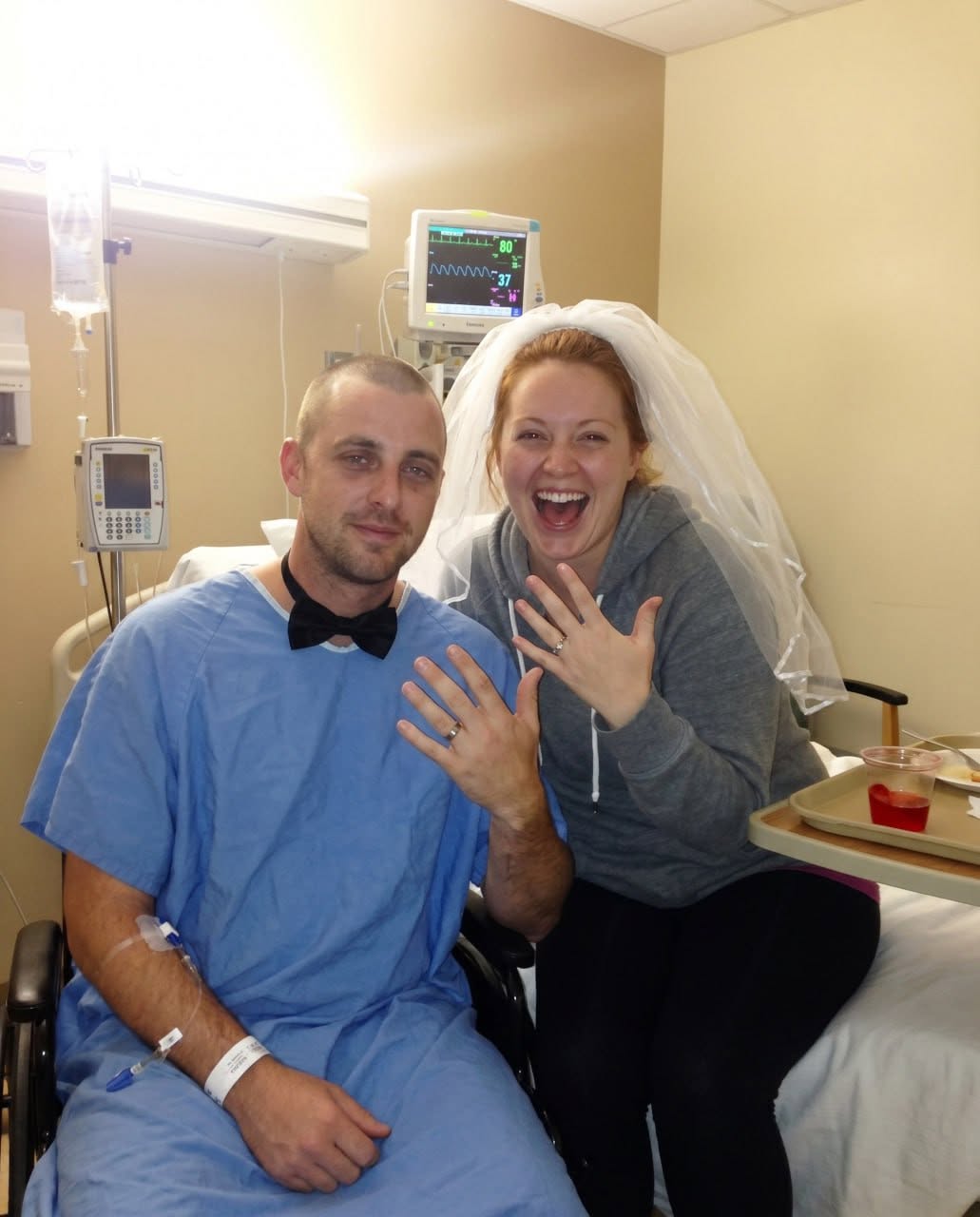
Their first wedding had lasted only fifteen minutes in a hospital room. But in the end, it became the foundation for everything that followed.
Some love stories are not defined by perfect timing. They are defined by what two people choose to face together.