A Home Slowly Stripped Of Memories
Linda did not arrive quietly. According to Delilah, she began removing reminders of her mother from the home piece by piece. Photos disappeared. Handmade quilts were put away. A favorite mug was treated like clutter.
Whenever Delilah objected, Linda framed it as a need to move forward. But to Delilah, it felt deliberate. The home that once held her mother’s warmth was being edited into something colder.
The prom dress remained the one thing Linda could not easily dismiss. It was personal, handmade, and meant for a specific night. Delilah kept it safely in her room, believing it was beyond Linda’s reach.
Then she found Linda looking at it.
Linda suggested it might be hard for Delilah’s father to see her wearing the gown. The comment landed badly. Delilah understood it as something more than concern. It sounded like Linda wanted the dress, and everything it represented, diminished.
The Seamstress Noticed Something Was Wrong
Two weeks before prom, a small flower on the gown came loose. Delilah took it to a local seamstress, Mrs. Harper, hoping for a careful repair.
Mrs. Harper immediately recognized the work as meaningful. But as she examined the dress, she told Delilah something unsettling: a woman had come in about a month earlier asking for an exact copy.
The requested duplicate was not inspired by the gown. It was meant to match every seam and measurement. Mrs. Harper said she refused the job because the request felt wrong. Her description of the woman matched Linda.
That meant Linda had not merely admired the dress. She had tried to reproduce it, apparently to take away what made it unique.
Delilah told Gary, her best friend and prom date. Instead of offering a simple reassurance, he helped prepare for what might happen next.
Prom Night Took A Painful Turn
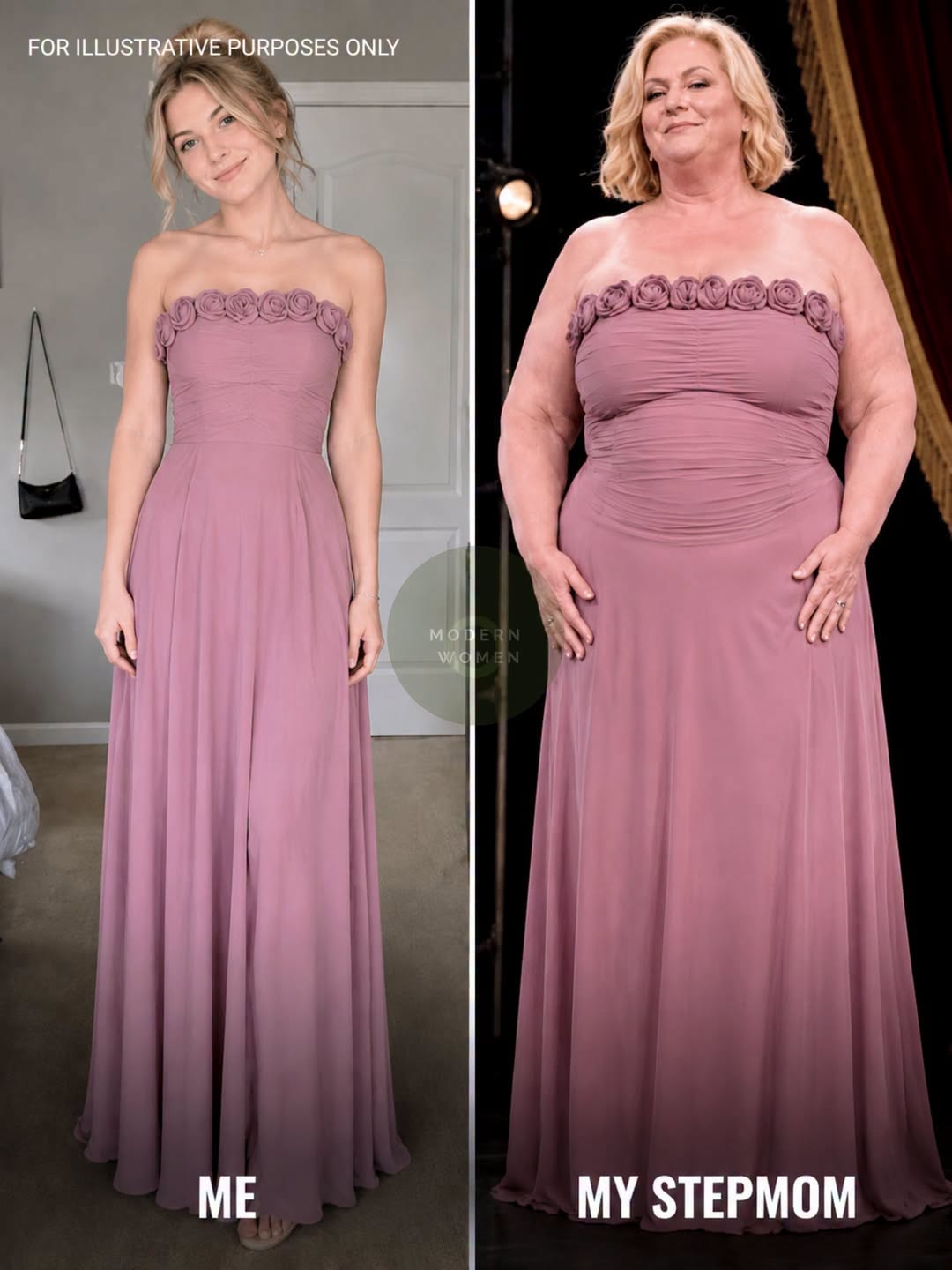
When Delilah arrived at prom, she wore the original gown her mother had made. For a moment, she felt connected to her mother again. The satin, the handmade flowers, and the careful stitching turned the night into something bigger than a school dance.
Then Linda entered.
She was wearing a copy of the same dress.
The room grew tense. Linda approached Delilah and made it clear that she wanted people to see Delilah as less special. The cruelty of the moment left Delilah frozen.
Gary stepped in. He moved toward the stage, where the principal and Mrs. Harper were waiting. Soon, a projector displayed images showing the original dress and photos Linda had taken while going through Delilah’s closet.
Gary explained to the room that the original gown had not come from a designer label. It had been made by a dying mother for her daughter. Mrs. Harper then described the earlier attempt to commission a copy.
The mood in the gym shifted. What had first looked like an awkward coincidence became something much more personal. Linda’s copied dress was no longer seen as fashion. It was seen as an attempt to intrude on a mother’s final gift.
Linda protested that she was being humiliated, but the damage was already done. A parent in the crowd reportedly summed up what many were thinking: this was not about fabric, but about trying to take away a memory that did not belong to her.
Delilah’s father, who had stayed silent through months of tension, finally stepped toward his daughter. He placed his jacket around her shoulders and apologized in front of the room, admitting that grief had made him blind to what was happening.
Linda reached for him, but he stepped away.
For Delilah, that moment mattered as much as the public exposure. Her father finally saw the pain she had been carrying and chose to stand beside her.
Why This Matters
Family heirlooms often carry a value that cannot be measured by money. A handmade dress, a photo, a quilt, or a small household object can become a link to someone who is gone. When another person tries to control or erase those reminders, the conflict can cut deeply.
This story resonates because the dress represented more than prom. It represented grief, memory, and a daughter’s right to hold on to the love her mother left behind.
In the end, the copy could imitate the stitching, but it could not copy the meaning. Some gifts remain one of a kind because of the hands that made them.