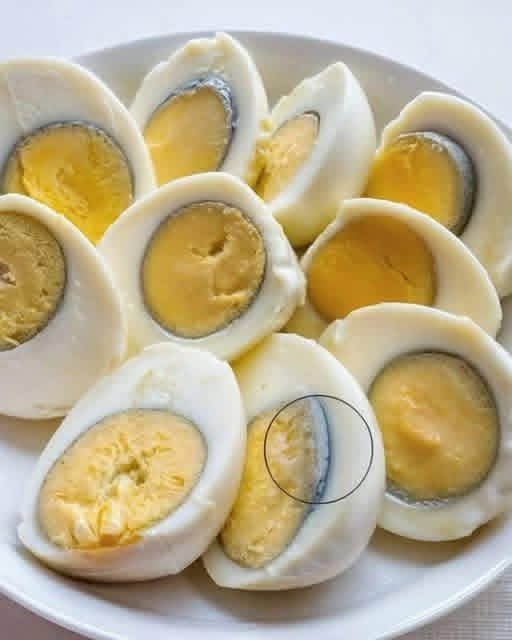
Good news: it’s not bacteria, it’s not rot, and it doesn’t automatically mean the egg is unsafe. It’s mainly a sign of overcooking (or not cooling the eggs quickly enough). The flavor can be a bit more “sulfury,” and the texture can turn dry or chalky—but it’s typically still edible.
The Real Cause: Overcooking (and Overheating)
A lot of people try to “play it safe” by boiling eggs hard for 15–20 minutes. That’s the fast track to:
- Rubbery egg whites
- Dry, crumbly yolks
- The dreaded green ring
Instead, the goal is controlled heat and precise timing—more like a reliable kitchen technique than a guessing game.
The Best Method for Perfect Hard-Boiled Eggs (No Green Ring)
Step 1: Start in Cold Water (for Even Cooking)
Place eggs in a single layer in a pot. Add cool water until the eggs are covered by about 1–2 inches.
This gradual warm-up helps prevent cracking and reduces the chances of uneven cooking.
Step 2: Bring to a Gentle Boil—Then Turn Off the Heat
Set the pot over medium heat and bring the water to a gentle boil. Once it’s steadily bubbling:
- Turn off the heat completely
- Cover the pot with a lid
- Let the eggs sit in the hot water
This “carryover cooking” sets the yolk without forcing that sulfur-and-iron reaction into overdrive.
Timing guide:
- 9 minutes: slightly softer but set yolk
- 10–12 minutes: firm, creamy yolk (great for meal prep and salads)
For most kitchens, 12 minutes is the sweet spot for a fully set yolk that still stays golden.
Step 3: Use an Ice Bath Immediately (This Is the Game-Changer)
As soon as the timer ends, move the eggs straight into an ice water bath.
This matters because eggs keep cooking inside the shell even after you remove them from hot water. That extra heat is often what causes the green ring—even when your timing seemed perfect.
Leave eggs in the ice bath for 5–10 minutes, until they’re cold all the way through.
Bonus Benefit: Ice Bath = Easier Peeling
The rapid cooling also helps the egg pull slightly away from the shell, making peeling cleaner and faster. If you’ve ever peeled an egg and lost half the white to the shell, this step is usually what was missing.
One More Pro Tip: Slightly Older Eggs Peel Better
Very fresh eggs are fantastic for frying and poaching, but they can be stubborn when hard-boiled. Eggs that have been in the fridge for a few days typically peel more easily because the internal chemistry shifts slightly over time.
So if you’re planning deviled eggs, egg salad, or high-protein meal prep, using eggs that aren’t brand-new can make the job smoother.
Don’t Guess—Use a Timer
The difference between a perfect yolk and a green ring can be just a couple of minutes. A simple kitchen timer turns hard-boiled eggs into something you can nail every single time—whether you’re cooking one egg or a full dozen.
Final Takeaway
The green ring is a harmless sign that the egg got a little too much heat for a little too long. Control the temperature, rely on carryover cooking, and always finish with an ice bath. You’ll get beautiful golden yolks, tender whites, and shells that practically slide off.
Want more simple kitchen fixes like this? Drop a comment with your biggest cooking frustration—or share how your eggs turned out after trying the method.