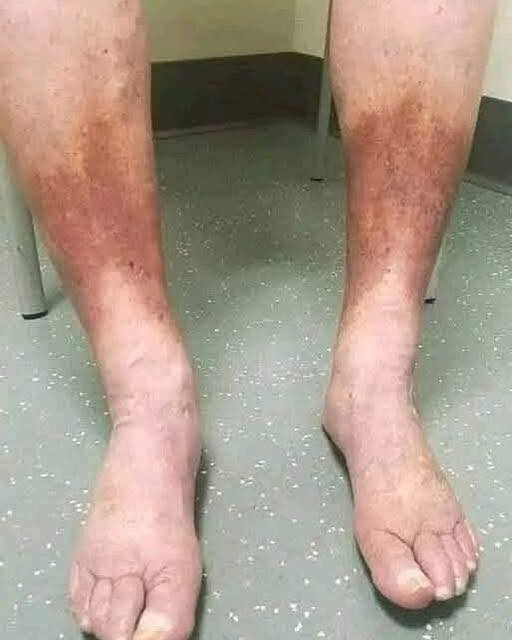
Diet can also play a role. Sodium causes the body to hold onto water, so meals high in salt or processed foods may contribute to temporary swelling in some people. Hot weather can have a similar effect. When temperatures rise, blood vessels widen as part of the body’s cooling process, and fluid can more easily collect in the lower legs and feet.
Injury is another common explanation. A sprain, strain, or minor twist can lead to localized swelling as the body sends fluid and immune cells to the area. In those cases, swelling is usually connected to pain, tenderness, or a clear incident such as stepping awkwardly or overdoing exercise.
When Swelling May Point to Something More Serious
Swelling that is persistent, unexplained, or getting worse should not be ignored. The heart, kidneys, and liver all help regulate fluid in the body. If one of these systems is not working well, fluid can build up and become more noticeable in the legs, ankles, and feet.
For example, when the heart is not pumping efficiently, pressure can build in the veins and push fluid into surrounding tissues. If the kidneys are not removing enough sodium and water, extra fluid may remain in the body. The liver also matters because it produces proteins that help keep fluid inside blood vessels.
Some symptoms require urgent attention. Swelling in only one foot or leg, especially if it is significant, may signal a blockage such as deep vein thrombosis, often called DVT. This can be serious because a clot may travel to the lungs.
Other warning signs include swelling with redness, warmth, fever, or skin that feels painful to touch, which may suggest infection. Swelling along with chest pain, shortness of breath, or sudden severe fatigue should be treated as an emergency.
Another sign to notice is pitting edema. This means pressing a finger into the swollen area leaves an indentation that stays for a while. It does not always mean there is a dangerous problem, but it is a reason to seek medical guidance, especially if it is new or worsening.
What Readers Should Know
For mild swelling after a long day, simple steps may help. Elevating the feet above heart level for 20 to 30 minutes can encourage fluid to move back toward the upper body. Gentle movement, such as walking, ankle circles, or calf raises, can also support circulation.
Compression socks may help some people by applying gentle pressure to the lower legs, although they are not right for every situation. Anyone with circulation problems, certain medical conditions, or significant one-sided swelling should ask a healthcare professional before using them.
Everyday prevention can also make a difference. Reducing excess sodium, drinking enough water, maintaining a healthy weight, and taking movement breaks during long periods of sitting or standing may reduce recurring swelling. For people who travel often or work at a desk all day, short walking or stretching breaks are a practical habit.
Swollen feet are often a simple message from the body: move more, elevate your legs, cool down, or rest. But when swelling is sudden, one-sided, painful, persistent, or linked with breathing or chest symptoms, it is worth taking seriously. Paying attention early can help you decide when home care is enough and when medical advice is the safer next step.