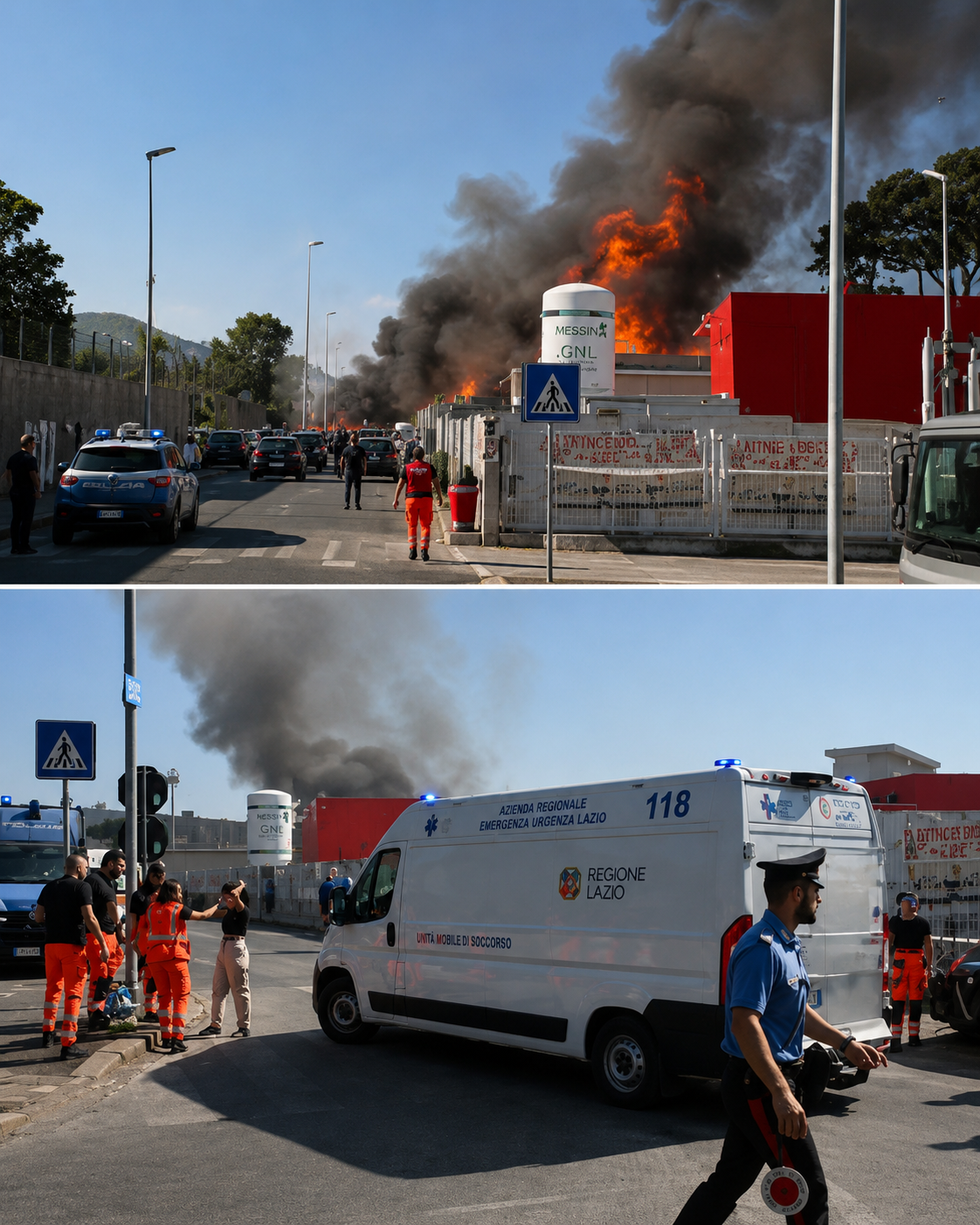
On the roadway, drivers closest to the tanker had little time to react. Some abandoned their vehicles and ran. Others climbed over barriers or tried to reach nearby side streets and open areas as flames spread through stopped traffic.
Dozens of vehicles, including cars, motorcycles, and commercial vehicles, were caught in the fire. Emergency crews moved into the area as quickly as possible, but the heat, smoke, and scale of the damage made rescue work extremely difficult.
Firefighters worked to control the flames while paramedics searched for survivors. Police set up emergency perimeters as thick black smoke continued rising over the surrounding neighborhoods.
Investigation Focuses on Safety and Oversight
Investigators are now working to determine what caused the tanker to overturn and how the explosion unfolded. The wreckage is being examined as officials attempt to reconstruct the moments before the disaster.
The incident has also raised broader questions about the movement of hazardous materials through densely populated areas. Residents and critics are asking whether existing rules, inspections, permits, insurance requirements, and compliance checks were strong enough to reduce the risk.
Those questions matter beyond this single crash. Transporting fuel and other hazardous cargo is part of daily commerce, but accidents can carry major public safety, healthcare, legal, insurance, and infrastructure costs. When a tanker route passes close to homes, businesses, schools, and commuter corridors, the consequences of a failure can spread far beyond the vehicle itself.
Some safety advocates have called for tougher inspections, improved driver training, stronger enforcement, and possible rerouting of fuel tankers away from crowded urban corridors. Officials have not yet announced a final cause, and the investigation remains ongoing.
The Bigger Picture
For people living near the highway, the explosion was not an abstract transportation issue. Homes and businesses in the area reportedly suffered damage such as broken windows and other impacts from the force of the blast.
The roadway itself also carried the marks of the fire, with burned vehicles and heat-damaged pavement left behind after the flames were brought under control. In the days that followed, memorials began appearing near the site as families and strangers gathered to mourn.
Survivors have described moments of fear, confusion, and courage, including drivers helping others escape and first responders entering dangerous conditions to reach the injured.
For now, families continue grieving, hospitals continue treating victims, and investigators continue searching for answers. The central question remains whether stronger safeguards could have prevented the tragedy — and what must change before another ordinary commute faces the same risk.
As the investigation develops, the lessons from this highway disaster may shape how communities think about safety, regulation, and the hidden risks that pass through daily traffic.