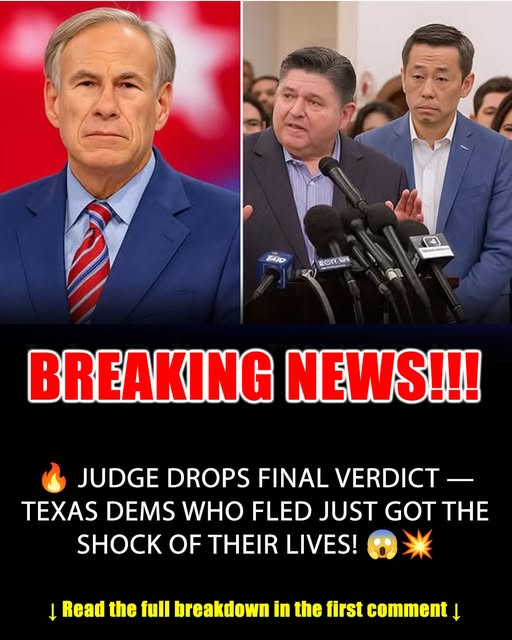
A Political Protest Turns Personal
The controversy began when Democratic lawmakers left Texas in an effort to deny Republicans the quorum needed to advance controversial voting legislation. By leaving the state, Democrats hoped to stall the legislative process and draw national attention to what they described as threats to voting rights.
At first, the move energized supporters across the country.
Now, however, the political drama has entered a much harsher phase.
Texas House leadership has reportedly moved beyond procedural consequences and into financial punishment. The combination of mounting daily fines and disrupted salaries is placing increasing pressure on lawmakers to return — whether they want to or not.
Supporters of the penalties argue the absent legislators created the situation themselves.
“These lawmakers were elected to show up and do their jobs,” critics of the walkout argue. “If ordinary Texans stopped showing up for work, they wouldn’t expect a paycheck either.”
Many conservatives see the fines as a necessary response to what they view as political theater that has disrupted the legislative process and left constituents without representation.
Democrats Call the Move Dangerous
Opponents of the crackdown see something far more alarming unfolding.
Democratic allies and civil liberties advocates argue the punishment sets a troubling precedent by financially targeting political dissent. To them, the issue is no longer just about attendance or legislative procedure — it’s about whether a ruling majority can use economic pressure to force political compliance.
Critics warn that if withholding pay becomes an accepted tool against lawmakers who protest or resist legislation, future political battles could become less about debate and more about who can afford to withstand punishment.
The concern has fueled outrage among supporters of the absent lawmakers, many of whom believe the Democrats are using one of the few tools available to slow legislation they strongly oppose.
The Stakes Keep Growing
As the standoff drags on, pressure is mounting on both sides.
Republicans appear determined to demonstrate that walkouts will carry serious consequences. Democrats, meanwhile, are attempting to frame the financial penalties as proof that the majority party is willing to weaponize government power against opposition voices.
Neither side seems ready to retreat.
And with every passing day, the cost of the conflict grows — politically, financially, and publicly.
What started as a dispute over voting legislation has now become something much bigger: a battle over power, resistance, and the limits of political authority in modern America.
One thing is becoming increasingly clear inside Texas politics:
This is no longer just a legislative disagreement.
It is a high-stakes showdown over who controls the rules — and how far leaders are willing to go to enforce them.