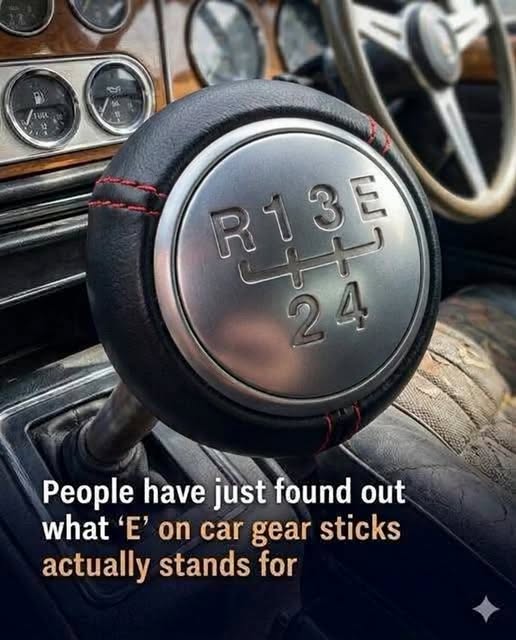
For manual-transmission cars, the “E” sometimes appeared where a fifth gear might normally be expected. On some older Volkswagen models, for example, this was essentially a tall overdrive gear. Drivers would use it after reaching cruising speed, usually on the highway, to lower engine RPM and make steady-speed driving more efficient.
That tall gearing came with a trade-off. The car could cruise quietly, but it would not respond strongly if the driver needed to accelerate quickly. Passing another vehicle or climbing a hill usually required a downshift back into a standard gear.
Why It Was Useful for Drivers
The old “E” setting made sense in an era when fuel economy was becoming a major concern for car buyers. After the oil crises of the 1970s, automakers looked for practical ways to reduce fuel consumption without completely redesigning every vehicle.
For owners, the benefit was easy to understand. Lower engine speeds during relaxed driving could help stretch a tank of fuel, especially on longer highway trips. It could also make the cabin feel calmer because the engine was not working as hard at cruising speed.
There was a driver-awareness benefit, too. Using an Economy gear or mode required paying attention to road conditions. You had to know when the car was comfortable in that setting and when it needed a lower gear. That made the feature different from today’s automatic systems, which often make those decisions in the background.
Why Modern Cars No Longer Need It
The physical “E” button or gear faded as vehicle technology changed. Modern cars use electronic control units that constantly monitor throttle position, speed, load, and other driving conditions. Automatic transmissions now often have many more gears than older three-speed or four-speed units, allowing the car to choose efficient ratios without the driver thinking about it.
Today’s Eco Mode is the modern version of the same idea, but it is broader. Depending on the vehicle, it may adjust throttle response, shift timing, engine behavior, and even climate-control operation to reduce energy use. In hybrids and electric vehicles, efficiency settings can also affect how power is delivered and how regenerative braking feels.
That makes newer systems more effective in many situations, but less mechanical and less visible. The old “E” gave drivers a clear, physical reminder that they were choosing efficiency over quick response.
The Bigger Picture
The forgotten “E” is a small detail, but it says a lot about how cars have changed. Older vehicles often asked drivers to participate more directly in how the machine worked. Modern vehicles rely more on software, sensors, and automatic optimization.
For most drivers, that is a good thing. Better transmission programming and modern efficiency features can reduce fuel costs and make daily driving easier. But for people who enjoy the feel of older cars, that simple letter on the gear selector remains a reminder of a more hands-on style of driving.
Next time you see an old “E” on a shifter or console, it is worth a second look. It was a small feature with a practical job: helping the driver trade a little urgency for a smoother, more economical ride.