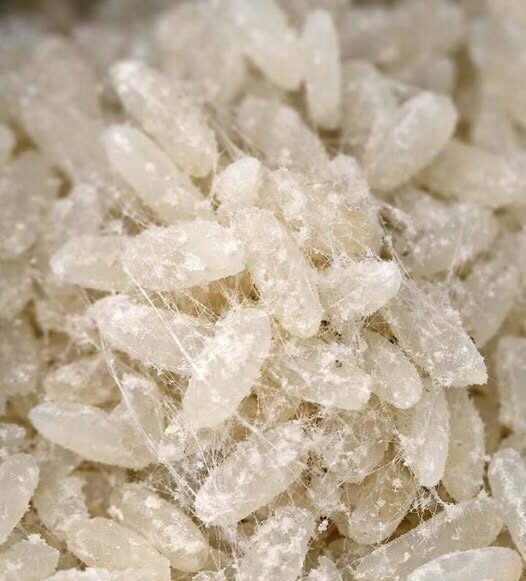
Opening a container of rice and finding thin, web-like strands is enough to make anyone stop cooking. Rice is supposed to be dry, loose, and clean, so stringy clumps can immediately raise questions about food safety, storage, and whether the rest of the pantry is still usable.
In most cases, that webbing is not part of the rice. It is a warning sign of pantry pests, most commonly the larvae of the Indian meal moth, a household insect that can infest rice, flour, cereal, grains, nuts, dried fruit, pasta, pet food, and other dry goods.
What the Webbing Usually Means
The fine white or off-white threads found in rice are typically silk-like material produced by pantry moth larvae. As the larvae feed and move through stored food, they spin webbing between grains. Over time, that can make rice stick together, form clumps, or cling to the sides of a container.
The problem may be easy to miss at first. Sometimes the webbing only becomes noticeable when the rice is scooped, poured, or stirred. In a more developed infestation, the strands can be visible across the surface or throughout the container.