A Thursday Night That Changed Everything
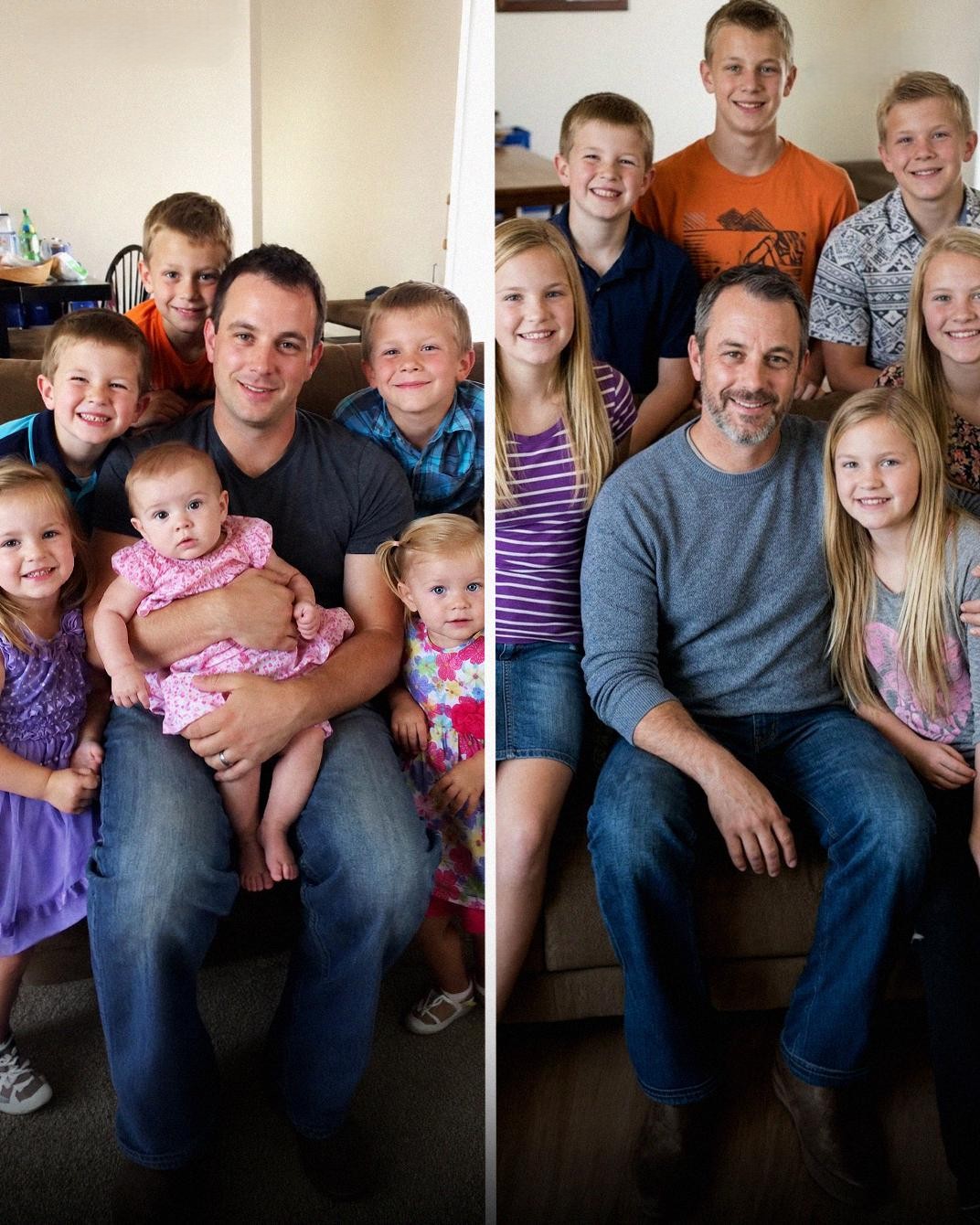
My ex-wife, Melissa, left when our youngest, Sophie, was still a baby. I remember the sound of suitcase wheels clicking across the kitchen tile like a countdown I couldn’t stop. She didn’t sit the kids down. She didn’t explain. She didn’t even wake them.
I had already seen the messages—someone promising her an easier life, a “fresh start,” the kind of fantasy that ignores diapers, bills, and the exhausting, beautiful chaos of raising six kids.
Her parting words weren’t an apology. They were a justification. She said she felt trapped. She said the kids would be “better off” than watching us struggle. Then she walked out while our children slept, leaving me to carry the weight of everything she dropped.
And from that night on, I did what a lot of parents do when they’re trying to protect their kids: I softened the truth.
When they asked where she went, I didn’t poison them with my anger. I didn’t call her names. I didn’t tell them she chose someone else. I gave gentle, vague answers because I wanted them to grow up without bitterness—even when I was awake at 3 a.m., pacing the hallway, whispering promises I wasn’t sure I could keep.
The Birthday Party That Turned Into a Reckoning
Caleb’s eighteenth birthday started like every big day in our house: loud music, kids everywhere, too much food, and not enough chairs. I was outside at the grill when Sophie—now old enough to have opinions—complained that her hair didn’t look right.
Then the doorbell rang.
I opened the door and froze.
Melissa stood there like she belonged on a billboard—cream-colored coat, diamond earrings, expensive perfume, and a smile that acted like twelve years was just a long break. Behind me, my kids gathered quietly, shoulder to shoulder. Not one of them stepped forward. They didn’t see a “mother returning.” They saw a stranger connected to an old wound.
Melissa tried to take control of the moment with a speech that sounded practiced. She told anyone listening that she’d been unhappy, that she “had to survive,” that she couldn’t give us the life we deserved back then.
She also aimed a subtle jab my way—suggesting I hadn’t been able to provide enough.
But the kids weren’t little anymore. And Caleb, now grown and steady, didn’t flinch.
The Luxury Gift That Couldn’t Buy Back Time
Melissa led us outside like she was about to reveal a miracle.
At the curb sat a brand-new Mustang with a huge red bow stretched across the hood—like a commercial for forgiveness. She held the keys out to Caleb, smiling as if a car could cover up twelve years of missed birthdays, empty seats, and unanswered questions.
For a split second, I felt something sharp in my chest. Not jealousy—something closer to shame. I thought about the used bikes, the patched baseball gloves, the stretched grocery budgets, and the nights I counted bills twice to make sure the lights stayed on.
Then I looked at Caleb.
He wasn’t staring at the car like it was salvation. He looked at me, and in his eyes was something money can’t create: respect for the parent who stayed.
Caleb took the keys. And then he said, calmly, that he had a gift for her too.
The Dusty Shoebox That Held the Truth
Caleb went inside and came back with a shoebox tied with a faded blue ribbon. I recognized it immediately. He’d kept it for years, tucked away like a private archive.
Melissa opened it, expecting what—letters of longing? A sentimental reunion?
The first envelope was labeled “Mommy” in shaky childhood handwriting. Inside was a small card from years ago, telling her he’d saved her a piece of cake.
As she dug deeper, the handwriting changed. The names changed too:
- “Mommy”
- “Momma”
- “Mother”
- And finally, just: “Melissa”
The shoebox wasn’t a love letter. It was a timeline of absence.
Inside were hospital bracelets from ER visits she never showed up for. Programs from school plays where her seat stayed empty. Little reminders of ordinary moments most parents take for granted—moments she skipped without a second thought.
There were even receipts: cheap cake mix, lunch meat, and groceries bought when money was tight. Some were folded behind overdue notices—because that was our reality while she was building her “new life.”
And then came the notes that hit hardest: sticky reminders I’d written to myself to learn how to French braid so my daughters wouldn’t feel different on picture day.
The street went quiet. Even the party noise behind us faded.
Because the truth was sitting in that shoebox, plain as day: while she was gone, we didn’t fall apart—we fought to stay whole.
When the Kids Spoke, There Was Nowhere Left to Hide
Melissa tried to pivot. She claimed I must have “turned them against her.”
That’s when I finally stepped in.
I told her the truth: for twelve years, I was the barrier between her and their anger. I protected her image when she didn’t deserve it. I refused to let the kids call her selfish, even when they were hurt and confused and furious.
One by one, the kids confirmed it. They admitted I never let her become the household villain, even though it would’ve been easier to let my resentment do the talking.
Then Sophie—the baby Melissa left behind in a duck onesie—looked up at her and said, clear as day:
“I don’t know who you are.”
No yelling. No drama. Just the simplest, most honest sentence possible.
The Moment Caleb Chose What Actually Matters
Caleb handed the keys back.
He told her to keep the Mustang. Keep the diamonds. Keep the version of motherhood that shows up late with expensive gifts and expects applause.
Because he already knew who his parent was.
Melissa stared at the shoebox, then at the six kids who no longer felt like hers, and something in her expression finally cracked—not sadness, exactly. More like realization.
She walked back to her car alone.
No grand reunion. No movie ending. Just consequences.
What I Told My Son After She Left
When the car pulled away, Caleb’s shoulders dropped like he’d been holding his breath for years. He asked me if he’d ruined his birthday.
I pulled him into a hug and told him the truth doesn’t ruin anything—it just clears the fog.
Then we went back to the backyard: melting candles, half-eaten cake, and a family that had learned how to laugh through the hard parts.
Melissa came back believing she could buy her way into the life we built. But parenting isn’t a grand entrance. It’s twelve years of showing up when nobody’s clapping.
And I’d do it all again.
If this story hit home, share your thoughts in the comments—have you ever had to choose peace over bitterness for the sake of your family? And if you want more real-life stories about parenting, healing, and second chances, subscribe/bookmark this page so you don’t miss the next one.