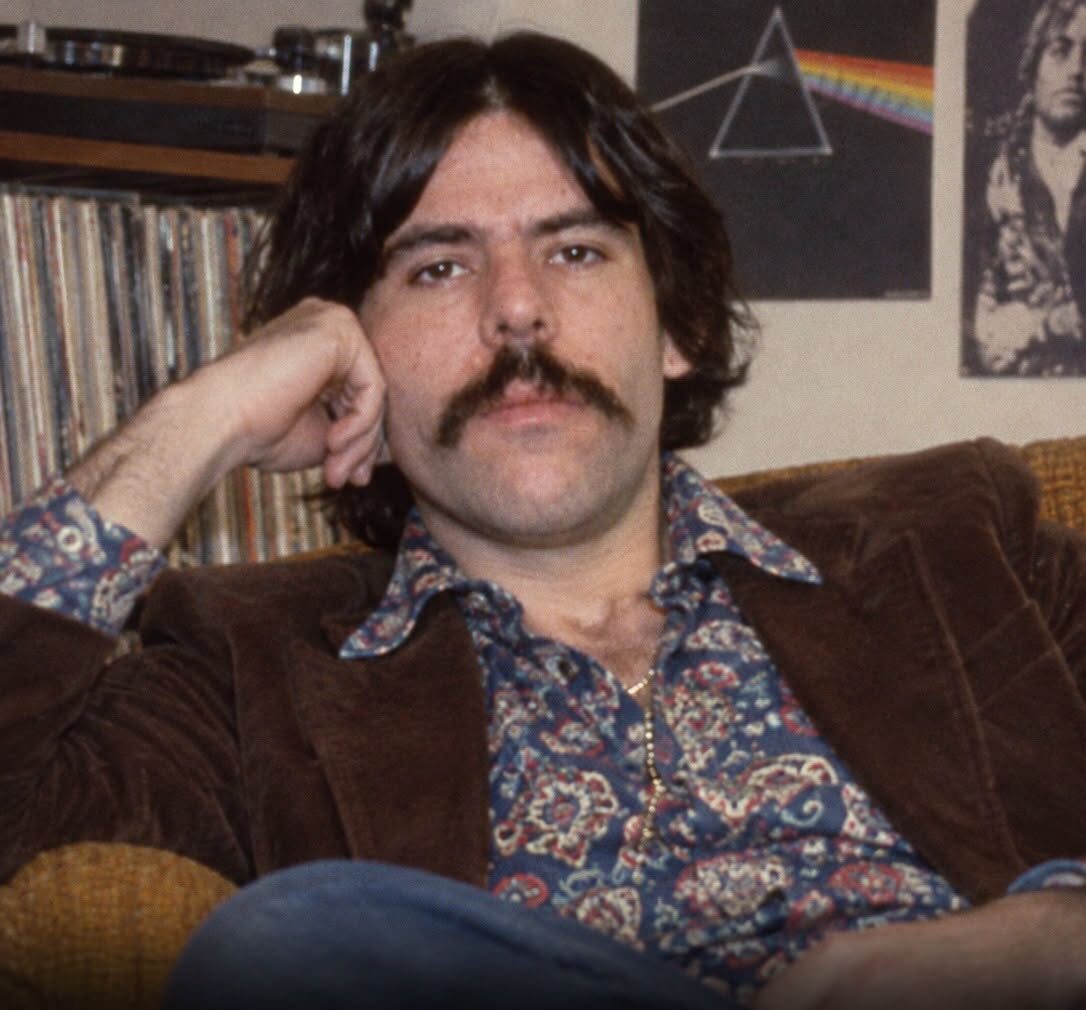
The Man Behind the Colors
Perhaps the most revealing words after his death came from his family.
His son Adam Max said the family would remember Peter for his creativity, warmth, curiosity, and the way he saw beauty and possibility everywhere. He also made a distinction that says much about Max’s legacy: the art became part of American culture, but the father his family knew and loved was the person they would miss most.
That perspective matters.
The public knew the mustache, the psychedelic colors, the cosmic imagery, and the larger-than-life artist.
His children knew their father.
A Complicated Final Chapter
Max’s later years were considerably more complicated than the bright world depicted in his paintings.
His health declined, and he eventually developed advanced dementia. His family life also became the subject of legal disputes and intense public scrutiny, making his final years very different from the joyful image associated with his art.
Yet none of that erased what his work had already accomplished.
The colors remained.
The images remained.
And the cultural imprint remained.
A Legacy That Still Glows
Peter Max didn’t invent the psychedelic aesthetic of the 1960s by himself, but he helped give that era one of its most recognizable visual identities.
His art reached far beyond galleries. It entered bedrooms, living rooms, advertisements, public events, aircraft, ships, postage stamps, and popular culture.
That accessibility was part of his significance.
He made art something millions of people encountered in everyday life.
And decades later, his imagery could still be recognized almost instantly.
Peter Max once described himself as seeing the world through “rainbow eyes.”
Now the man behind those colors is gone.
But the world he helped paint remains remarkably bright.
Peter Max didn’t simply illustrate an era. He gave that era a color palette—and generations of people never forgot it.