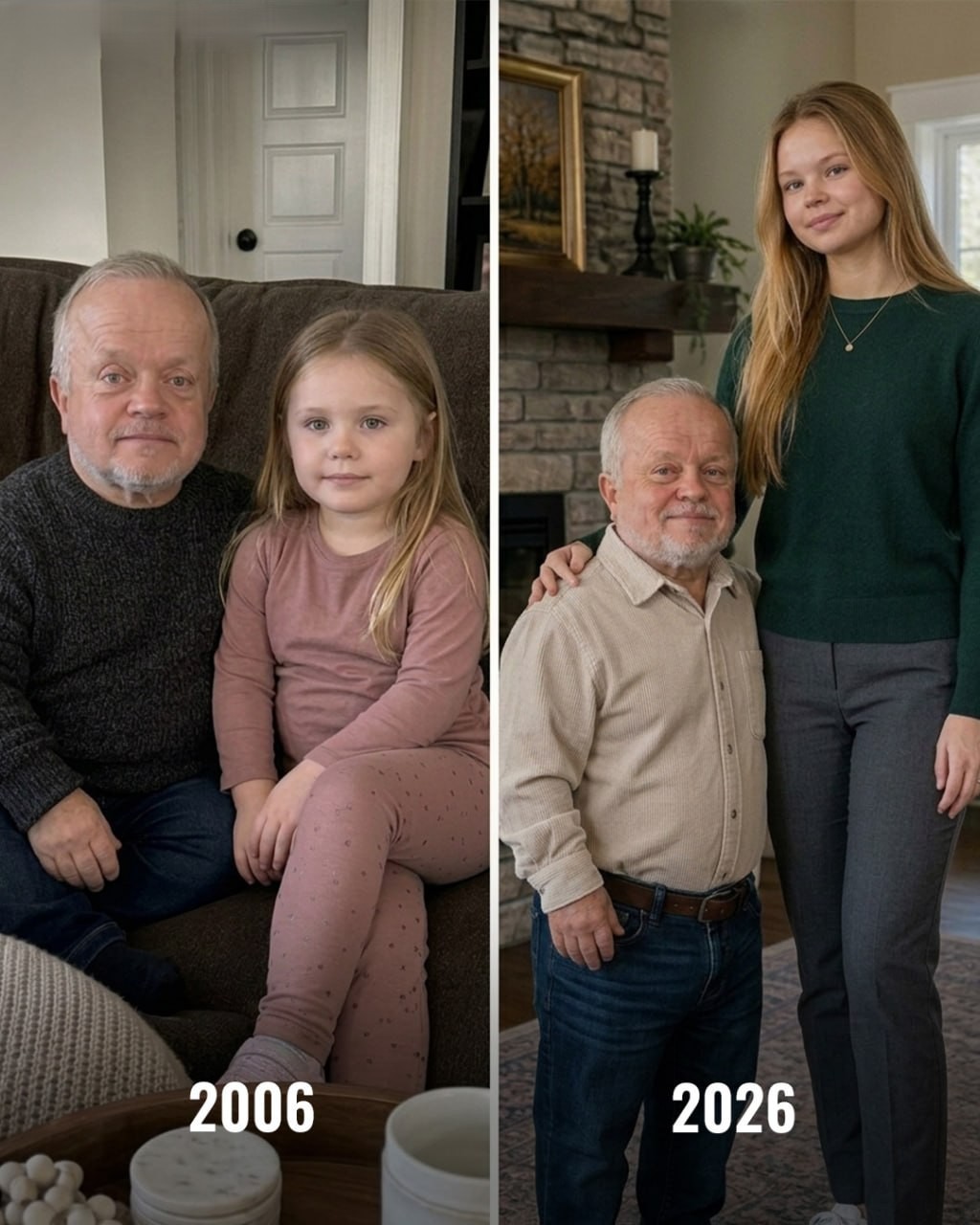
A Winter Storm, a Family Dinner, and a Goodbye That Didn’t Feel Final
It was a few days before Christmas, twenty years ago. My son, Michael, came by with his wife, Rachel, and their two kids for an early holiday meal. We lived in the kind of small town where weather warnings are usually treated like background noise—something you talk about while topping off coffee.
The forecast called for light snow. Nothing serious.
Instead, the storm hit fast and hard, turning roads into white tunnels and making the night feel hostile. Still, at around 7 p.m., Michael stood at my door with his usual steady confidence. He bundled little Emily into her coat, kept his voice calm, and promised they’d get home safely.
I watched their taillights disappear into the snow and told myself not to worry.
Three hours later, I heard the knock that changes a life forever.
The “Accident” Everyone Accepted
It was a local officer—someone I knew, someone I’d seen at community events for years. Snow clung to his shoulders as he delivered the news with a face that looked trained for tragedy.
The car had gone off a rural road and hit the trees.
Michael was gone.
Rachel was gone.
Eight-year-old Sam was gone.
Only Emily survived—strapped into the back seat.
In one night, I stopped being “grandpa who spoils the kids” and became a full-time parent again at fifty. Doctors said Emily’s memory was cloudy from trauma and urged me not to push her to remember details. So I didn’t.
I did what people do when they’re trying not to drown: I focused on the next day. I learned how to braid hair, how to pack lunches, how to clap at school plays while my heart felt like it had been hollowed out.
And when Emily asked why her parents weren’t coming back, I gave her the only explanation I’d been handed:
“It was a terrible accident. The storm was bad. Nobody could’ve stopped it.”
Why the Questions Started Again After 20 Years
Emily grew into the kind of adult who notices what others miss. Smart, careful, and drawn to details. After college, she moved back home to save money and took a job as a paralegal—exactly the kind of work that rewards a person who can’t ignore loose ends.
As the 20-year anniversary of the crash approached, something shifted.
She got quieter. More guarded. Then the questions started—specific ones.
- What time did they leave?
- Who else was on that road?
- Why did the investigation end so quickly?
- Why did no one follow up after the funeral?
I assumed it was grief resurfacing. Anniversaries do that.
But Emily wasn’t revisiting memories.
She was building a case.
The Note That Changed Everything: “It Wasn’t an Accident”
Last Sunday, she sat across from me at the kitchen table and slid a folded paper forward. Her hands were shaking, but her eyes were steady.
In clean, unmistakable handwriting, she had written:
IT WASN’T AN ACCIDENT.
I tried to dismiss it—tried to force a laugh and suggest she’d been reading too many crime stories. She didn’t smile.
Instead, she reached into her bag and pulled out an old silver flip phone, scratched and dated like something from a different lifetime.
She told me she found it in the county archives—boxed away, labeled as non-essential, never treated like evidence.
Then she pressed play.
The Voicemail That Exposed a Cover-Up
What came through the speaker didn’t sound like fiction. It sounded like fear.
Two voices. One man, panicked, saying something like: “We can’t keep doing this… nobody was supposed to get hurt.”
The other voice was colder. Controlled. Final.
“Just drive.”
I felt my stomach drop. The room didn’t feel steady anymore.
Emily told me she’d spent months digging through records—old rosters, internal notes, case logs, and anything she could legally access. What she found connected back to the same officer who had stood on my porch that night.
According to what she uncovered, he’d been tied to allegations of taking bribes connected to a private trucking operation—payments made to keep certain incidents quiet and routes open.
What Really Happened on That Road
The truth wasn’t that Michael “lost control in a storm.”
The truth was that the road should have been blocked off.
Earlier that day, a semi-truck had jackknifed in the area. Under normal circumstances, barriers would have stayed in place and traffic would have been rerouted.
But Emily’s research suggested those barriers were removed—quietly—so business could continue as usual.
Michael didn’t simply skid.
He swerved—trying to avoid a massive truck that had no business being on that stretch in those conditions.
The marks on the road weren’t just “weather-related sliding.” They were the desperate movements of someone trying to keep his family alive for one more second.
My son’s family didn’t die because of bad luck.
They died because someone chose money over safety.
No Courtroom Justice—But the Truth Finally Arrived
There was another cruel twist: the officer had died years earlier. No trial. No public reckoning. No dramatic courtroom scene.
Emily wasn’t chasing headlines. She wasn’t even chasing punishment.
She was chasing the truth—because living with a lie for twenty years is its own kind of sentence.
Then she showed me one last thing: a faded letter addressed to me from the officer’s widow.
Inside was an explanation and an unfiled confession she’d discovered among her husband’s hidden documents. She wrote about debt, bad decisions, and a choice that spiraled beyond what he thought it would cost.
She didn’t ask for forgiveness.
She said she wanted the truth to reach the people it belonged to.
What the Truth Changed—and What It Didn’t
I read that letter more than once. Not because I didn’t understand it—but because part of me had built an entire life around accepting the “accident.”
The truth didn’t erase grief. It didn’t bring anyone back.
But it did something I didn’t expect: it gave our pain a name. It gave our family back the dignity of reality—no more shrugging at fate, no more pretending it was just a storm doing what storms do.
That night, snow fell outside our windows again. For the first time in twenty years, it didn’t feel like an enemy.
Emily reached across the table and held my hand—not like a child needing comfort, but like an adult who had carried the weight of a buried story and refused to let it stay buried.
We talked about Michael’s laugh. Rachel’s kindness. Sam’s drawings. The small things that mattered—and still do.
And for the first time, the silence in our home didn’t feel like unanswered questions.
It felt like truth.
If this story moved you, share your thoughts in the comments: Do you believe the truth always comes out—no matter how long it takes? And if you’ve ever lived through a loss that left questions behind, what helped you finally find peace?