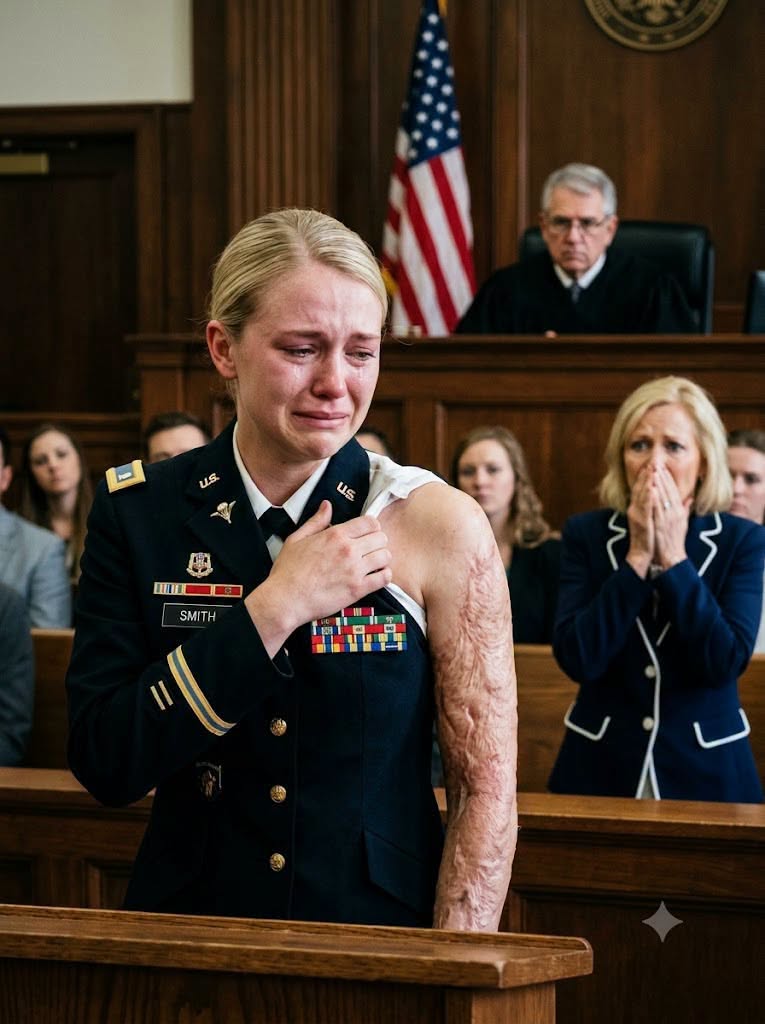
Every word made the room feel smaller. What she had once been ordered to keep private was now being used against her. The silence that had protected others had become the very thing threatening to destroy her name.
Then the courtroom doors opened.
Elaine’s expression changed before anyone said a word. The sadness she had worn throughout the hearing disappeared, replaced by something closer to fear. She recognized the man who had entered.
He was older than Ms. Wright remembered, but he still carried the same steady authority she had known years earlier.
When asked to identify himself, he gave his name plainly: Duane Carney, United States Army, retired.
The judge immediately questioned the late appearance of the witness. The prosecutor objected that he had not been informed. But the room had already shifted. For the first time that day, someone had walked in who seemed to know exactly who Ms. Wright was.
The Witness Who Could Explain the Missing Records
Commander Carney told the court that he had been Ms. Wright’s commanding officer. The statement sent murmurs through the courtroom.
Asked whether he could verify her military service, he did not rush his answer. Instead, he looked toward the sealed documents on the evidence table and explained that parts of her service could not be discussed publicly.
That answer helped explain what the prosecution had treated as suspicious: missing details, restricted files, and records that could not be fully opened in court.
When asked for support, Commander Carney produced documentation from his folder. Elaine stared at it as though she had not believed such proof could exist.
Under questioning, the prosecutor pressed him on whether he had personally witnessed Ms. Wright’s service. Commander Carney confirmed that he had. He also explained that her records were unavailable because she had been part of an operation that remained restricted.
Then he gave the court the clearest statement anyone had made all day. Ms. Wright had followed orders, protected her team, and returned home with injuries she had never used to gain sympathy. She had stayed silent because she had been instructed to do so.
For years, that silence had cost her. In that courtroom, it finally began to protect her.
The Bigger Picture
As the prosecutor returned to his table, the attention in the room moved from Ms. Wright to Elaine. The judge asked whether she wished to revise her testimony, but this time she had no polished answer ready.
Curtis, Ms. Wright’s brother, tried to redirect the moment by insisting that none of it proved anything about the company. But his reaction only made the larger issue harder to ignore.
This case was no longer only about a disputed military record. It was beginning to point toward something tied to their father’s warnings, the family company, and money that had been kept out of sight.
That was when Ms. Wright’s attorney opened another folder.
It was the one her father had left behind. Inside was evidence Elaine and Curtis did not know existed, along with a final message from him explaining what he believed they had done.
The courtroom had just watched one accusation fall apart. But the next revelation suggested the family dispute was far from over.
And for Ms. Wright, the fight to reclaim her name was only the beginning.