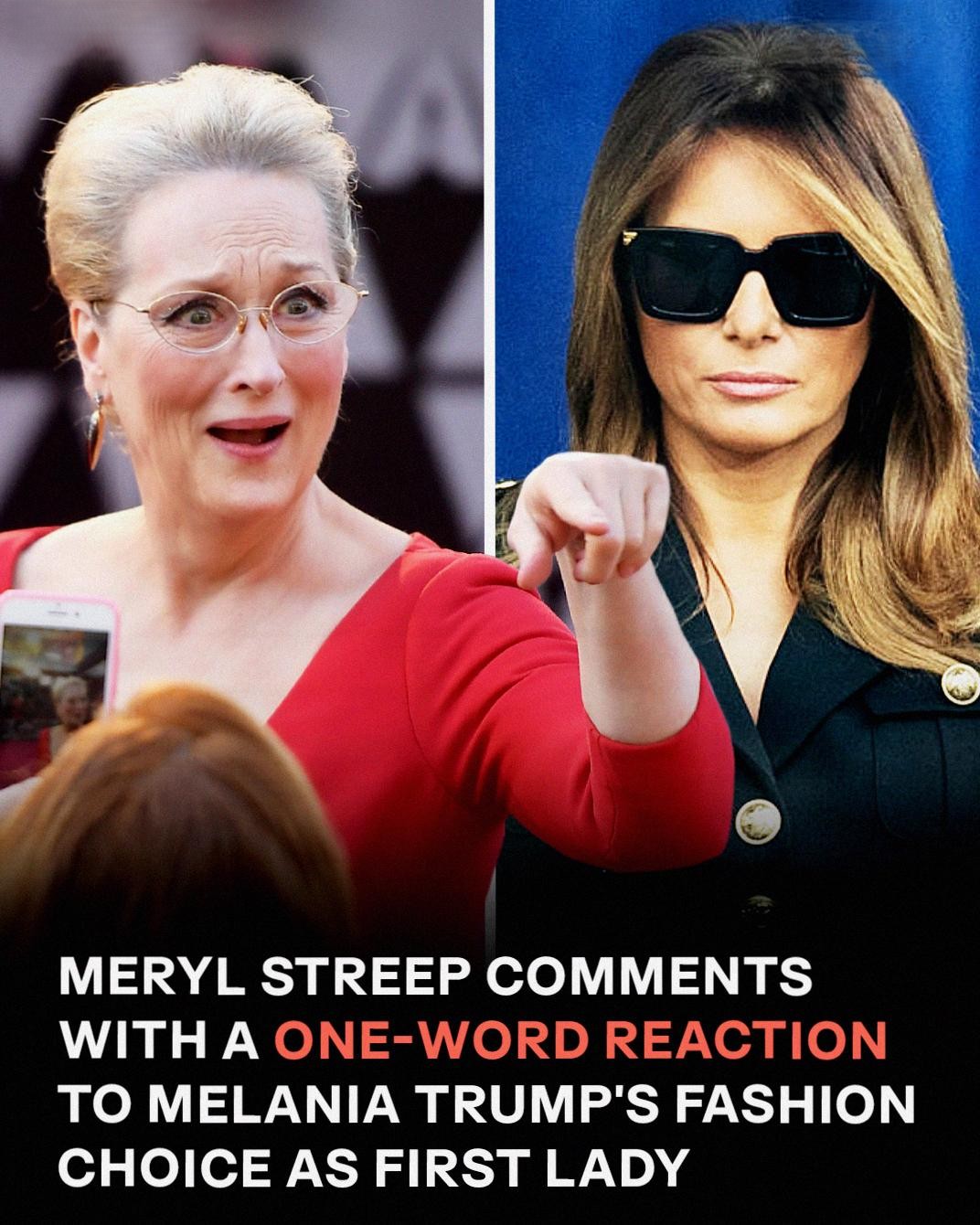
Streep described the moment as “destabilizing”—not because of the brand or styling, but because of the slogan’s placement in that specific setting. Her argument was simple: when a leader’s spouse appears at a humanitarian flashpoint wearing words that read as indifference, the outfit becomes a form of communication whether intended or not.
Why the Jacket Still Sparks Outrage Years Later
The backlash in 2018 was immediate. Photos of the jacket circulated worldwide, and critics interpreted the message as cold or dismissive toward vulnerable children. Melania Trump later said the slogan was aimed at her critics and the media, not the children, and urged people to focus on what she did rather than what she wore.
Streep’s point, however, is that optics are part of leadership. In a media ecosystem driven by images, a slogan doesn’t stay private, and context is never optional. Even if the message was meant for someone else, the public moment “locks in” the meaning for millions of viewers.
Streep’s Longstanding Warning About Public Cruelty
Streep’s comments also echo themes she has raised before—especially the idea that behavior modeled by powerful people can normalize a broader cultural shift. She has argued that when public figures display humiliation, mockery, or emotional detachment, it doesn’t remain at the top; it filters into everyday life and reshapes what society tolerates.
By bringing up the jacket again, Streep connects a single fashion decision to a larger pattern: the way public indifference can be staged, branded, and repeated until it feels normal.
Why This Conversation Is Back Now
The timing of the Vogue interview matters. Recent public appearances by Melania Trump have reignited online scrutiny about her public role, her image, and how she presents herself beside Donald Trump. Some commentators focus on glamour and composure; others read distance and calculation.
Streep’s critique pushes back on the “movie star” framing and argues that the real story isn’t about shine—it’s about symbols. In her view, the most revealing moments aren’t always in speeches. Sometimes they’re in the details: a slogan, a photo, a choice made when the world is watching.
Fashion as Soft Power—and Why It Matters
What makes this debate persist is the uncomfortable truth that fashion can operate as soft power. Clothing can humanize a public figure or create distance. It can project empathy—or send the opposite signal. And when the person wearing the message occupies a historic platform, the stakes rise dramatically.
Streep’s larger argument is not that people should obsess over labels. It’s that leaders and their inner circles understand the camera, understand branding, and understand how quickly an image becomes a political artifact. In that environment, a jacket slogan isn’t trivial. It’s a message the public is forced to interpret.
The Image That Won’t Go Away
Trends fade, but certain images stick—especially when they capture a mood of an era. For many critics, the jacket became a lasting symbol of defiance over compassion, a snapshot of how power can look when it refuses to perform empathy. That’s why, years later, it can still ignite debate with a single mention in a major magazine interview.
Streep’s comments have effectively pulled the moment back into the spotlight, asking readers to consider a hard question: when public figures say nothing, can their wardrobe speak anyway?
What do you think—was the jacket simply misunderstood, or was it an intentional message? Share your take in the comments, and if you want more deep dives on celebrity news, political optics, and the real meaning behind headline-making style moments, stick around and explore our latest articles.