A Promise Made Years Earlier
Jack had been raising Emily on his own since the death of her mother, Sarah. Before Sarah passed away, she asked him to do one thing for their daughter: keep showing up.
That promise stayed with him through long workdays, school events, packed lunches, and the quiet pressure of being the parent Emily depended on most. Jack worked in the mine, often coming home exhausted and covered in dust, but he carried the promise seriously.
Graduation day was supposed to be different. His shift was expected to end early. He planned to go home, clean up, put on the gray jacket Sarah had once bought for him, and take his place proudly in the crowd.
Then, just before he could leave work, an emergency unfolded underground.
Two workers were trapped, and Jack stayed behind to help with the rescue. By the time the workers were brought to safety, there was no time left for him to change clothes or wash away the coal dust. He got in his car and drove straight to the school.
The Moment the Room Learned the Truth
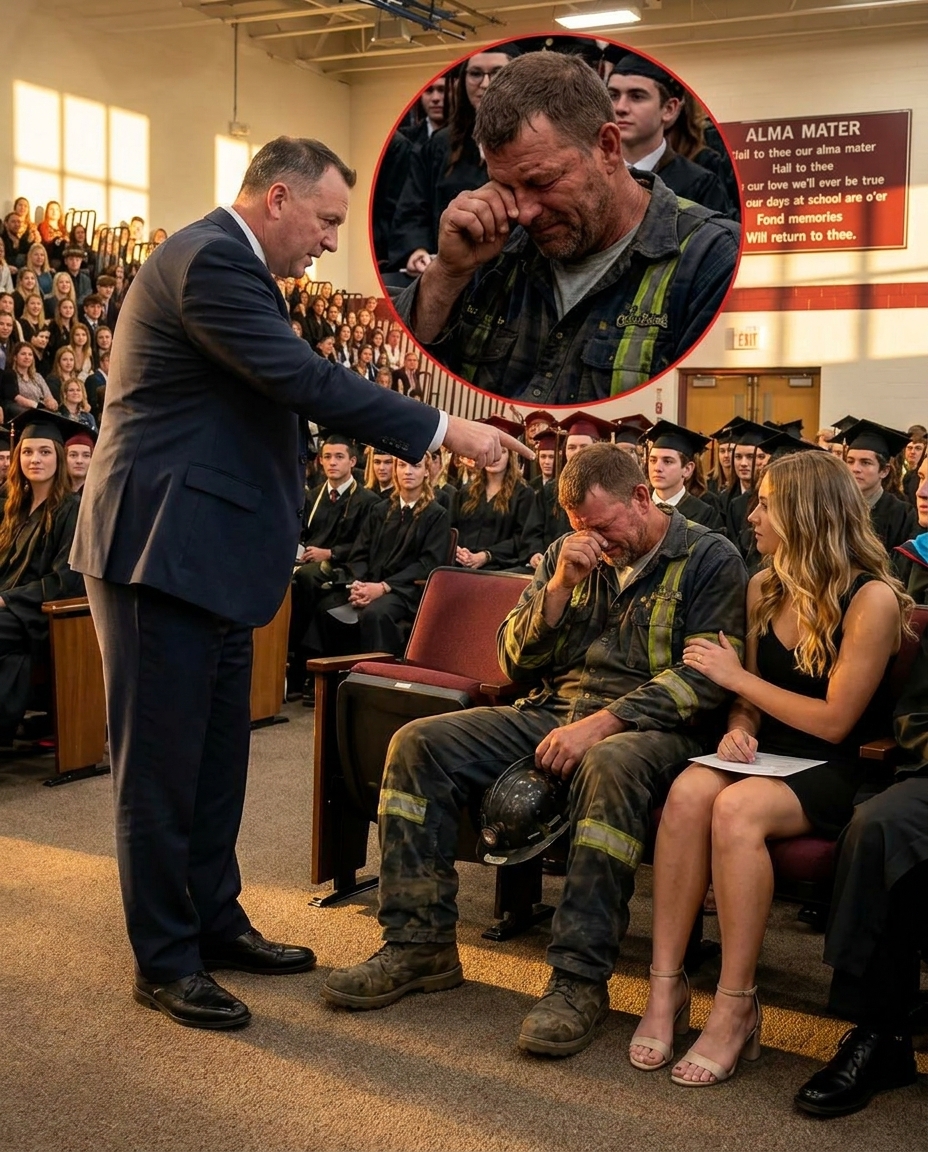
When Jack finally slipped into the auditorium, he was late, tired, and still covered in the marks of the mine. The reaction was immediate. A few people whispered. One parent made an unkind remark. Emily lowered her eyes, trying to hold herself together.
Then Principal Walter stopped the ceremony.
Rather than let the whispers define the moment, he pointed attention toward the back of the room and explained why Jack had arrived the way he did. He told the audience that Jack had not been careless. He had been helping save two lives before rushing to see his daughter graduate.
The room shifted. The judgment faded. What had looked like failure suddenly looked like sacrifice.
Applause rose through the auditorium as people understood the fuller story. Emily walked to her father and took his dusty hand, no longer worried about what anyone else thought.
The Bigger Picture
The story stands out because it turns a familiar public moment into a reminder about private burdens. From the outside, people often see only lateness, worn clothes, tired faces, or an empty chair. They do not see the years of effort behind them.
For Emily, her father’s arrival mattered more than how he looked or when he entered the room. He had come from a dangerous emergency, still carrying the evidence of his work, because he had made a promise to her mother and to his daughter.
Later, Emily dedicated her diploma to both of her parents: the mother she had lost and the father who kept finding his way back to her, even when life made it difficult.
Not every act of love arrives neatly dressed and perfectly on time. Sometimes it comes breathless, worn down, and covered in dust — and that can make it mean even more.