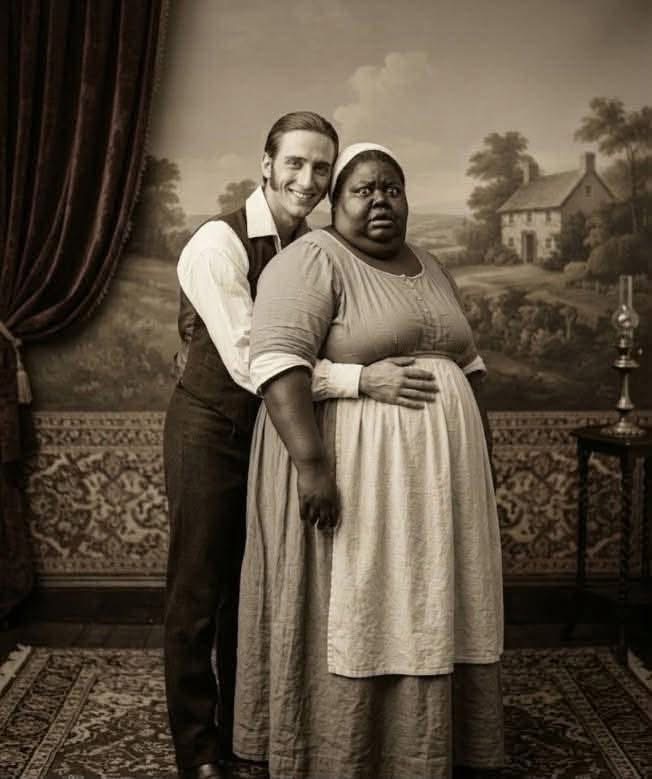
The crowd laughed even harder. A merchant called him foolish. The auctioneer, eager to move on, accepted the bid and brought down the gavel.
What Silas Did After the Auction
Most people in Oakhaven assumed Silas had bought Martha for harsh labor. They expected him to drag her back to his poor farm and force her to clear the fields that had resisted him for years.
But once they were beyond the town’s boundaries, Silas stopped and told Martha something she had not expected to hear: she was free.
That one decision changed the meaning of everything that had happened in the square. Silas had not joined the crowd’s cruelty. He had used the only money he had to remove Martha from a system that had reduced her to a price.
Martha was stunned. Freedom did not instantly solve her problems. She had no home waiting for her and no easy path ahead. But as she looked over Silas’s struggling land, she understood something the townspeople had missed.
Silas did not need someone to command. He needed someone who could see possibility where everyone else saw failure.
The Strength Oakhaven Refused to See
Martha’s size had made people afraid of her, but her real value was not simply physical strength. She had a sharp mind for agriculture and a practical understanding of land, effort, and survival.
On Silas’s farm, her strength was no longer something others tried to exploit. It became part of work she could choose for herself, guided by her own judgment and skill.
The story turns on that difference. Oakhaven’s landowners looked at Martha and saw a cost. Silas looked at her and saw a person. Martha looked at the farm and saw what could be rebuilt.
For a poor farmer with difficult land, that kind of partnership mattered more than public opinion. The same townspeople who laughed at the seven-cent bid never understood the choice Silas had made, because they had already decided Martha was worthless.
The Bigger Picture
This story is remembered less for the price paid at the auction than for what happened immediately afterward. It is about dignity, judgment, and the danger of allowing a crowd to decide a person’s worth.
Silas’s act did not erase the cruelty of the auction, but it did create a different future for Martha. In a place where people saw only size, reputation, and cost, he made room for freedom and trust.
And Martha, once dismissed by an entire town, proved that the people most underestimated are often the ones who understand how to build something lasting.
It is a simple story, but it leaves a difficult question behind: how often do people mistake someone’s difference for a weakness?