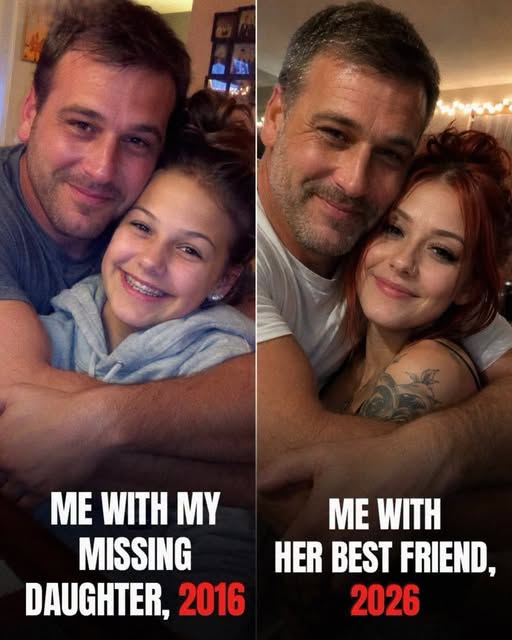
The Night Everything Broke
Before Emily disappeared, it had been just the two of us. My wife, Abigail, was gone, and Emily had become the center of my life. I was not a perfect father. I forgot things. I burned meals. I worried too much. But I loved her completely.
Nora lived nearby with her grandmother, whose memory was failing. Emily noticed before most adults did. She started inviting Nora to eat with us, lending her clothes, and making her feel like she belonged somewhere.
Not everyone welcomed that bond. Emily’s maternal grandparents, Carla and Grant, treated Nora like a problem and me like a man unfit to raise my own child. Their criticism came dressed up as concern, but over time it changed how people saw us.
The night Emily vanished, she and I argued about a school dance. I was too strict. She was angry. In the heat of it, she said her grandparents understood her better than I did. I told her to go ask them, a sentence I regretted almost as soon as it left my mouth.
Emily ran out. Nora followed, promising to bring her back.
Only Nora returned.
She was soaked, panicked, and almost impossible to understand. Emily was gone, and from that night forward, suspicion settled on Nora like a permanent shadow.
A Child Turned Into the Town’s Villain
People built a story around Nora because it was easier than living with uncertainty. She was the neglected girl from down the street. She was the outsider. She was, in their eyes, the one who must have known more than she said.
When her grandmother could no longer care for her, I took Nora in. Later, I adopted her. Some people saw that as proof I had lost my judgment. I saw it as keeping faith with Emily, who had never treated Nora as disposable.
Nora never tried to take Emily’s place. She did not move into Emily’s memory like a thief. Every year, she left flowers on Emily’s pillow. Every year, she grieved quietly for the girl who had once called her family.
Still, the whispers followed her. In stores, on sidewalks, at community events, people looked at Nora as if she were carrying a secret too ugly to forgive.
They were right about one thing. There was a secret. They were wrong about who had created it.
The Messages That Changed Everything
The truth began with anonymous digital messages on Nora’s phone. She brought it to me with trembling hands.
One message asked whether I had really stopped looking. Another questioned whether I had adopted Nora only because Emily was gone. Then came the image.
It showed a woman who was older and thinner, but still unmistakably my daughter.
Emily was alive.
The discovery was not simple joy. It was relief mixed with horror, because it meant the last ten years had been built on a lie. According to what Nora revealed and what Emily later confirmed, Carla and Grant had intercepted Emily that night. They convinced her I had rejected her, moved her away, changed the life she knew, and filled her with the fear that coming back would destroy me.
Nora, with no strong family protection of her own and a grandmother whose memory was fading, had been frightened into silence. Emily had been kept away by manipulation. Both girls had been trapped by the same lie, just in different ways.
When Nora brought Emily home, my daughter stood on the porch in tears. The question she asked hurt more than any accusation ever could: had I truly stopped wanting her?
There was no answer big enough for the years we had lost. There was only the truth. I had never stopped waiting.
Why This Matters
This story is painful because it shows how quickly a community can decide what happened before it knows the truth. Nora was a child when Emily disappeared, yet people treated her like the source of the tragedy instead of another victim of it.
It also shows the lasting damage caused when adults use fear, family pressure, and isolation to control children. The consequences did not end with one bad night. They shaped a decade of grief, guilt, and stolen time.
The next day, I walked into the community hall with both of my daughters. Carla and Grant tried to explain, but no explanation could return ten years. When Emily took Nora’s hand and called her sister, the room finally understood what it had done.
For years, I thought I had failed the daughter who vanished. That night, listening to Emily and Nora talk softly in their rooms again, I understood something different.
I had kept a place for both of them. And somehow, after the longest night of our lives, they had found their way back to it.
Some stories are not about forgetting what happened. They are about finally seeing who deserved belief all along.